

Best Sun Damage Face Cream: A Guide to Healing Your Glow
Sun Damage Is More Common Than You Think — Here's What Actually Helps
Finding the best moisturizer for sun damage doesn't have to mean sifting through hundreds of overhyped products. Here's a quick answer if you're short on time:
Top moisturizer features to look for if you have sun-damaged skin:
| Priority | What to Look For |
|---|---|
| Barrier repair | Ceramides, squalane, colloidal oatmeal |
| Hydration | Hyaluronic acid, glycerin |
| Dark spots | Niacinamide, vitamin C |
| Soothing | Peptides, antioxidants |
| Daily protection | Broad-spectrum SPF 30+ |
| Formula safety | Fragrance-free, non-comedogenic |
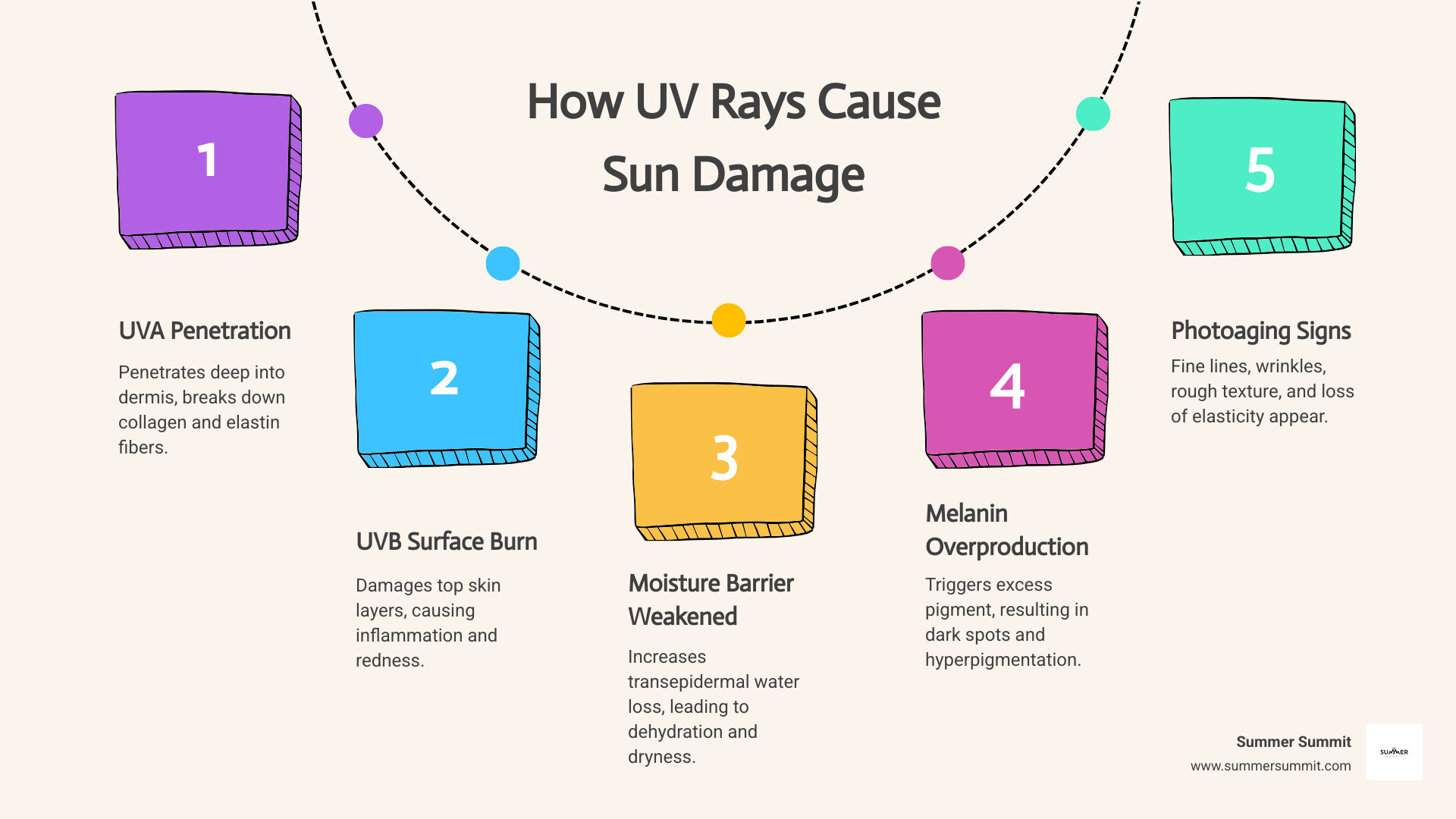
Sun damage is one of the most common — and most ignored — skin concerns out there. UV rays break down collagen and elastin, trigger excess melanin production, and strip moisture from the skin barrier. The result? Dark spots, rough texture, dullness, and fine lines that seem to appear out of nowhere.
The good news: the right moisturizer, used consistently, can make a real difference. Not overnight. But over weeks, with the right ingredients, you can support your skin's recovery and stop the damage from getting worse.
My name is Robert McCann, and through founding Summer Summit Skincare I've spent years working directly with labs and ingredient suppliers to understand what formulations actually deliver results for concerns like sun damage — which is exactly why I put together this guide on the best moisturizer for sun damage. Let's break down what works, why it works, and how to find the right fit for your skin.
What Sun Damage Does to Skin and Why Moisturizer Matters
Sun damage is really a mix of problems happening at once.
UVA rays penetrate deeper into skin and are strongly linked with photoaging, including wrinkles, laxity, and collagen breakdown. UVB rays are more associated with burning and direct surface injury. Together, they increase inflammation, weaken the moisture barrier, and encourage uneven pigment production. The American Academy of Dermatology offers helpful resources on understanding how UV exposure affects skin over time.
That is why sun-damaged skin often looks and feels:
- Dry or dehydrated
- Rough or papery
- Dull instead of radiant
- More sensitive than usual
- Uneven in tone
- Marked by dark spots or redness
- Less firm or bouncy
A moisturizer cannot erase years of UV exposure by itself, but it can do something important: help skin function better while supporting repair. When the barrier is healthier, skin holds water more effectively, feels calmer, and looks smoother and plumper.
Signs your skin may need the best moisturizer for sun damage
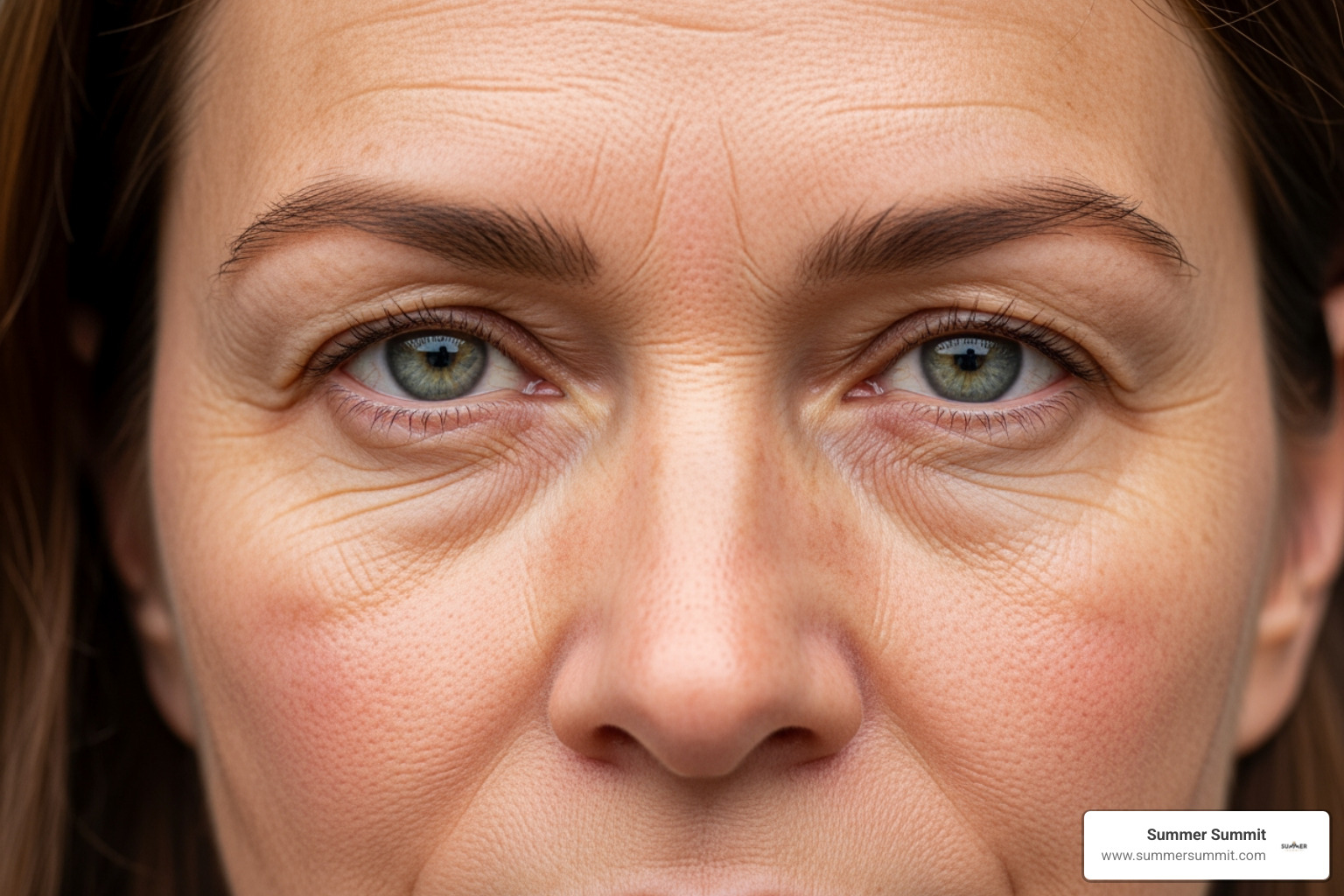
You do not need a dramatic sunburn history to have sun damage. Often it shows up quietly over time.
Common signs include:
- Sun spots or age spots
- Uneven tone or patchy pigmentation
- Fine lines that seem more visible when skin is dry
- Crepey texture
- Flaking or rough patches
- Redness that lingers
- Increased sensitivity to active ingredients
- Loss of elasticity
If pigmentation is one of your main concerns, our guides on age spots and hyperpigmentation can help you tell the difference between common sun-triggered discoloration patterns.
Why moisturizers help repair sun-damaged skin
Think of moisturizer as support staff for stressed-out skin.
A good formula helps by:
- Reducing transepidermal water loss
- Replenishing barrier lipids
- Softening rough texture
- Temporarily plumping fine lines caused by dehydration
- Calming irritation
- Supporting a healthier environment for long-term recovery
This matters because UV exposure does not just create spots and wrinkles. It also leaves skin less resilient. Barrier-supportive hydration is one of the simplest ways to make skin more comfortable while you work on deeper concerns like pigment and texture.
For more on firmness-related changes, see our articles on regaining your skin's elasticity and how wrinkles evolve with age.
How to Choose the Best Moisturizer for Sun Damage
The best formula is not automatically the richest, fanciest, or most expensive. It is the one your skin will actually tolerate and use consistently.
When choosing, we suggest focusing on:
- Your skin type
- Your main sun-damage concern
- Whether you want a day cream, night cream, or both
- Fragrance-free, irritant-aware formulas
- Non-comedogenic textures if you break out easily
- Whether you still plan to use a separate sunscreen
In general, sun-damaged skin does best with dermatologist-formulated products that prioritize barrier support over heavy fragrance or trendy filler ingredients.
Ingredients that make the best moisturizer for sun damage more effective
Here are the ingredients most worth your attention:
- Ceramides: Help repair and reinforce the barrier
- Hyaluronic acid: Draws in water and improves hydration
- Glycerin: A reliable humectant that helps skin stay comfortable
- Niacinamide: Supports barrier health and helps reduce the look of dark spots from UV damage
- Vitamin C: Antioxidant support for brightness and uneven tone
- Peptides: Helpful for smoothing and supporting firmer-looking skin
- Squalane: Lightweight emollient that reduces dryness without feeling too heavy
- Colloidal oatmeal: Great for sensitive, dry, or irritated skin
- Antioxidants: Help defend against environmental stress
- Willow bark: Often used for gentle exfoliation support in oily or congestion-prone skin
Independent beauty lab testing has shown that some moisturizers containing vitamin C and pigment-supporting ingredients can improve brightness, hydration, and the appearance of dark spots over several weeks of consistent use. That does not mean every vitamin C or exfoliating cream will perform identically, but it does show that pigment-supporting moisturizers can do more than simply sit there looking expensive.
What to avoid if your skin is already sun-stressed
When skin is sun-damaged, more is not always more.
Be cautious with:
- Heavy fragrance
- Essential oils if you are sensitive
- Drying alcohols
- Harsh scrubs
- Overuse of strong acids
- Too many active ingredients at once
- Sulfates in cleansing routines
- Irritating formulas packed with unnecessary extras
At Summer Summit, we are big believers in skipping harmful irritants. When skin is already inflamed or dehydrated, a gentler formula is often the smarter formula.
Matching your cream to dry, oily, sensitive, and combination skin
A quick cheat sheet:
- Dry skin: Richer cream with ceramides, squalane, peptides, or colloidal oatmeal
- Oily skin: Oil-free or gel-cream texture with hyaluronic acid and niacinamide
- Sensitive skin: Fragrance-free, soothing cream with ceramides, oatmeal, peptides
- Combination skin: Lightweight lotion or gel-cream, with richer cream only on drier zones
If you are not sure where you fall, start with our guide on why skin type matters with moisturizers. If dryness is your main issue, also see our tips for daily dry skin care.
Best Moisturizer for Sun Damage: What to Look for by Skin Need
Below is a practical comparison to help narrow things down.
| Skin need | Hero ingredients | SPF pairing | Best texture | Best use |
|---|---|---|---|---|
| Dark spots | Niacinamide, vitamin C | SPF 30+ every morning | Lightweight cream | AM or PM |
| Barrier damage | Ceramides, squalane, glycerin | Separate sunscreen | Cream or balm | PM, recovery days |
| Sensitive skin | Colloidal oatmeal, peptides, ceramides | Mineral SPF often preferred | Cream | AM and PM |
| Oily sun-damaged skin | Hyaluronic acid, niacinamide, willow bark | Lightweight SPF fluid | Gel-cream | AM |
| Very dry skin | Ceramides, shea butter, oatmeal | Creamy SPF or separate sunscreen | Rich cream | PM and as needed |
Best overall nightly repair cream
For overnight recovery, look for a fragrance-free barrier cream with antioxidants, ceramides, niacinamide, and a balanced texture that does not smother the skin.
A good nightly repair cream should offer:
- Lasting hydration
- Barrier support
- Some antioxidant protection
- Comfort for skin that feels tight or rough
- Good tolerance with the rest of your routine
This category is ideal if your main concerns are dryness, texture, and that "my face looks tired for no reason" feeling.
For more skin health content, browse our skin health tips hub.
Best for dark spots and uneven tone
If discoloration is your biggest issue, the best moisturizer for you may be one with niacinamide, vitamin C, or gentle exfoliation support.
What we like in this category:
- Niacinamide for tone support
- Vitamin C for brightness
- Antioxidants to help reduce environmental stress
- Hydration, because dry skin makes spots look more obvious
A few useful stats from recent testing:
- Some lab-tested vitamin C moisturizers have improved brightness and dark spots after 4 weeks
- In one study of 180 women, 91% said their skin looked healthier and glowier after 5 days of use with a vitamin C moisturizer
- A tone-correcting cream with pigment-focused ingredients helped 96% of 50 women report lighter post-mark discoloration in 8 weeks
Translation: realistic improvement often happens in weeks, not one magical Tuesday.
Best for sensitive or redness-prone skin
Sun-damaged skin is often reactive skin. If products sting, flush, or make your face feel personally offended, choose a calming moisturizer first and a "results" moisturizer second.
Look for:
- Ceramides
- Hyaluronic acid
- Peptides
- Colloidal oatmeal
- Fragrance-free labels
- Non-comedogenic formulas if you are breakout-prone
Some dermatologist-formulated products in this category also use peptides and antioxidants for redness-prone skin while avoiding common irritants. That combination can be especially helpful if your barrier has been weakened by sun, wind, or over-exfoliation.
Best for very dry or compromised skin
For flaky, tight, compromised skin, richer repair creams are often the better choice.
The best options here usually include:
- Ceramides
- Colloidal oatmeal
- Shea butter or squalane
- Glycerin
- Occlusive support to reduce water loss
Clinical claims from some barrier-first creams are notable: some sensitive-skin moisturizers have been shown to strengthen the skin barrier in as little as 7 days, while other occlusive-style formulas can help lock in moisture for up to 24 hours. Those are not direct "sun repair" studies, but they do reinforce a key point: when dryness and barrier damage are severe, richer support can make skin look and feel better much faster.
If you also deal with body dryness, our guide to dry skin on arms and legs may help.
Best daytime moisturizers with SPF
For daytime, we like moisturizers with broad-spectrum SPF 30 or higher, especially if they also include hydrating ingredients like hyaluronic acid, niacinamide, or ceramides.
That said, convenience and complete protection are not always the same thing.
For many people, a broad-spectrum SPF moisturizer can be a helpful part of a morning routine, especially when paired with generous application and regular reapplication. And yes, daily sunscreen still deserves its own standing ovation. Here are 5 compelling reasons to use sunscreen every day.
How to Use a Sun Damage Moisturizer in Your Routine for Faster Results
Even the best moisturizer will underperform if it is used randomly, layered badly, or paired with zero sun protection.
Basic order:
- Cleanser
- Treatment serum if using one
- Moisturizer
- Sunscreen in the morning
Consistency matters more than perfection. A solid routine done daily beats a 14-step routine done twice before giving up.
Morning routine: hydration plus protection
A smart morning routine for sun-damaged skin looks like this:
- Use a gentle cleanser
- Apply an antioxidant serum if desired
- Use your moisturizer
- Finish with broad-spectrum SPF 30+
- Reapply sunscreen every 2 hours when outdoors
If your moisturizer already contains SPF, use enough to reach the labeled protection. That is where many people run into trouble: they apply a tiny dab and assume they are covered.
Recent testing on SPF moisturizers consistently supports SPF 30+ as the minimum practical target for everyday facial protection, with reapplication still needed during sun exposure.
For more help, see our guide to daily sunscreen and our picks for sensitive skin sun creams.
Night routine: repair the barrier while skin rests
At night, the focus shifts from protection to recovery.
A simple PM routine:
- Cleanse gently
- Apply treatment product if using one
- Use a repair-focused moisturizer
- For very dry skin, add a thin occlusive layer on top if needed
Night is a good time for:
- Ceramide creams
- Peptide moisturizers
- Niacinamide creams
- Richer barrier creams
If you use retinoids, pair them with moisturizer to reduce dryness. You may also want "recovery nights" with no acids or retinoids at all, just hydration and barrier support. Your skin does not get bonus points for suffering.
Are SPF moisturizers enough on their own?
Sometimes yes, often not quite.
SPF moisturizers can be enough for:
- Short indoor days
- Minimal sun exposure
- People who apply a generous amount
They may not be enough for:
- Long outdoor time
- Sweating
- Beach or pool days
- High UV exposure
- Anyone who uses too little product
The main issue is application amount. Most people do not use enough moisturizer to get the full labeled SPF. Also, moisturizer with SPF usually covers only the face, while ears, neck, chest, and hands get forgotten like side characters in a bad sequel.
For many people, the best approach is:
- Moisturizer first if needed
- Separate broad-spectrum sunscreen on top
When You'll See Results and What Else Helps Sun-Damaged Skin Heal
This is where realistic expectations matter.
Moisturizers help, but sun damage recovery is usually measured in weeks and months, not hours. Hydration improves fastest. Pigment and texture take longer. Collagen-related changes take longest.
How long it usually takes to notice improvement
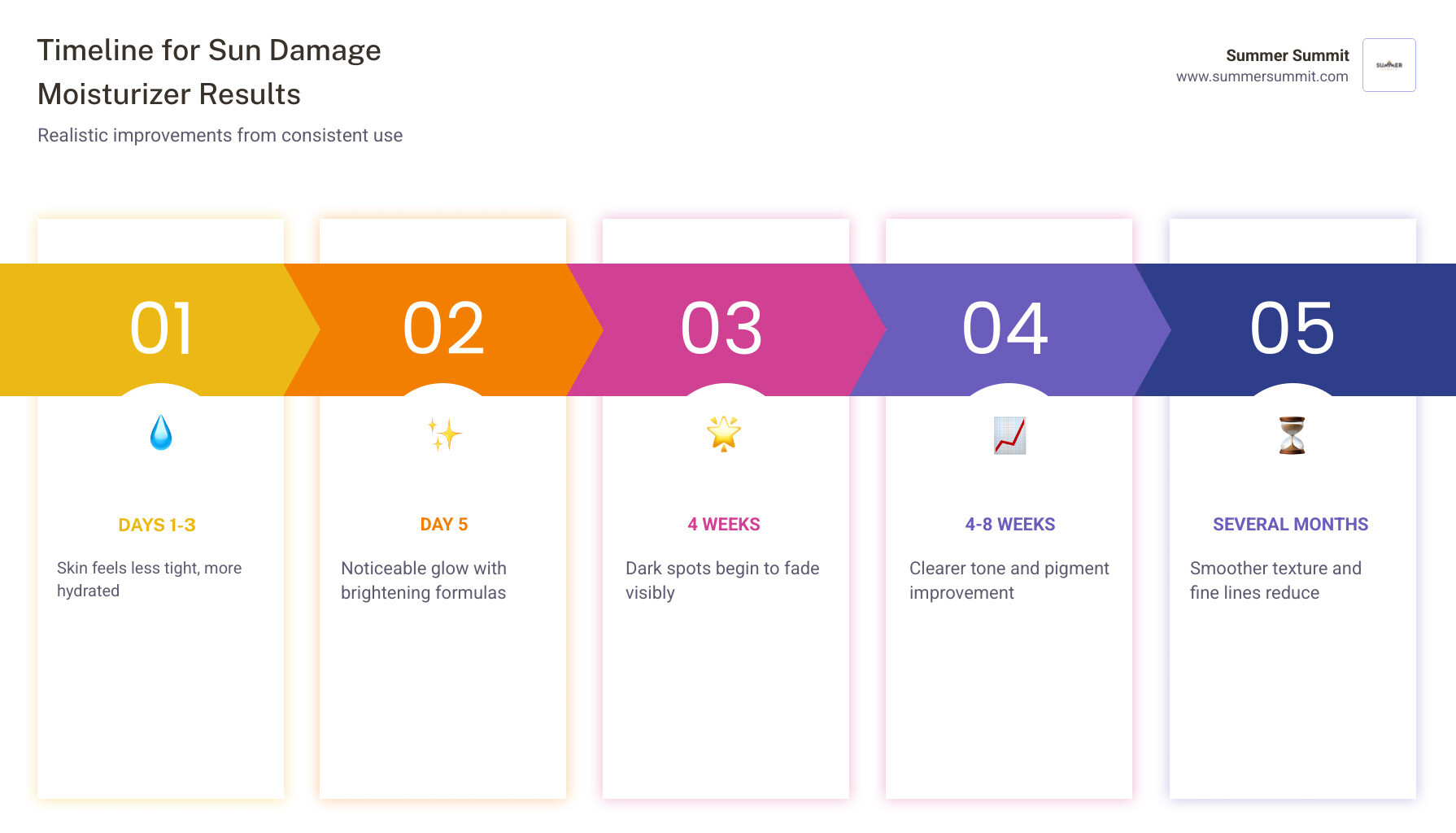
Typical timeline:
- Within days: skin feels less tight, looks more hydrated
- Around 5 days: some people notice more glow with brightening moisturizers
- Around 4 weeks: dark spots may begin to look lighter with targeted formulas
- 4 to 8 weeks: more visible pigment improvement in consistent users
- Several months: texture and fine-line improvement become easier to judge
The stats support this pattern. In recent testing:
- 91% of users in one 180-woman study said their skin looked healthier after 5 days of a vitamin C moisturizer
- Some dark spot moisturizers showed measurable fading in 4 weeks
- A tone-correcting cream study reported visible improvement in 8 weeks
Complementary treatments that pair well with moisturizers
Moisturizer works even better when paired with the right supporting products.
Best pairings include:
- Vitamin C serum in the morning for antioxidant support
- Retinoids at night for texture and fine lines
- Azelaic acid for redness and discoloration
- Gentle exfoliation, used sparingly
- Dedicated sunscreen every day
- Dermatologist evaluation for stubborn pigment or texture changes
If you are unsure whether you are dealing with standard sun spots, post-inflammatory discoloration, or melasma, read our guide on melasma vs. hyperpigmentation.
For stubborn or severe sun damage that does not respond to topical care alone, a board-certified dermatologist can evaluate your skin and recommend a personalized treatment plan.
How to prevent further sun damage while treating existing damage
This part is non-negotiable.
If you keep accumulating UV damage, even a great moisturizer will feel like trying to mop up water while the sink is still overflowing.
Do this consistently:
- Wear broad-spectrum SPF 30+ every day
- Reapply when outdoors
- Use hats and sunglasses
- Seek shade during peak sun hours
- Avoid picking at flaky or peeling skin
- Keep your routine gentle while skin is healing
- Protect year-round, not just in summer
Frequently Asked Questions About the Best Moisturizer for Sun Damage
Can one moisturizer reverse all signs of sun damage?
No. A moisturizer can improve hydration, barrier strength, comfort, and the appearance of texture and fine dehydration lines. Some formulas can also help with dark spots. But deeper wrinkles, major collagen loss, and long-standing discoloration usually need a combination approach.
Is the best moisturizer for sun damage different from a regular anti-aging cream?
Usually, yes. Anti-aging creams often focus heavily on lines and firmness. A sun-damage moisturizer should also address barrier stress, dehydration, sensitivity, and pigment irregularity. In other words, it needs to care about repair, not just appearance.
What if I have oily or acne-prone skin with sun damage?
Choose a lightweight, non-comedogenic, oil-free moisturizer with ingredients like niacinamide, hyaluronic acid, and possibly willow bark. You do not need a thick cream just because you have sun damage. You need the right texture for your skin, plus daily SPF.
Conclusion
The best moisturizer for sun damage is the one that matches both your skin type and your main concern.
If you are dealing with:
- Dryness and tightness, look for ceramides, squalane, oatmeal, and richer creams
- Dark spots, prioritize niacinamide, vitamin C, and antioxidants
- Sensitivity, stick with fragrance-free, soothing, irritant-free formulas
- Oily skin, choose a lightweight gel-cream or lotion with barrier-friendly hydration
Most importantly, remember this: moisturizer helps repair, but sunscreen prevents backsliding. Using one without the other is a little like brushing your teeth while eating caramels all day. Helpful, but not ideal.
At Summer Summit, we believe the best skincare should be clinically informed, dermatologist-formulated, cruelty-free, and free of sulfates, parabens, and harmful irritants. If you want more guidance on building a healthier routine, explore our skin health articles.
Leave a comment