

A Practical Guide to Vitamin C Creams
Why Vitamin C Cream Belongs in Your Daily Skincare Routine
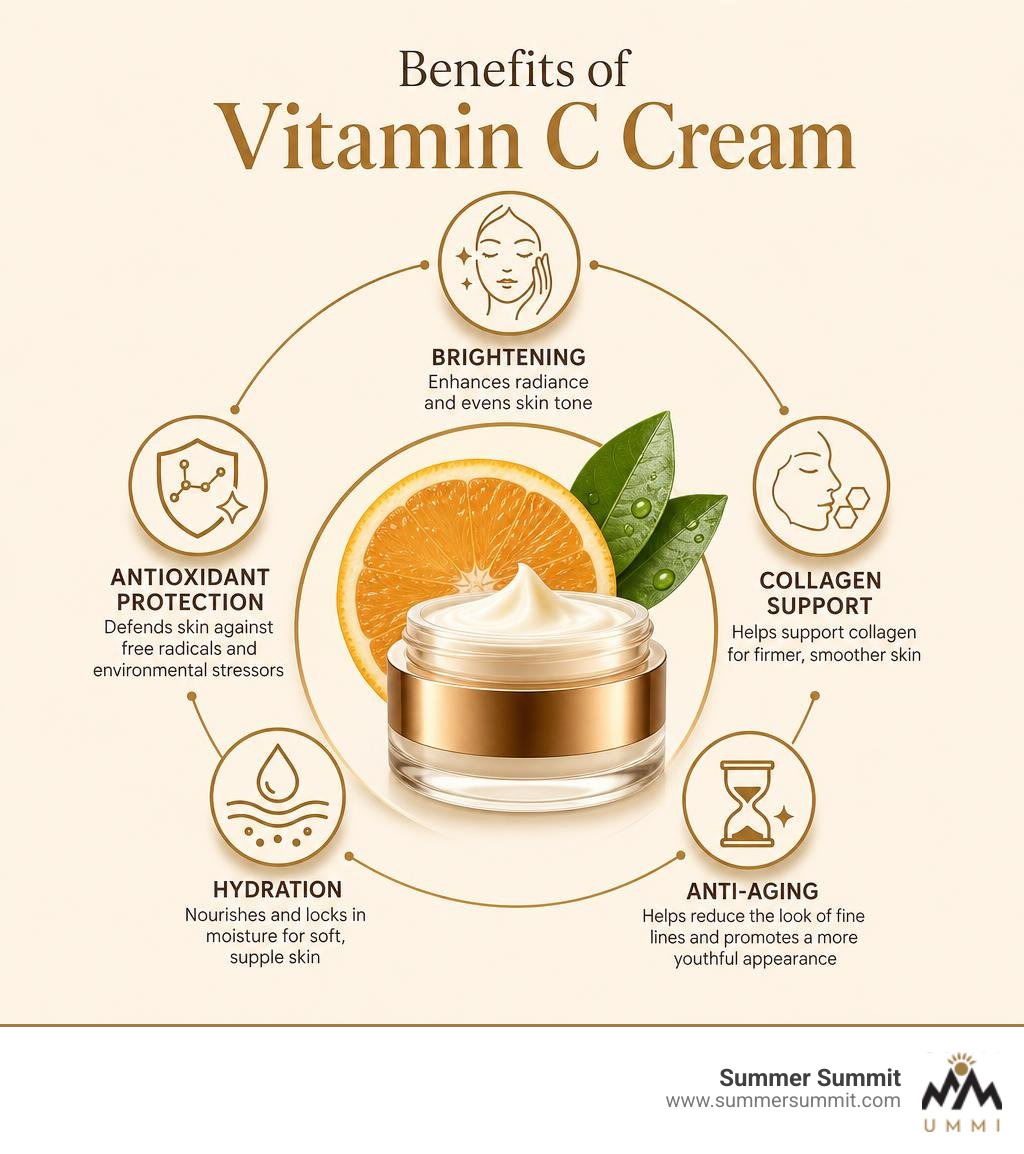
Vitamin C cream is a moisturizer infused with vitamin C that brightens skin tone, fights free radicals, and supports collagen production — all while keeping skin hydrated.
Quick answers:
- What it does: Brightens dull skin, reduces dark spots, fights oxidative damage, and firms over time
- Who it's for: All skin types, including sensitive skin
- When to use it: Morning, as a daily moisturizer before sunscreen
- Key ingredients to look for: Ascorbic acid, niacinamide, bakuchiol, hyaluronic acid, rose hip oil
- Typical results: In one study, 88% of participants saw a brighter complexion after just 4 weeks
If you spend time outdoors — near the beach, in the sun — your skin is constantly dealing with UV exposure, pollution, and oxidative stress. That daily damage adds up. Over time, it shows up as uneven tone, dark spots, and dullness. Vitamin C cream addresses all three at once, making it one of the most practical daily skincare tools available.
Unlike a serum, a vitamin C cream combines the active brightening power of vitamin C with the moisturizing weight of a cream base. That means you get antioxidant protection and hydration in a single step — which matters if you're already juggling a busy routine.
I'm Robert McCann, founder of Summer Summit Skincare, and I've spent years working directly with labs and formulators to understand how active ingredients like vitamin C cream perform across different formulations and skin types. In this guide, I'll walk you through everything you need to know to choose and use one that actually works.
What is a Vitamin C Cream and How Does It Differ from Serums?
When you step into the skincare aisle or browse online, the sheer volume of products can feel overwhelming. You will inevitably find yourself staring at two distinct bottles: a vitamin C serum and a vitamin c cream. What is the actual difference, and why should you care?
To understand how they differ, we have to look at their formulation vehicle.
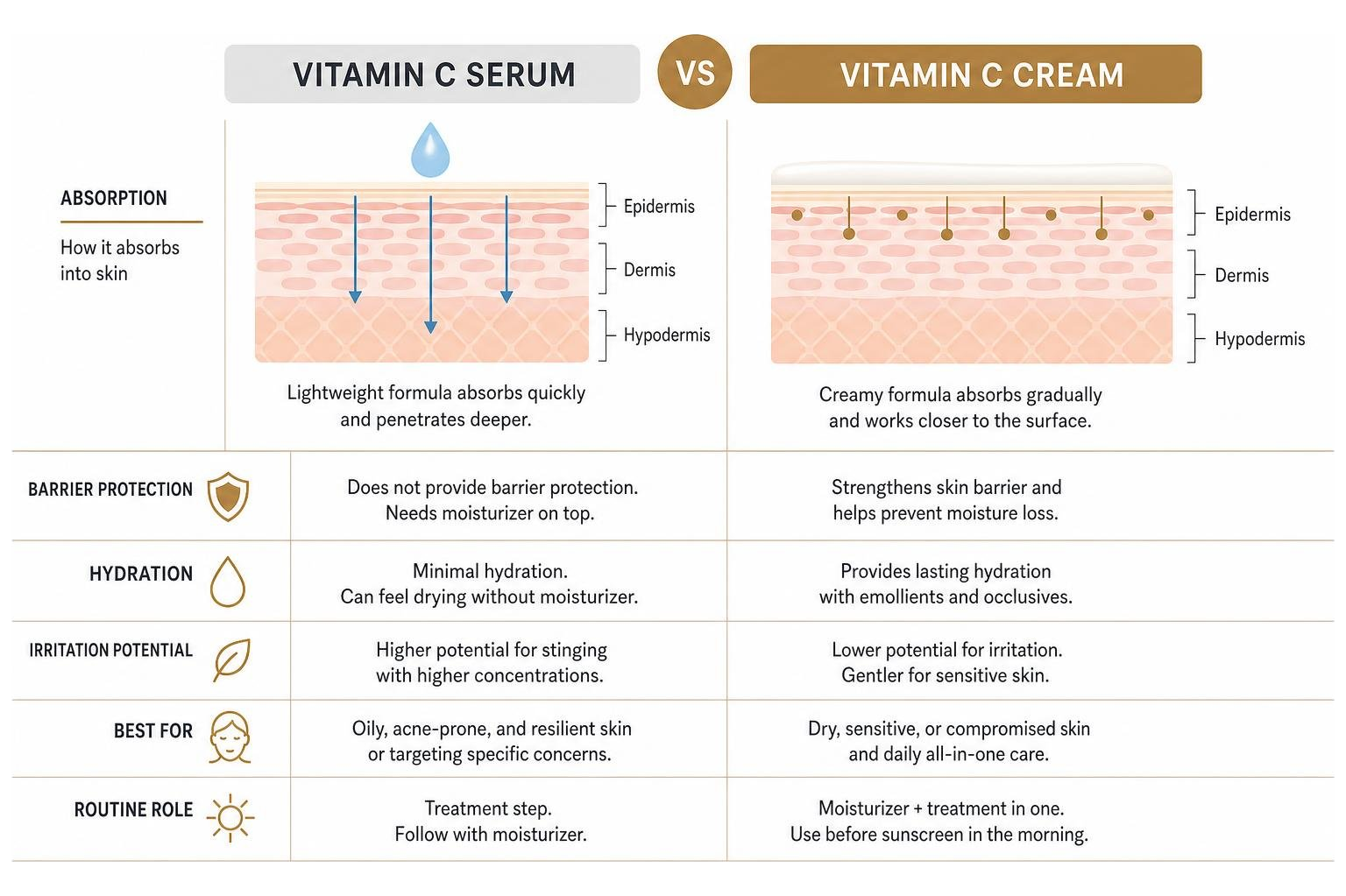
A serum is a lightweight, highly concentrated, water- or oil-based liquid. It is designed to penetrate the skin rapidly and deliver a high dose of active ingredients directly to the deeper layers of the epidermis. However, because they are so lightweight, serums lack the occlusive ingredients required to seal in moisture. If you use a serum, you almost always need to layer a moisturizer over it to prevent your skin's natural moisture from evaporating.
A vitamin c cream, on the other hand, is an emulsion of water and oil. It is inherently moisturizing and formulated with lipids, emollients, and occlusives. This structure allows it to perform a dual function: it delivers the antioxidant benefits of vitamin C while simultaneously reinforcing your skin barrier and preventing transepidermal water loss (TEWL).
For anyone with dry, compromised, or sensitive skin, this distinction is a game-changer. High-concentration vitamin C serums can sometimes cause a stinging sensation because they deliver a rapid, acidic dose of L-ascorbic acid directly to the skin. A cream formula slows down this absorption rate, making it far more tolerable for sensitive complexions.
Choosing between them doesn't have to be an all-or-nothing decision. For example, if you are pregnant, you might be looking for gentle, nourishing alternatives to harsh anti-aging actives. You can learn more about finding the right balance in our guide on choosing a Vitamin C Serum Pregnancy Safe formulation.
If you prefer a lightweight, clean, and organic cream base that nourishes the skin barrier while delivering daily brightening, choosing a formula rich in botanical oils and clean ingredients is an excellent way to elevate your skin's performance.
The Key Benefits of Vitamin C Creams for Skin Health

The skin is our primary shield against the outside world. Every single day, it battles environmental aggressors like ultraviolet (UV) radiation from the sun and microscopic particles of pollution. These aggressors generate unstable molecules called free radicals, which steal electrons from healthy skin cells, leading to collagen breakdown, premature aging, and hyperpigmentation.
This is where the antioxidant power of a vitamin c cream comes to the rescue. By donating an electron to these unstable free radicals, vitamin C neutralizes them before they can cause cellular damage.
Beyond its role as a defensive shield, incorporating a vitamin C cream into your routine offers several remarkable benefits:
- Boosts Collagen Synthesis: Collagen is the structural scaffolding that keeps our skin firm, plump, and youthful. As we age, our natural collagen production slows down. Vitamin C is an essential co-factor for the enzymes responsible for stabilizing and cross-linking collagen molecules. Without it, the body cannot effectively produce new collagen.
- Deep, Lasting Hydration: Cream formulations are packed with moisturizing agents that lock in hydration. In clinical evaluations of high-performance vitamin C creams, the hydration benefits are clear: 100% of volunteers in a 28-day study felt their skin was significantly more hydrated after daily use of a premium C+C vitamin cream.
- Visible Rejuvenation: Regular application helps restore a bouncy, youthful texture to tired skin. In that same 28-day clinical study, 91% of volunteers noticed their skin looked visibly younger and felt revitalized.
- Synergistic Antioxidant Protection: When combined with other antioxidants like Vitamin E, the protective benefits multiply. Vitamin C regenerates spent Vitamin E, creating a continuous loop of antioxidant defense. You can read more about this powerful synergy in our article on Vitamin C And E Together In A Serum.
These incredible benefits are why vitamin C formulations have been celebrated by beauty experts for decades. For instance, top-tier formulations have historically taken home prestigious accolades, such as the 2015 Tatler Beauty Award for Best Day Cream, proving that the industry recognizes the profound impact of a well-formulated vitamin C moisturizer.
How Vitamin C Cream Targets Brightening, Anti-Aging, and Hyperpigmentation
If you struggle with dark spots, sun damage, or a generally dull complexion, a vitamin c cream is one of the most effective tools you can use. But how does it actually transform your skin's appearance at a microscopic level?
The secret lies in its ability to regulate melanin production. Melanin is the pigment that gives our skin its color. When your skin is exposed to UV light or suffers from inflammation (like an acne breakout), an enzyme called tyrosinase is activated. This enzyme triggers the overproduction of melanin, resulting in dark spots, sun spots, and melasma.
Vitamin C is a natural tyrosinase inhibitor. By blocking this enzyme's activity, it prevents the chemical pathway that leads to excess pigmentation. Over time, existing dark spots fade away, and new ones are prevented from forming.
At the same time, vitamin C accelerates cellular turnover. By gently encouraging the skin to shed dead, pigmented surface cells, it reveals the fresher, more evenly pigmented skin underneath.
The clinical data supporting these effects is incredibly compelling:
- In a 4-week clinical study of participants using a 10% vitamin C cream, 88% of participants saw a visibly brighter, more even complexion.
- In a separate 28-day study, 91% of volunteers reported that their skin looked significantly more luminous and radiant.
- Because of these dramatic brightening capabilities, advanced formulations have earned major industry recognition, including the 2023 SELF Healthy Beauty Awards for Best Brightening Moisturizer.
To maximize these brightening effects, many people choose to combine vitamin C with other targeted botanical brighteners. For a deep dive into how these ingredients work together to clear up stubborn discoloration, check out our Vitamin C The Powerful Skin Brightening Agent guide.
Additionally, if you are looking for a highly restorative option that pairs vitamin C with nourishing botanical extracts to target deep wrinkles and sun damage, selecting a well-formulated revitalizing face cream is an excellent way to let modern skincare science revitalize mature skin.
Key Ingredients to Look For in a Vitamin C Cream
Not all vitamin C creams are created equal. The efficacy of your cream depends entirely on the specific form of vitamin C used, its concentration, and the supporting ingredients in the formula. To find a cream that delivers real results, you need to know how to read the ingredient label.
Active Forms of Vitamin C in a Vitamin C Cream
When you look at the back of a skincare bottle, you will rarely just see the words "Vitamin C." Instead, you will see one of several chemical derivatives. Each has its own unique strengths, stability profile, and absorption rate:
- L-Ascorbic Acid: This is pure vitamin C. It is incredibly potent and highly effective, but it has a major drawback: it is highly unstable. When exposed to light, air, and water, L-ascorbic acid oxidizes rapidly, turning a dark orange color and losing its effectiveness. It also requires a low, acidic pH to penetrate the skin, which can cause irritation for sensitive skin types.
- Tetrahexyldecyl Ascorbate (THD Ascorbate): This is a cutting-edge, fat-soluble derivative of vitamin C. Because our skin's outer barrier is lipid-based, THD ascorbate penetrates much deeper and more easily than water-soluble forms. It is exceptionally stable, does not oxidize easily, and is incredibly gentle on sensitive skin.
- Sodium Ascorbyl Phosphate (SAP): A stable, water-soluble derivative that is particularly beneficial for acne-prone skin due to its natural antimicrobial properties.
- Magnesium Ascorbyl Phosphate (Mag-C): A highly stable derivative known for its anti-inflammatory properties. Mag-C is excellent at neutralizing hyperpigmentation while soothing redness and irritation.
For those interested in exploring highly stable, professional-grade derivatives that deliver a fresh glow without the risk of rapid oxidation, modern cosmetic chemistry has made it possible to keep these active molecules stable and effective.
Synergistic Ingredients in a Vitamin C Cream
While vitamin C is a superstar on its own, it performs best when surrounded by a supporting cast of synergistic ingredients. When formulating our products, we look for ingredients that enhance vitamin C's performance, soothe the skin, and provide deep hydration:
- Niacinamide (Vitamin B3): This powerhouse ingredient works beautifully alongside vitamin C to improve skin elasticity, strengthen the skin barrier, and double down on reducing hyperpigmentation.
- Bakuchiol: Known as nature's retinol alternative, bakuchiol stimulates cell turnover and smooths fine lines without the dryness or peeling associated with traditional retinoids.
- Hyaluronic Acid & Squalane: These ingredients act as moisture magnets, drawing hydration deep into the skin and sealing it there to keep the complexion plump and dewy.
- Ceramides & Lactic Acid: Lactic acid gently exfoliates the skin surface while encouraging natural ceramide production, reinforcing the protective barrier.
- Rose Hip Seed Oil & Green Tea Extract: Rich in natural antioxidants and fatty acids, these botanicals nourish dry skin and provide an extra layer of defense against environmental stressors.
- European Green Clay & Spanish Rosemary: These unique ingredients help purify oily and combination skin, balancing sebum production while delivering antioxidant protection.
If you want to take your brightening routine to the absolute next level, combining vitamin C with other targeted brightening agents like kojic acid is incredibly effective. To learn how to safely layer these active ingredients, read our comprehensive Kojic Acid and Vitamin C Cream guide.
How to Incorporate Vitamin C Cream Into Your Daily Skincare Routine

To get the absolute most out of your vitamin c cream, you need to apply it in the correct order. Skincare application follows a simple golden rule: apply your products from thinnest consistency to thickest consistency.
Because a cream is thicker than a toner or a serum, it should be applied toward the end of your routine to lock in all the goodness underneath.
Your Step-by-Step Morning Routine:
- Cleanse: Start with a gentle, sulfate-free cleanser to wash away oil and sweat from the night.
- Tone: Apply a hydrating toner to prep your skin and balance its pH.
- Serum (Optional): If you use a targeted treatment serum (like a hyaluronic acid or peptide serum), apply it now and let it absorb.
- Vitamin C Cream: Smooth a nickel-sized amount of your vitamin c cream over your face, neck, and chest. Massage it gently in upward, circular motions.
- Sunscreen: This is the most crucial step! Vitamin C and sunscreen are best friends. Vitamin C neutralizes the free radicals that slip past your sunscreen, while sunscreen prevents UV rays from degrading the vitamin C on your skin. Always finish with a broad-spectrum SPF 30 or higher.
Which Skin Types Benefit Most?
- Dry Skin: Extremely beneficial. The rich, lipid-based cream base prevents flaking and locks in moisture all day.
- Combination/Normal Skin: Helps balance oil production while keeping drier areas hydrated and bright.
- Sensitive Skin: A fantastic alternative to high-strength serums, as the cream base buffers the active vitamin C, preventing irritation.
- Oily Skin: Look for lightweight, oil-free "cream-gel" formulations that absorb quickly without leaving a greasy residue.
Morning vs. Night Application: Which is Best?
| Aspect | Morning Application | Night Application |
|---|---|---|
| Primary Goal | Protection against UV rays, pollution, and daily oxidative stress. | Repair, cellular recovery, and deep overnight hydration. |
| Product Synergy | Pairs perfectly with SPF to multiply sun protection. | Pairs well with hydrating oils and barrier-repairing ceramides. |
| Texture Preference | Lightweight, non-greasy creams that sit well under makeup. | Richer, thicker creams that can deeply nourish the skin overnight. |
Frequently Asked Questions about Vitamin C Creams
Navigating active skincare ingredients can raise a lot of questions. Here are the answers to the most common questions we hear about using a vitamin c cream.
Can I combine vitamin C cream with retinol or niacinamide?
Yes, but you need to be smart about how you do it.
Niacinamide and vitamin C can absolutely be used together. In fact, they make a fantastic pair for tackling stubborn hyperpigmentation. Modern formulations often combine them in a single bottle to deliver a double dose of brightening power.
Retinol, however, is a different story. Retinol works best at a neutral pH, while pure vitamin C (L-ascorbic acid) requires a low, acidic pH to penetrate the skin. Applying them at the exact same time can destabilize both ingredients and lead to severe skin irritation, redness, and peeling.
To get the benefits of both safely, we recommend a "split routine": use your vitamin c cream in the morning to protect your skin, and save your retinol for your nighttime routine to rebuild and repair. Also, avoid using strong chemical exfoliants (like AHAs and BHAs) in the same step as your vitamin C to keep your skin barrier happy and healthy.
Are there any side effects or precautions when using vitamin C cream?
While vitamin C is generally very safe, some people may experience mild side effects, especially when starting a new product. These can include a slight tingling sensation, temporary redness, or mild itching.
To minimize the risk of irritation, we always recommend performing a patch test. Apply a small amount of the cream to your inner forearm or the side of your neck and wait 24 hours to see how your skin reacts.
Another major precaution is oxidation. Because vitamin C is highly sensitive to light and air, look for creams packaged in airless pump bottles or opaque, airtight tubes. Avoid jars where you have to constantly scoop the product out with your fingers, as this exposes the cream to oxygen and bacteria, causing it to lose its potency quickly.
How do different brands compare in price and performance?
When shopping for a vitamin c cream, you will find products ranging from drugstore options to luxury department store jars.
While luxury brands often feature beautiful glass packaging and elegant scents, high price doesn't always equal high performance. What matters most is the stability of the vitamin C derivative used, the concentration percentage (typically between 10% and 20% is ideal), and the absence of harmful irritants like synthetic fragrances, parabens, and sulfates.
For a complete, unbiased breakdown of how to choose a high-quality formula that fits your budget and skin needs, check out our comprehensive Kojic Acid Vitamin C Cream Complete Guide (also available in our Spanish Edition Guide for our Spanish-speaking community).
Conclusion
A high-quality vitamin c cream is one of the most practical, effective investments you can make for your skin's long-term health and radiance. By combining the deep hydration of a moisturizer with the protective, brightening power of an antioxidant, it simplifies your routine while delivering visible results.
At Summer Summit, we believe that skincare should be clean, effective, and completely stress-free. Our dermatologist-formulated products are proudly cruelty-free and entirely free of sulfates, parabens, and harmful irritants. We are so confident you will love how your skin looks and feels that we back every single order with a 100% satisfaction guarantee, along with free shipping directly to your door.
Ready to unlock your most radiant, glowing complexion yet? Discover the ultimate guide to pairing your vitamin C with other powerful brighteners by exploring our Kojic Acid and Vitamin C Cream collection today!
Leave a comment