

Step-by-Step Guide to Sun Face Cream
Why Choosing the Right Sun Face Cream Matters More Than You Think
Finding a great sun face cream doesn't have to be complicated — here are the top options to consider:
| Product Type | Best For | SPF Level | Key Benefit |
|---|---|---|---|
| Mineral cream | Sensitive/acne-prone skin | SPF 50 | Zinc oxide, no irritation |
| Chemical cream | Daily wear under makeup | SPF 50 | Lightweight, no white cast |
| Hybrid cream/moisturizer | Dry or mature skin | SPF 50 | Hydration + protection in one |
| Gel formula | Oily/normal skin | SPF 50 | Matte finish, fast-absorbing |
| After-sun face cream | Post-sun recovery | None | Restores and rehydrates |
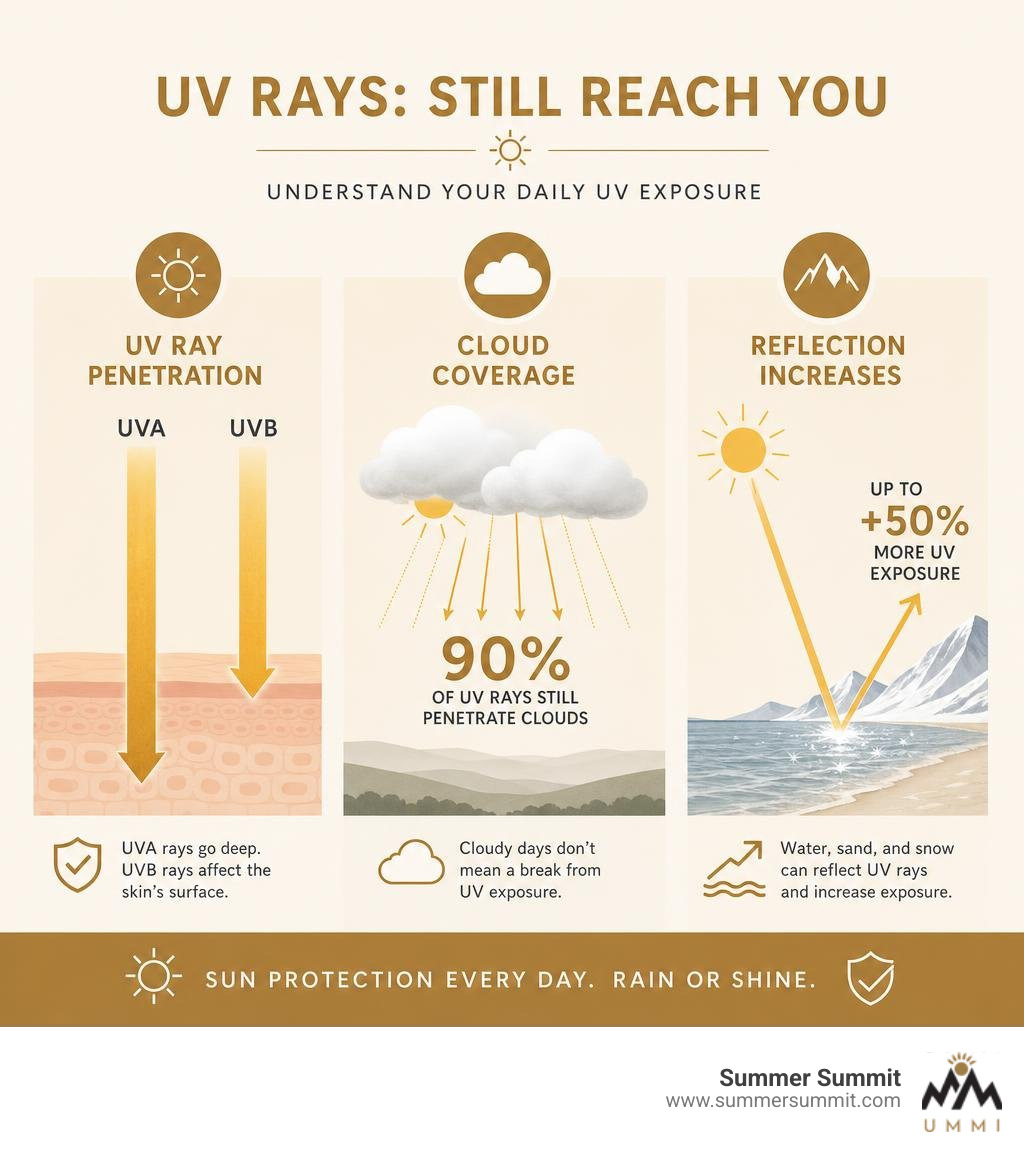
Here's something most people don't think about on a cloudy day: 90% of UV rays still penetrate cloud cover. And if you're near water or snow, reflections can boost your UV exposure by up to 50%.
That means sun protection isn't just a beach-day habit. It's a daily necessity — especially for your face, which takes the most direct exposure.
The problem? Most people either skip sunscreen entirely or grab a moisturizer with a low SPF and assume they're covered. They're usually not.
A proper sun face cream does two things at once: it shields your skin from both UVA and UVB rays, and it delivers the hydration and skin-care actives your face actually needs. Getting that balance right is what separates a product you'll actually use from one that ends up half-full at the back of your cabinet.
I'm Robert McCann, founder of Summer Summit Skincare, and I've spent years working directly with labs and formulators to understand what makes a sun face cream genuinely effective versus just well-marketed. In this guide, I'll break down exactly what to look for so you can make a confident, evidence-based choice.
Daily SPF Moisturizer vs. Dedicated Sun Face Cream
Many of us want to streamline our morning routines. It is incredibly tempting to reach for a single, multi-tasking bottle and call it a day. However, relying solely on your standard daily moisturizer with a splash of SPF might be leaving your skin vulnerable to long-term damage.
To truly understand why, we need to look at how these products are formulated. Spending time in the sun increases your risk of skin cancer and early skin aging. To decrease this risk, we must regularly use a sunscreen with a Broad Spectrum SPF value of 15 or higher—and ideally SPF 30 or higher for extended exposure.
When you use a dedicated sun face cream, you are applying a product engineered primarily to form an even, resilient shield over your skin. If you are curious about why skipping this step is so risky, check out our guide on the 5 Compelling Reasons to Use Sunscreen Every Day.

Key Differences Between Daily Moisturizers and Sun Face Cream
The primary difference lies in the formulation's core objective. A daily moisturizer is designed to penetrate the outer layers of the skin to deliver hydrating agents, lipids, and active ingredients. Because its main goal is absorption, the SPF filters added to it are often diluted or distributed unevenly once rubbed into the skin.
Conversely, a dedicated sun face cream is formulated to sit on top of the skin as a uniform protective film. While modern, high-quality sun face creams certainly contain hydrating elements, their emulsion structure is optimized to keep the UV filters suspended evenly across the surface.
If you rely on a basic moisturizer with SPF, you would likely need to apply three to four times the normal amount to achieve the actual SPF rating listed on the bottle. To explore how to balance these two steps in your morning routine, read more about Day Cream Sun Protection.
How to Choose the Right SPF and Broad-Spectrum Protection
When shopping for a sun face cream, you will see a variety of numbers and ratings. Let's demystify what they actually mean:
- UVB vs. UVA: UVB rays are responsible for sunburns and surface-level damage, while UVA rays penetrate deeper, causing premature aging, wrinkles, and dark spots.
- The SPF Rating: This system measures protection against UVB rays. For example, a sunscreen with a rating of SPF 30 allows only 3 photons per 100 to penetrate the skin, meaning it shields approximately 97% of the sun’s harmful UVB rays. An SPF 50 blocks about 98%, and SPF 70 blocks roughly 98.5%.
- Broad-Spectrum: This label guarantees the formula protects against both UVA and UVB rays.
- PA++++ Rating: Popularized by Asian skincare standards, the "Protection Grade of UVA" (PA) system measures UVA defense. A PA++++ rating represents the absolute highest level of UVA protection available.
For those who want a deeper dive into how these ratings translate to real-world protection, our article on Face Sun Tan Lotion breaks down the science of sun defense.
Mineral vs. Chemical Filters for Sensitive and Acne-Prone Skin
One of the most common debates in skincare is whether to use mineral (physical) or chemical UV filters. Both have their place, but depending on your skin type, one will likely perform much better for you.
| Feature | Mineral Filters (Physical) | Chemical Filters |
|---|---|---|
| Active Ingredients | Zinc Oxide, Titanium Dioxide | Avobenzone, Homosalate, Octisalate, Octocrylene |
| How They Work | Sit on top of skin; reflect and scatter UV rays | Absorb into skin; convert UV rays into harmless heat |
| Skin Sensitivity | Extremely gentle; ideal for eczema, rosacea, and baby skin | Can occasionally cause mild irritation or stinging on sensitive skin |
| Texture & Finish | Historically thicker; can leave a white cast if not formulated well | Typically lightweight, clear, and easy to layer under makeup |
| Application Timing | Protects immediately upon application | Requires 15 to 20 minutes to fully absorb and become active |
If you struggle with redness, irritation, or breakouts, choosing the wrong filter can set your skin journey back weeks. For a curated list of gentle options, see our guide on the Best Sun Creams for Sensitive Skin.
Zinc Oxide and Physical Blockers
Mineral sunscreens rely on natural earth minerals—specifically zinc oxide and titanium dioxide—to protect your skin. Zinc oxide is widely considered the gold standard of mineral protection because it blocks the widest spectrum of both UVA and UVB light.
These physical blockers sit on top of the skin's surface, acting like tiny mirrors that reflect and scatter incoming solar radiation. Because they do not penetrate the skin barrier or convert UV light into heat within the dermis, they are incredibly soothing. If you have active acne, rosacea, or highly sensitive skin, mineral formulas are your safest bet. To learn more about how this powerhouse mineral supports your skin barrier, check out our deep dive into Zinc Oxide and Your Skincare.
Chemical Filters and Skin Sensitivity
Chemical sunscreens use organic carbon-based compounds such as avobenzone, homosalate, octisalate, and octocrylene. These filters work like a sponge, absorbing UV rays, converting them into heat, and releasing that heat from the skin.
Because chemical filters are highly soluble, they allow for incredibly elegant, thin, and completely transparent formulas. They are perfect for oily skin types or those who hate the feeling of heavy creams. However, because the chemical reaction occurs directly within the skin, it can sometimes trigger irritation, redness, or heat-induced breakouts in ultra-sensitive individuals.
If you are looking for local dermatological advice regarding skin sensitivities or professional skin treatments in Florida, we recommend consulting experts like the Sun City Center Botox Skin Care Dermatologist Clinic to find a routine tailored to your skin's unique needs.
Essential Ingredients for Hydration, Anti-Aging, and Brightening
A premium sun face cream should do more than just block the sun; it should actively work to improve your skin's health throughout the day. By combining UV filters with advanced skincare actives, you can target photoaging, dehydration, and dark spots all at once.

When UV rays hit your skin, they generate free radicals—unstable molecules that break down collagen and damage skin cells. This process is the primary cause of dark spots, fine lines, and loss of elasticity. To combat this, look for formulas that enrich your skin barrier. For recommendations on restoring your skin's natural vitality, explore our article on the Best Moisturizer for Sun Damage.
Active Ingredients to Seek in a Premium Sun Face Cream
When scanning the ingredient list of your next sun face cream, look for these proven dermatological powerhouses:
- Hyaluronic Acid: A moisture-binding humectant that can retain over 1,000 times its weight in water, keeping your skin plump and hydrated under the drying sun.
- Peptides: Short chains of amino acids that signal your skin to produce more collagen. Advanced formulations sometimes include specialized DNA-DEFENSE peptides, which actively help protect skin cells from premature photoaging.
- Squalane: A lightweight lipid that mimics your skin's natural sebum, balancing moisture levels without clogging pores.
- Niacinamide (Vitamin B3): A multitasking vitamin that strengthens the skin barrier, reduces redness, regulates oil production, and fades hyperpigmentation.
- Vitamin B5 (Panthenol): Deeply hydrates, soothes irritation, and helps restore skin elasticity after UV exposure.
For more expert advice on building a clean, highly effective daily skincare routine, browse our Summer Summit Skincare Guides.
Brightening Agents to Combat Dark Spots
One of the most common side effects of sun exposure is hyperpigmentation, often referred to as sun spots or dark spots. When UV rays trigger melanin production, it can leave the complexion looking uneven.
To prevent and reverse this, look for sun face creams infused with brightening agents. Vitamin C is an exceptional antioxidant that neutralizes free radicals and inhibits the enzyme responsible for excess melanin production. Additionally, botanical extracts like hop extract have been clinically shown to target dark spots and promote a more even skin tone.
To learn more about how to integrate these brightening powerhouses into your routine, read our guide on Vitamin C The Powerful Skin Brightening Agent, or explore the Best Face Cream to Reverse Sun Damage.
Step-by-Step Application and Reapplication Guide
Even the most advanced, expensive sun face cream in the world won't protect your skin if it is applied incorrectly. To get the full SPF protection promised on the bottle, you need to follow a few simple, non-negotiable rules.
Proper application ensures you don't miss hidden spots like your hairline, ears, and neck. For a complete look at keeping your skin glowing all season long, read our Tips for Summer Skincare Keeping Your Skin Healthy and Radiant.
How to Apply for Full Coverage Without a White Cast
To achieve the laboratory-tested SPF rating, you need to apply approximately two-finger lengths of sunscreen to your face and neck. Here is how to apply it flawlessly without looking like a ghost or feeling greasy:
- Prep Your Skin: Wash your face and apply your daily serums. Let them dry completely for 1 to 2 minutes.
- Dot and Disperse: Instead of rubbing a giant glob of cream between your palms and smearing it on all at once, dot the cream evenly across your forehead, cheeks, nose, chin, and neck.
- Massage in Sections: Work on one area at a time. Use light, upward circular motions to massage the cream into the skin.
- Press and Set: Once the cream is distributed, gently press your warm palms against your face. This helps set the formula, minimizing any temporary white cast and leaving a smooth, non-comedogenic finish.
- Let it Dry: Wait 15 minutes before applying makeup to allow the protective barrier to fully form.
Reapplication Rules and Water Resistance
Sunscreen is not a "one-and-done" step. The UV filters in your cream break down over time as they absorb solar energy, and they can easily be rubbed off by sweat, water, or towels.
- The Two-Hour Rule: You must reapply your sun face cream at least every two hours of continuous sun exposure.
- Water Resistance: If you are swimming or sweating, look for a formula labeled "water-resistant." Under FDA standards, these formulas are tested to maintain their SPF protection for either 40 or 80 minutes while in the water.
- Towel Drying: The moment you rub your face with a towel, you wipe away your sunscreen barrier. Reapply immediately after towel drying, regardless of how long it has been since your last application.
For detailed official guidance on sunscreen safety and standards, you can review the FDA Sunscreen Guidelines.
Frequently Asked Questions About Sun Face Cream
Which sun face creams carry the Skin Cancer Foundation Seal?
The Skin Cancer Foundation awards its prestigious Seal of Recommendation to sun protection products that meet strict safety and efficacy criteria. To earn the seal, a manufacturer must submit clinical data proving their product sufficiently blocks both UVA and UVB rays without causing adverse skin reactions. This data is rigorously reviewed by an independent, volunteer Photobiology Committee.
Many dermatologist-recommended mineral and chemical sunscreens carry this seal. For a complete, searchable database of approved sunscreens and sun-protective apparel, visit the official Skin Cancer Foundation Seal of Recommendation directory.
How do sun face creams prevent photoaging and skin cancer?
Sun face creams act as a physical or chemical barrier that prevents UV radiation from penetrating the delicate cellular structure of your skin. By blocking UVB rays, they prevent direct DNA damage that can lead to skin cancers like melanoma and basal cell carcinoma. By blocking UVA rays, they prevent the destruction of collagen and elastin fibers (photoaging).
Advanced formulas also utilize antioxidants and DNA-DEFENSE peptides to help neutralize any free radicals that manage to slip past the surface barrier, providing a second layer of defense.
What makes a sun face cream water-resistant, and how long does it last?
Water resistance is achieved by adding specialized polymers and water-insoluble ingredients (such as specific oils or silicones) to the emulsion. These ingredients help the formula adhere tightly to the skin, preventing it from washing away immediately when exposed to moisture.
By law, products cannot be labeled "waterproof" or "sweatproof" because all sunscreens eventually wash off. Instead, they are rated for either 40 minutes or 80 minutes of water resistance. Once that time limit is up, or immediately after you dry off with a towel, you must reapply.
If you have questions about choosing a gentle, ocean-friendly formula that respects the environment while keeping you protected, look for mineral-based formulations that utilize non-nano zinc oxide. Additionally, physical sun blocks enriched with botanical extracts can offer excellent protection while nourishing the skin barrier.
Conclusion
Taking care of your skin doesn't stop at cleansing and moisturizing. Investing in a high-quality, daily sun face cream is the single most effective step you can take to prevent premature aging, dark spots, and skin cancer.
At Summer Summit, we are dedicated to developing premium, clinically proven skincare products designed to protect and revitalize your skin. Our dermatologist-formulated products are 100% cruelty-free and entirely free of sulfates, parabens, and harmful irritants. We back every bottle with a 100% satisfaction guarantee and offer free shipping to make your skincare journey as seamless as possible.
Ready to elevate your daily routine? Explore Summer Summit Skincare Guides today to find the perfect formulas for your healthiest, most radiant skin yet.
Dejar un comentario