

Don't Get Roasted with These Top Rated Face Sunscreens
Why Your Face Needs More Than Just Regular Sunscreen
Choosing the right face sun tan lotion is one of the most important skincare decisions you can make — and one that most people get wrong.
Quick answer: What are the top-rated face sun tan lotions?
| Skin Type | Best Formula | Minimum SPF |
|---|---|---|
| Daily / all skin types | Lightweight SPF lotion | SPF 50 |
| Oily / combo | Clear gel, matte finish | SPF 50 |
| Sensitive | Mineral (zinc oxide) | SPF 30+ |
| Dry | Hydrating SPF moisturizer | SPF 50 |
| Acne-prone | Oil-free, non-comedogenic | SPF 30+ |
| Under makeup | Invisible, primer-effect SPF | SPF 45+ |
| Outdoor / beach | Water-resistant mineral SPF | SPF 30+ |
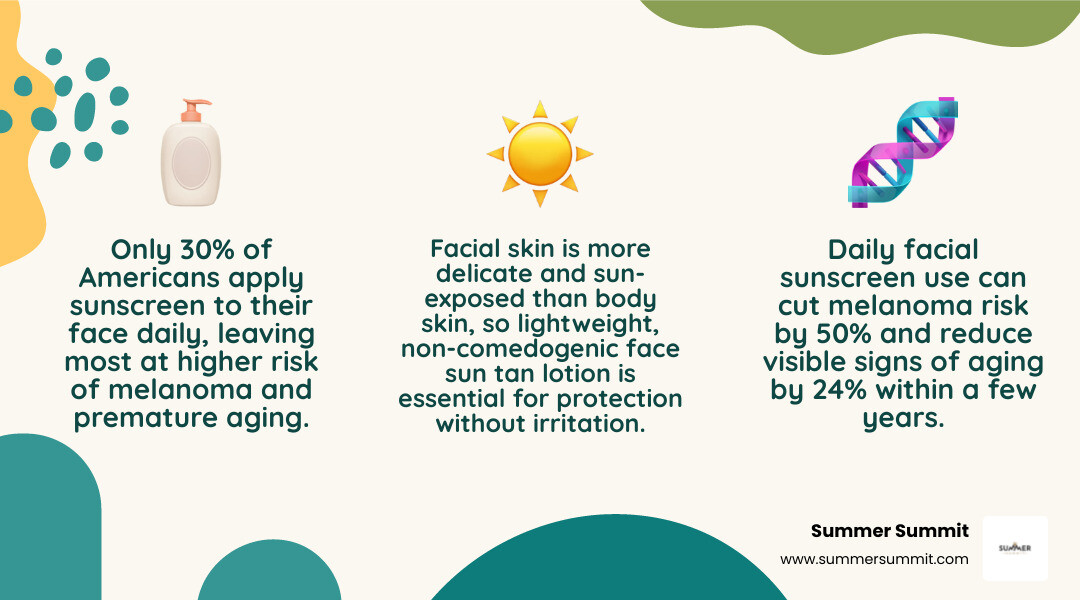
The face is one of the most sun-exposed parts of your body — and also the most prone to irritation. Yet only about 30% of Americans regularly apply sunscreen to their face. That gap matters. Regular sunscreen use can cut your melanoma risk by 50% and reduce visible signs of aging by 24% over just a few years.
The problem is most people either skip it, use the wrong formula, or don't apply nearly enough. Body sunscreens are often too heavy, pore-clogging, or irritating for facial skin. And with hundreds of options on the market making big claims, it's hard to know what actually works.
That's what this guide is for.
I'm Robert McCann, founder of Summer Summit Skincare, and I've spent years working directly with labs and formulators to understand how sunscreen actives work — including what separates a truly effective face sun tan lotion from one that just looks good on the shelf. I'll walk you through the top picks for every skin type, what ingredients to look for, and how to apply them correctly so your skin is actually protected.
What to Know Before You Buy a Face Sun Tan Lotion
Before we get into the roundup, let's clear up a common confusion: face sun tan lotion usually refers to facial sunscreen, not a product meant to help you tan. A good facial SPF is designed to reduce UV damage, limit burning, help prevent uneven pigmentation, and lower long-term skin cancer risk.
It should also be comfortable enough to wear every day. That matters more than people think, because the best sunscreen is the one you'll actually use instead of leaving in a beach bag until next July.
What is face sun tan lotion and how is it different from body sunscreen?
Facial sunscreen is made for thinner, more reactive skin. Compared with many body sunscreens, it is often:
- Lighter in texture
- Less greasy
- More likely to be non-comedogenic
- Better under makeup
- Less likely to sting eyes or clog pores
Many facial formulas also double as a moisturizer or primer. That can make daily use easier, especially if your morning routine already feels crowded.
Body sunscreens are not automatically bad for the face, but they are often optimized for larger surface area, not cosmetic elegance. In plain English: great for shoulders, less great for your T-zone.
Another difference is finish. Face SPFs are more likely to come in dewy lotions, clear gels, tints, serums, matte fluids, and mineral blends designed to disappear more gracefully on skin.
Why daily facial sun protection matters more than most people think
Daily sun protection is not just about avoiding a lobster-red vacation photo.
Ultraviolet UVA rays contribute to collagen breakdown, wrinkles, sagging, and dark spots. UVB rays are the main sunburn culprits. Both can damage skin and raise skin cancer risk. UV exposure also happens year-round, and UVA can come through window glass while you're indoors or driving.
The stats are hard to ignore:
- Regular sunscreen use with SPF 30 or higher can reduce melanoma risk by 50%
- Daily sunscreen use can reduce visible aging by 24% over 4.5 years
- Only about 30% of Americans regularly use sunscreen on their face
That gap is exactly why we talk so much about prevention. If you want more background, our guide on 5 compelling reasons to use sunscreen every day goes deeper.
What SPF level should you choose for your face?
For most people, SPF 30 is the minimum worth considering for daily facial use, but SPF 50 is usually the smarter target.
Why? Because people routinely under-apply sunscreen. In real life, a higher SPF helps create a buffer when your application isn't perfect. SPF 50 is especially useful if you:
- Spend long stretches outdoors
- Live in intense sun
- Sweat easily
- Want more margin for missed spots
- Are using actives that make skin more sun-sensitive
Whatever SPF you choose, it should be labeled broad-spectrum so it covers both UVA and UVB. And no, SPF 100 is not permission to ignore reapplication. The two-hour rule still applies during active sun exposure.
10 Top Rated Face Sun Tan Lotion Picks for Every Skin Type
This roundup focuses on formula type and use case first, because that's how people really shop. If a sunscreen feels awful, even the best active ingredients won't save your routine.
Best overall face sun tan lotion for daily wear
A lightweight SPF 50 face lotion is the safest all-around recommendation for most people. We like this category because it balances high protection with daily comfort.
A strong daily formula in this category should offer:
- Broad-spectrum SPF 50
- Lightweight, watery texture
- Fragrance-free wear
- A dewy finish
- Daily-routine compatibility as the last skincare step
This style works especially well for normal to dry skin and for anyone who wants moisturizer-plus-SPF simplicity.
Best matte option for oily or combo skin
If your forehead gets shiny by 10 a.m., a clear gel or lightweight matte sunscreen is often a better choice than a cream.
Look for:
- SPF 50
- Non-comedogenic labeling
- Oil-free or lightweight gel texture
- Fast absorption
- Matte or velvet finish
Gel-based facial sunscreens are often easier for oily or combination skin because they feel less heavy and tend to sit better under makeup. They can also reduce the "I look like I basted my face in olive oil" effect.
Best mineral pick for sensitive skin
Mineral sunscreens rely on zinc oxide, titanium dioxide, or both. These are especially popular for sensitive skin because they are often better tolerated than some chemical-filter formulas.
A good mineral face sunscreen should have:
- Broad-spectrum SPF 30 or higher
- Zinc oxide and/or titanium dioxide
- Fragrance-free formula
- Comfortable daily wear
- Minimal eye sting risk
The main tradeoff is cosmetic finish. Some mineral SPFs can leave a white cast, especially on deeper skin tones. Newer formulas are better than older ones, but this is still something to test before committing.
Best tinted face sun tan lotion for tone-evening coverage
Tinted facial sunscreen is one of the smartest categories for people who want protection plus a little cosmetic help.
The big advantage is not just color correction. Tinted formulas often contain iron oxides, which can help protect against visible light. That matters particularly for people prone to melasma or post-inflammatory hyperpigmentation.
A good tinted SPF can:
- Even skin tone
- Reduce white cast
- Add visible-light support
- Replace light foundation on casual days
- Make daily sunscreen more wearable
If you hate the chalky look some untinted mineral sunscreens leave behind, tinted may be your best friend.
Best under-makeup facial sunscreen
For makeup wearers, a facial sunscreen has to play nicely with everything else. The best under-makeup options usually have an invisible finish, low pilling risk, and a primer-like slip.
Look for:
- Smooth texture
- Fast dry-down
- No heavy residue
- Non-comedogenic claim
- SPF 45 or higher
These formulas often come in gel-cream, serum, or silicone-light textures that help makeup sit evenly instead of sliding around by lunch.
Best hydrating sunscreen for dry skin
Dry skin usually does best with a richer lotion or moisturizer-style SPF, ideally with antioxidants and humectants.
Helpful features include:
- SPF 50
- Glycerin or hyaluronic acid
- Vitamin E or other antioxidants
- Cream or lotion texture
- Dewy finish
Hydrating SPFs can simplify your routine and help reduce flaking under makeup. If your skin feels tight after cleansing, this category is a strong place to start.
Best acne-friendly sunscreen
Acne-prone skin often needs sunscreen the most, especially if you're using exfoliants, benzoyl peroxide, or retinoids.
Look for formulas described as:
- Oil-free
- Non-comedogenic
- Lightweight
- Gel or fluid texture
- Fragrance-free when possible
Niacinamide is a nice bonus in this category because it can support the skin barrier and help calm redness. The goal is a sunscreen that disappears quickly and does not feel like an occlusive mask.
Best water-resistant choice for outdoor days
If you'll be sweating, walking, running, or spending time at the beach, water resistance matters.
Choose a facial sunscreen labeled water-resistant for up to 80 minutes when possible, then reapply as directed. These are especially useful for:
- Sports
- Beach days
- Humid weather
- Hiking
- Long outdoor events
Water-resistant does not mean all-day-proof. It means you still need to reapply, just with slightly less panic.
Best budget-friendly facial sunscreen
You do not need luxury pricing for solid protection. A budget-friendly facial sunscreen should still check the core boxes:
- Broad-spectrum
- SPF 30 to 50
- Comfortable on skin
- Easy to replace regularly
- Suitable for your skin type
Affordable facial sunscreens are widely available in drugstores, big-box retailers, and online. The key is to prioritize protection, texture, and repeat purchase value over flashy packaging.
Best face sunscreen with the Skin Cancer Foundation Seal
One of the most helpful trust signals is the Skin Cancer Foundation Seal of Recommendation. According to the research, products with this Seal are reviewed by a volunteer Photobiology Committee for safety and effectiveness.
That matters because it gives you a screening layer beyond marketing claims. One useful note: a product may be listed by the Foundation even if the Seal does not appear prominently on the packaging.
So if you want a shortcut for identifying more credible products, this is one of the best ones.
How to Compare Ingredients Like a Pro
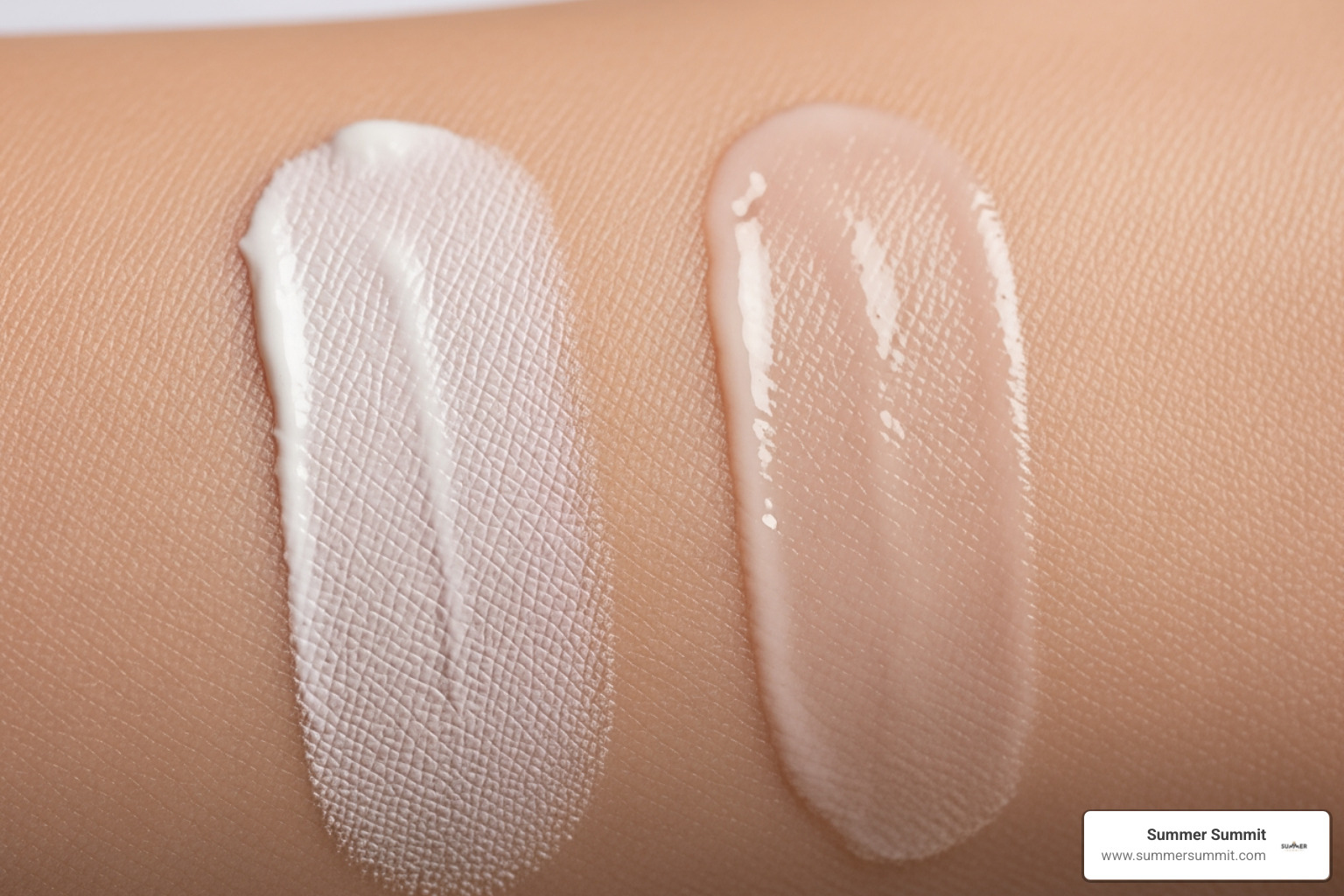
You do not need a chemistry degree to decode sunscreen labels. A few ingredient basics go a long way.
| Type | Common Filters | Best For | Possible Downsides |
|---|---|---|---|
| Chemical | Avobenzone, Octocrylene, Homosalate, Octisalate | Invisible finish, easy layering | Can sting eyes or irritate some skin |
| Mineral | Zinc Oxide, Titanium Dioxide | Sensitive skin, broad coverage | Can leave white cast |
| Hybrid | Mix of mineral + chemical filters | Balanced wear and protection | Formula quality varies |
Chemical vs mineral vs hybrid: which one is right for you?
Chemical sunscreens absorb UV energy through organic filters like avobenzone, octocrylene, homosalate, and octisalate. They often feel lighter and look more invisible.
Mineral sunscreens use zinc oxide and titanium dioxide. They are frequently chosen by people with sensitive, reactive, or redness-prone skin.
Hybrid sunscreens combine both approaches. These can offer a better cosmetic finish than fully mineral formulas while still using some mineral protection.
Quick guide:
- Choose chemical if you want invisible, lightweight, makeup-friendly wear
- Choose mineral if your skin is sensitive or your eyes sting easily
- Choose hybrid if you want a middle ground
The best ingredients to look for in a quality facial sunscreen
Some of the most useful ingredients include:
- Zinc oxide: reliable broad-spectrum mineral filter
- Titanium dioxide: mineral UV filter often paired with zinc oxide
- Iron oxides: especially useful in tinted formulas for visible light support
- Glycerin: helps draw in moisture
- Hyaluronic acid: hydration support
- Vitamin E: antioxidant support
- Niacinamide: barrier-friendly and calming
- Antioxidants: helpful support against environmental stress
A good facial sunscreen is not just about UV filters. It should also be wearable enough for daily use and supportive enough that your skin does not rebel by noon.
Ingredients some people may want to avoid
Not every skin type needs to avoid the same things, but common problem ingredients include:
- Added fragrance
- Drying alcohols in high amounts
- Irritating essential oils
- Heavy, greasy bases that feel pore-clogging
- Formulas that consistently sting the eyes
Some shoppers also prefer products without parabens or other irritants. At Summer Summit, we focus on dermatologist-formulated skincare that is cruelty-free and free of sulfates, parabens, and harmful irritants. If your skin is reactive, our guide to the best sun creams for sensitive skin is a useful next read.
How to Apply Face Sun Tan Lotion for Maximum Protection
Even the best product fails if you use half the amount you need. And yes, most people do.
How much face sun tan lotion should you actually use?
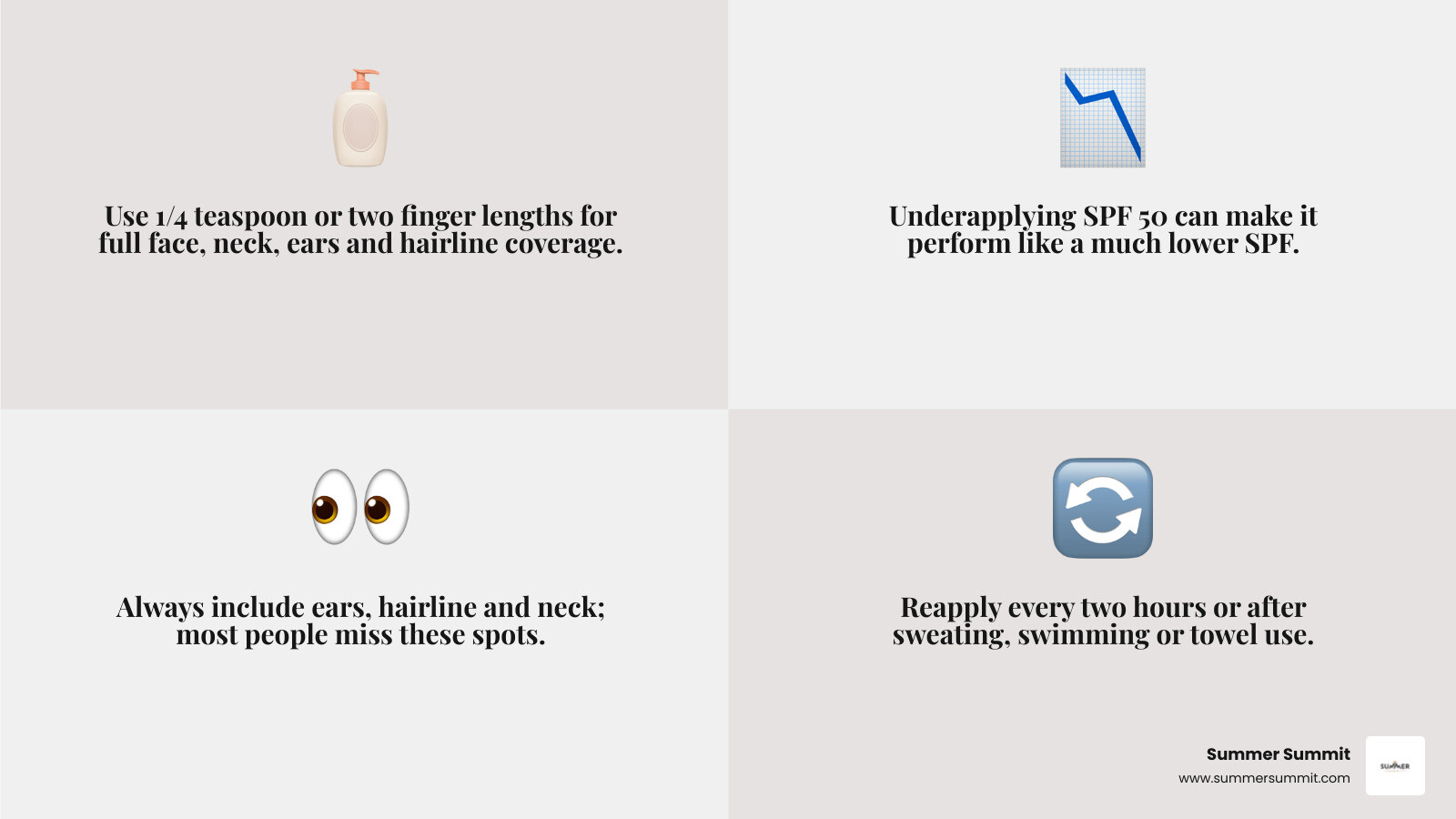
For the face alone, a common guideline is about 1/4 teaspoon, or the famous two-finger rule for many lotion textures.
That means enough product to cover:
- Face
- Ears
- Hairline
- Neck if exposed
Underapplying can dramatically reduce actual protection compared with the labeled SPF. In other words, SPF 50 applied sparingly may perform more like something much lower.
When to apply, layer, and reapply during the day
For most facial sunscreens:
- Apply it as the last step of your morning skincare routine
- Put it on about 15 minutes before sun exposure
- Let it set before makeup
- Reapply every 2 hours during ongoing sun exposure
- Reapply sooner after sweating, swimming, or towel drying
Many product directions also specify reapplication after 80 minutes of water or sweat exposure for water-resistant formulas.
And yes, winter counts. Cloudy days count. Driving counts. Sitting by a bright window for hours also counts more than most people realize.
Common facial sunscreen mistakes that reduce protection
Here are the biggest sunscreen fails we see:
- Using too little
- Missing the ears, hairline, eyelids, or neck
- Applying once in the morning and never again
- Relying on makeup SPF alone
- Using expired sunscreen
- Skipping sunscreen on cloudy days
- Assuming indoor days mean zero UV exposure
If your sunscreen pills, burns, or feels awful, switch formulas instead of giving up on SPF entirely. Better a formula you love than a "perfect" one you never touch. For more warm-weather skincare help, see our tips for summer skincare keeping your skin healthy and radiant.
How to Spot Truly Effective Facial Sunscreens in 2026
The market is crowded, so here is the cheat sheet. A facial sunscreen is easier to trust when it has most or all of the following:
- Broad-spectrum label
- SPF 30 or higher
- Water resistance if needed for activity
- Non-comedogenic claim if you break out easily
- Clear active ingredients
- Valid expiration date
- Comfortable finish you'll wear daily
- Skin Cancer Foundation Seal if available
Tinted vs untinted facial sunscreens: protection and finish differences
Tinted and untinted formulas can both be excellent. The best choice depends on your skin goals.
Tinted sunscreen may be better if you:
- Want light complexion evening
- Struggle with white cast
- Are prone to melasma or hyperpigmentation
- Prefer no-makeup makeup days
Untinted sunscreen may be better if you:
- Want a fully invisible finish
- Already wear foundation
- Prefer more shade flexibility
- Want simpler layering
Tinted formulas often provide added visible-light support thanks to iron oxides, while untinted formulas may feel more neutral or weightless depending on the base.
Which labels and claims are actually worth trusting?
Some claims matter more than others.
Most useful:
- Broad-spectrum
- SPF 30+
- Water-resistant
- Fragrance-free
- Non-comedogenic
- Dermatologist tested
- Skin Cancer Foundation Seal
Worth understanding but not overhyping:
- Reef-safe style claims
- Hawaii-compliance references
- "Clean" marketing language
- Botanical buzzwords
Patch testing still matters, especially if your skin is sensitive. A perfect label does not guarantee your face will love it on day one.
Who should choose which formula?
Here is the simple match-up:
- Sensitive skin: mineral, fragrance-free, zinc oxide-based
- Oily skin: matte gel, non-comedogenic, lightweight
- Dry skin: hydrating lotion SPF with glycerin or hyaluronic acid
- Mature skin: moisturizing SPF with antioxidants and elegant finish
- Acne-prone skin: oil-free fluid or gel, non-comedogenic, minimal fragrance
- Outdoor athletes: water-resistant SPF 50 with reliable reapplication
- Pigmentation-prone skin: tinted SPF with iron oxides
If you're also thinking about repair after past UV damage, our guide to the best face cream to reverse sun damage can help round out your routine.
Conclusion: Pick the Face Sun Tan Lotion You'll Actually Wear Every Day
The best face sun tan lotion is not the fanciest bottle or the trendiest launch. It is the one that gives you broad-spectrum protection, fits your skin type, and feels good enough that you'll use it every single morning.
If you remember just a few rules, make them these:
- Choose broad-spectrum SPF 30 or higher
- Aim for SPF 50 when possible
- Match the texture to your skin type
- Apply enough for full coverage
- Reapply when you're outdoors
- Look for credible signals like the Skin Cancer Foundation Seal
At Summer Summit, we believe sunscreen should work hard without being harsh. That's why we build our skincare around dermatologist-formulated, cruelty-free standards and keep our products free from sulfates, parabens, and harmful irritants. We also stand behind every order with a 100% satisfaction guarantee and free shipping.
If you want to keep building a smart daily routine, explore more daily skincare reading.
Leave a comment