

Clean and Exfoliate Like a Pro for a Fresh Complexion
Why the Way You Clean and Exfoliate Your Skin Actually Matters
To clean and exfoliate your skin effectively, follow these core steps:
- Cleanse first to remove surface dirt, oil, and makeup
- Exfoliate 2-3 times per week using a physical or chemical exfoliant suited to your skin type
- Moisturize immediately after to protect your skin barrier
- Wear SPF the next morning — freshly exfoliated skin is more sun-sensitive
Your skin sheds millions of dead cells every single day. When that process slows down — which happens naturally with age, stress, and sun exposure — the result is dull skin, clogged pores, and uneven texture.
That's where cleansing and exfoliation come in. Cleansing removes the surface stuff: sweat, oil, sunscreen, and pollution. Exfoliation goes deeper, helping your skin turn over fresh cells faster.
Done right, the combination makes a real difference. Done wrong — too often, too rough, or in the wrong order — it can strip your skin barrier and make things worse.
This guide cuts through the noise so you know exactly what works, what doesn't, and how to build a routine that fits your life.
I'm Robert McCann, founder of Summer Summit Skincare, and I've spent years working directly with labs and formulators to understand how ingredients like AHAs, BHAs, and physical exfoliants interact with different skin types — knowledge I apply directly to helping people learn to clean and exfoliate without causing damage. Everything in this guide is grounded in that hands-on formulation experience.
Cleansing vs. Exfoliating: Why You Need Both to Clean and Exfoliate Effectively
Many people treat cleansing and exfoliating as if they are the exact same thing. In reality, they are two distinct steps with entirely different jobs. To clean and exfoliate successfully, you need to understand how these two steps cooperate to keep your skin healthy and glowing.

Think of your skin like a window. Cleansing is like wiping away the daily dust and rain spots on the outside. Exfoliation is like polishing the glass to remove deeper scratches and built-up grime that a simple wipe-down cannot touch.
If you only cleanse, dead skin cells will continue to pile up, leading to a dull complexion and clogged pores. If you only exfoliate, you are rubbing exfoliants into a layer of makeup, daily sweat, and surface oil, which can push dirt deeper into your pores and cause irritation. Understanding the Benefits of Exfoliating helps you appreciate why this step is essential for cellular renewal, while practicing proper Skin Care Cleansing Without Drying Skin ensures your protective barrier remains perfectly intact.
The Role of a Daily Cleanser
A daily cleanser is your baseline. Its primary job is to lift away surface-level impurities such as makeup, excess sebum, sweat, and environmental pollutants. A high-quality daily cleanser uses surfactants to bind to oil and dirt, allowing them to be rinsed away easily with water.
Using a gentle, Top Rated Face Cleanser morning and night keeps the skin's surface clear and prevents daily buildup from hardening into stubborn blackheads or blemishes. A great cleanser leaves your skin feeling clean, balanced, and ready to absorb the next steps of your routine without feeling tight or stripped.
How to Clean and Exfoliate to Reveal Radiant Skin
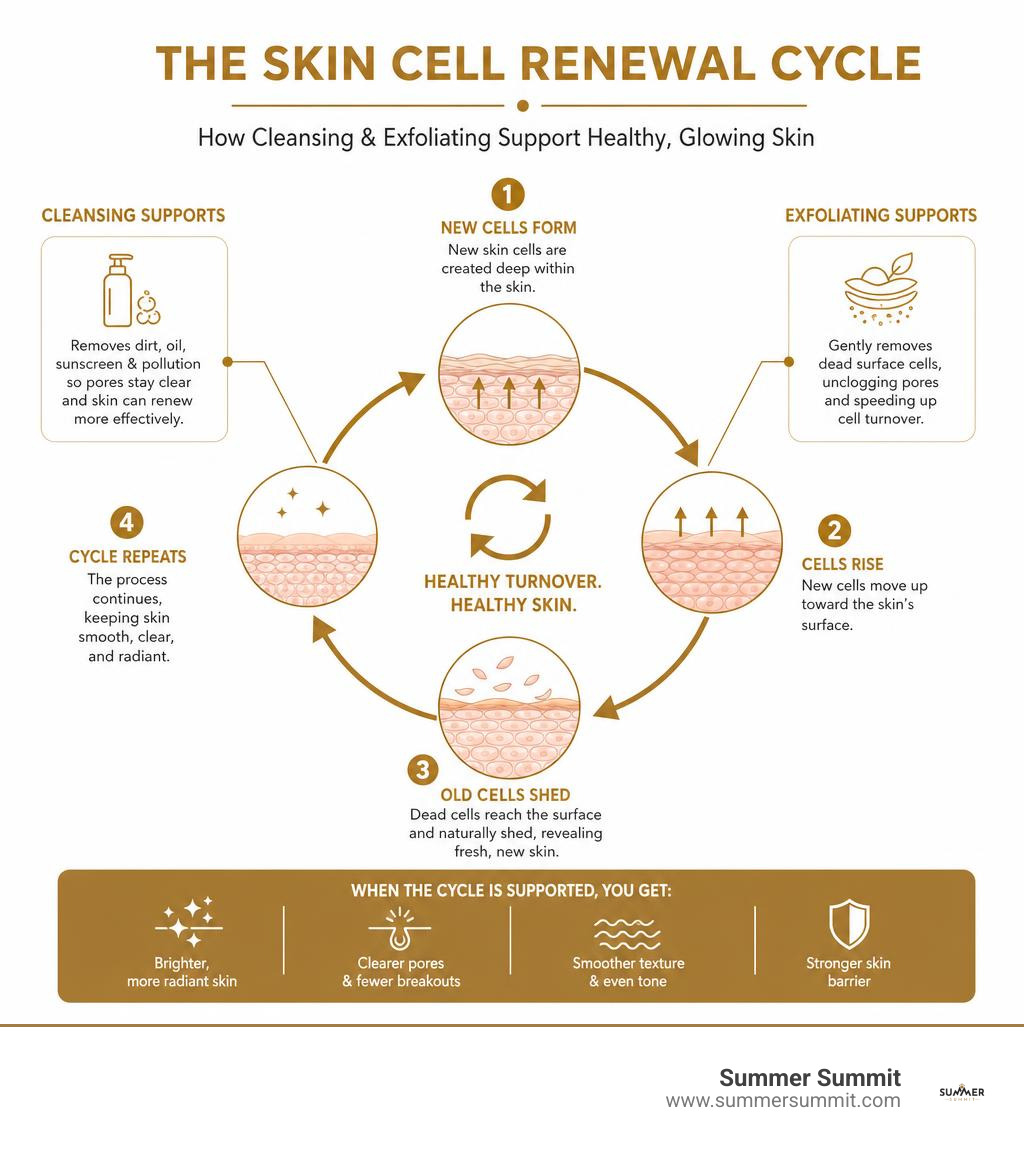
While cleansing works on the surface, exfoliation targets the cellular level. Your skin undergoes a natural renewal cycle where new cells are born at the deepest layer of the epidermis and travel to the surface, eventually dying and shedding off. As we age, this natural cycle slows down significantly.
When dead cells linger on the surface, they trap oil, block light reflection (causing dullness), and prevent your serums and moisturizers from penetrating effectively. By learning how to clean and exfoliate in harmony, you assist your skin's natural cell turnover. This process uncovers the fresh, radiant cells underneath and visibly improves skin texture. To dive deeper into how this process works at a cellular level, you can explore our guide on What Does an Exfoliant Do to My Skin.
Should You Cleanse or Exfoliate First?
One of the most common debates in skincare is whether you should use your cleanser or your exfoliant first. The truth is, both methods have their benefits, and the right order often depends on your skin type and personal preferences.
| Approach | Best For | Primary Benefit | How It Works |
|---|---|---|---|
| Cleansing First (Recommended) | All skin types, heavy makeup wearers | Creates a clean canvas | Removes surface oil and makeup so the exfoliant can target dead cells directly. |
| Exfoliating First | Oily, congested skin types | Deep debris loosening | Loosens up stubborn buildup which is then thoroughly washed away by the cleanser. |
Cleansing Before Exfoliating
For most people, cleansing first is the gold standard. When you wash your face first, you remove the initial layer of daily grime, makeup, and sunscreen. This creates a clean canvas.
By clearing away this surface barrier, your physical or chemical exfoliant can work directly on the dead skin cells and clogged pores without having to fight through a layer of daily dirt. This makes your exfoliation step much more efficient and reduces the amount of product you need to use.
Exfoliating Before Cleansing
While less common, exfoliating first has its place, particularly for those with very oily or highly congested skin. When you use an exfoliant first, you physically loosen up the dead skin cells, dry flakes, and stubborn debris.
Following up immediately with a gentle daily cleanser ensures that all of those newly loosened particles are completely washed off your face, leaving no residue behind. This sequence can provide an incredibly deep clean, but it should be done carefully to avoid over-stripping the skin.
Understanding Your Exfoliation Options: Physical vs. Chemical
Not all exfoliants are created equal. They generally fall into two main categories: physical and chemical. Both are highly effective, but they work in entirely different ways.
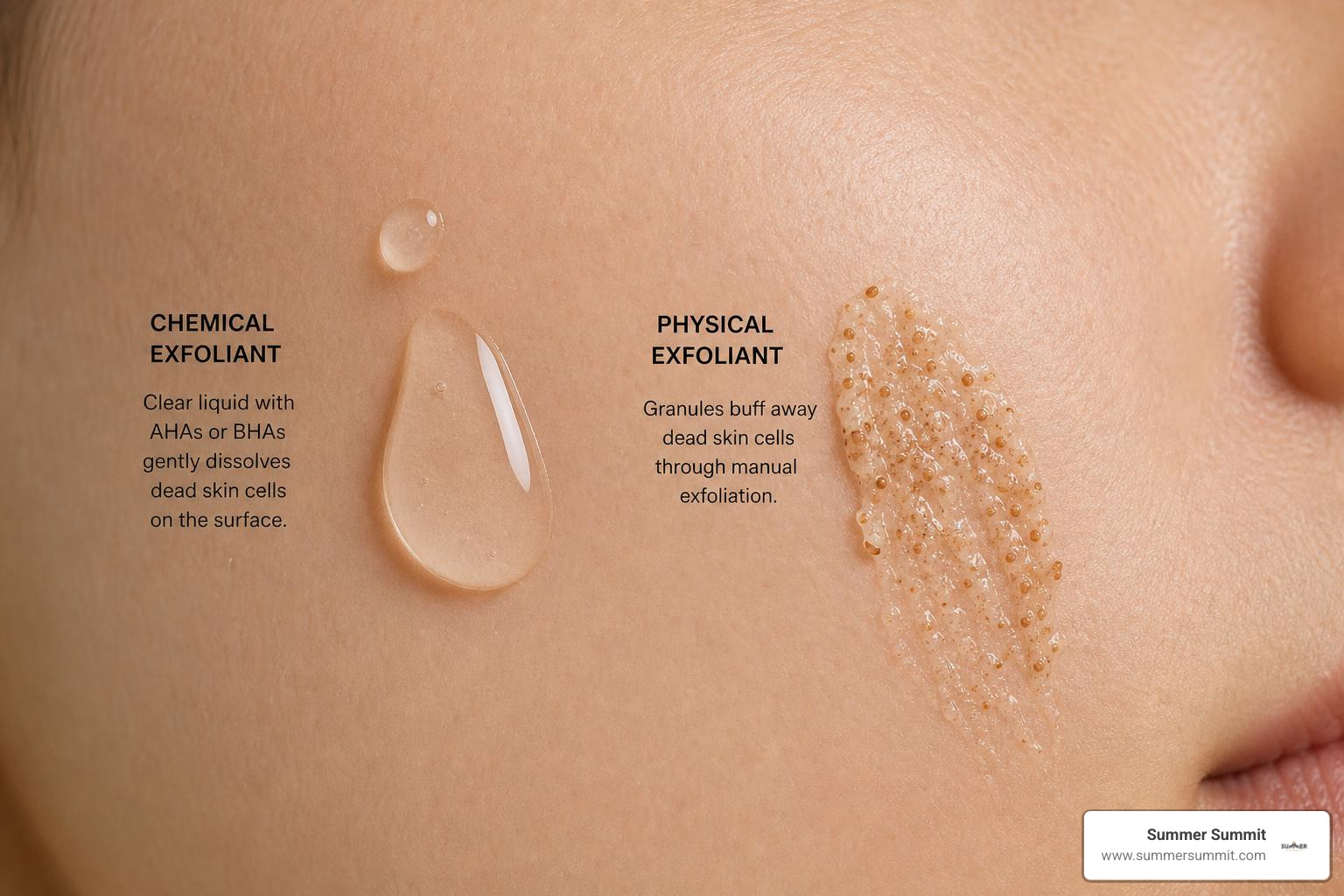
Choosing between them depends on your skin sensitivity, personal preferences, and specific skin goals. To build a balanced routine that incorporates the safest and most effective formulations, check out the Best Skin Care Products by SUMMER SUMMIT - Glow Starts Here! .
Physical Exfoliants
Physical exfoliation involves manually rubbing a textured substance against the skin to physically lift away dead cells. Common physical exfoliating agents include:
- Jojoba beads: Smooth, perfectly round spheres made from biodegradable jojoba wax that gently polish the skin without scratching.
- Cranberry seeds: Natural, finely ground seeds that provide a multi-textured physical scrub.
- Volcanic pumice: A highly effective, porous mineral that works beautifully for smoothing out rough body skin.
Historically, physical scrubs got a bad reputation due to older formulas that used jagged, uneven particles like crushed walnut shells, which could cause microscopic tears in the skin barrier. Modern physical exfoliants, however, utilize perfectly round, biomimetic beads and ultra-fine natural particles to polish the skin safely and gently.
Chemical Exfoliants (AHAs, BHAs, and PHAs)
Chemical exfoliants do not rely on scrubbing. Instead, they use gentle acids or enzymes to dissolve the microscopic "glue" that binds dead skin cells together, allowing them to shed effortlessly.
- Alpha Hydroxy Acids (AHAs): Water-soluble acids like lactic acid and glycolic acid. They work on the skin's surface to improve texture, even out skin tone, and boost hydration. Lactic acid is particularly beloved for its gentle nature and moisture-binding properties.
- Beta Hydroxy Acids (BHAs): Oil-soluble acids, primarily salicylic acid. Because they are oil-soluble, BHAs can penetrate deep inside the pores to dissolve excess sebum and debris, making them the ultimate choice for acne-prone and oily skin.
- Polyhydroxy Acids (PHAs): Large-molecule acids like gluconolactone. Because their molecular size is larger, they penetrate the skin slowly and work strictly on the very surface, making them incredibly gentle and safe for even the most sensitive or eczema-prone skin.
Tailoring Your Routine: Frequency and Skin Types
When learning how to clean and exfoliate, there is no one-size-fits-all formula. Your skin type, environmental factors, and unique skin concerns will dictate how often you should exfoliate.
Over-exfoliating is one of the most common mistakes in skincare. When you overdo it, you damage your skin's protective lipid barrier, leading to redness, dryness, flaking, and increased breakouts. For the vast majority of skin types, exfoliating 2-3 times per week is the sweet spot to maintain smooth, healthy skin without causing irritation.
How to Clean and Exfoliate Safely Based on Skin Type
- Sensitive Skin: Sensitive skin types should stick to gentle chemical exfoliants like PHAs or low-concentration lactic acid once or twice a week. Avoid harsh physical scrubs and look for formulas buffered with soothing ingredients like aloe vera.
- Oily and Acne-Prone Skin: Oily skin can tolerate exfoliation more frequently—up to 3 or 4 times a week. BHAs like salicylic acid are ideal here because they target deep pore congestion.
- Dry Skin: Dry skin benefits greatly from AHAs like lactic acid, which exfoliate while simultaneously pulling moisture into the skin. Limit exfoliation to 1-2 times per week and always follow immediately with a rich moisturizer.
- Combination Skin: Focus your exfoliation on your T-zone (forehead, nose, and chin) where oil builds up, while keeping dry cheek areas to a minimum.
Using a well-formulated exfoliating cleanser can lead to dramatic improvements. In fact, clinical data shows that exfoliating cleansers can improve skin texture and reduce the appearance of pores in up to 98% of users after a single use.
Exfoliating Cleanser for Men
Men's skin is typically thicker and produces more sebum than women's skin. Additionally, regular shaving can lead to irritation, razor bumps, and painful ingrown hairs.
Incorporating a high-quality Exfoliating Cleanser for Men into a daily or tri-weekly routine helps soften coarse facial hair, clears out the hair follicles, and dramatically reduces the occurrence of ingrown hairs for a much smoother shave.
Choosing the Right Ingredients and Products
Finding the right products to clean and exfoliate doesn't have to be overwhelming. By focusing on high-quality active ingredients and smart formulations, you can achieve professional results at home. To grab dermatologist-formulated products designed to respect your skin barrier, check out the 15% Off Summer Summit Promo Code (8 Coupons) May 2026 .
Key Ingredients to Look For
When shopping for cleansing and exfoliating products, look for formulas that balance active exfoliating agents with deeply soothing and hydrating ingredients:
- Tea tree oil: Naturally balances excess oil production and clears up stubborn congestion and blemishes.
- Aloe vera: Instantly calms redness, provides lightweight hydration, and protects sensitive skin during exfoliation.
- Hyaluronic acid (and charged hyaluronic acid): Attracts and locks moisture into the skin, ensuring your face feels plump and hydrated after rinsing rather than tight and dry.
- Peptides: Support natural collagen production, improve skin elasticity, and aid in barrier repair.
The Benefits of 2-in-1 Exfoliating Cleansers
For those with busy schedules, separate cleansing and exfoliating steps can feel like a chore. That is where 2-in-1 exfoliating cleansers shine. These multi-action formulas combine gentle cleansing surfactants with mild chemical or physical exfoliants in a single step.
Using a high-quality, dual-action cleanser saves time and minimizes the risk of irritation by delivering a perfectly balanced, low-concentration dose of exfoliants. The feedback on these multi-tasking formulas is overwhelmingly positive: 86% of users report that their skin feels refreshed and balanced after using an exfoliating daily cleanser. Furthermore, in data compiling over 370 reviews, 86% of users rate an exfoliating cleanser as excellent for improving overall skin tone and texture.
Frequently Asked Questions about Exfoliation
How often should I exfoliate my face?
For most skin types, exfoliating 2-3 times per week is ideal. If you have highly sensitive or dry skin, once a week is usually sufficient. Oily skin types may tolerate exfoliating up to 4 times per week. Always listen to your skin—if it starts to feel tight, red, or irritated, scale back the frequency immediately.
Can I exfoliate if I have active acne?
Yes, but you must choose the right method. Avoid harsh physical scrubs, as rubbing abrasive particles over active blemishes can pop them, spread bacteria, and worsen inflammation. Instead, opt for a gentle chemical exfoliant containing salicylic acid (BHA), which penetrates deep into the pores to dissolve acne-causing blockages without physical friction.
When should I avoid exfoliating altogether?
You should temporarily pause all exfoliation if you have a sunburn, open wounds, active eczema flare-ups, extreme windburn, or if your skin barrier is visibly damaged (characterized by persistent stinging, redness, and flaking). If you are planning to undergo professional treatments like chemical peels or laser therapy, consult your dermatologist for personalized pre- and post-care instructions.
Conclusion
Learning how to clean and exfoliate like a professional is the ultimate secret to achieving a smooth, radiant, and healthy complexion. By choosing gentle, high-quality ingredients and respecting your skin's natural barrier, you can unlock your skin's true potential without the risk of irritation.
At Summer Summit, we are dedicated to creating premium, dermatologist-formulated, and cruelty-free skincare solutions that deliver real, visible results. We stand behind our formulas with a 100% satisfaction guarantee and offer free shipping on our products. Ready to upgrade your daily ritual? Explore Summer Summit Skincare today and find the perfect match for your skin's unique needs!
Dejar un comentario