

The Best Sunscreens for Oily Skin Types Full Stop
Why Finding the Best Sun Creams for Oily Skin Is Harder Than It Should Be
If you have oily skin, the best sun creams for oily skin are ones that protect without adding grease, clogging pores, or leaving your face looking like a glazed donut by noon. Here are the top picks at a glance:
- Eucerin Sun Gel-Cream Oil Control SPF 50+ - 12-hour shine control, dry-touch finish, L-Carnitine formula
- La Roche-Posay Anthelios Ultra Light Fluid SPF 60 - ultra-light texture, fast absorption, drugstore accessible
- Shiseido Urban Environment Oil-Free Mineral SPF 42 - oil-free mineral formula, doubles as a makeup primer
- Altruist Oily Skin Cream SPF 50 - dermatologist-developed, starch-based mattifiers, budget-friendly
Over 80% of people with oily skin report that traditional sunscreens feel greasy or trigger breakouts. So it's no surprise many people skip SPF altogether — or wear a hat and hope for the best.
But skipping sunscreen isn't a real solution. Daily UV exposure causes lasting skin damage whether your skin is oily or not. The good news? Sunscreen formulations have come a long way. Lightweight, oil-free, mattifying options now exist that actually work for shine-prone skin.
I'm Robert McCann, founder of Summer Summit Skincare, and through years of hands-on work in formulation research and ingredient sourcing, I've developed a clear, evidence-based perspective on what makes the best sun creams for oily skin perform — and what makes them fail. In the sections below, I'll break down exactly what to look for, what to avoid, and which products are worth your money.
Understanding Sunscreen Formulations for Oily Skin
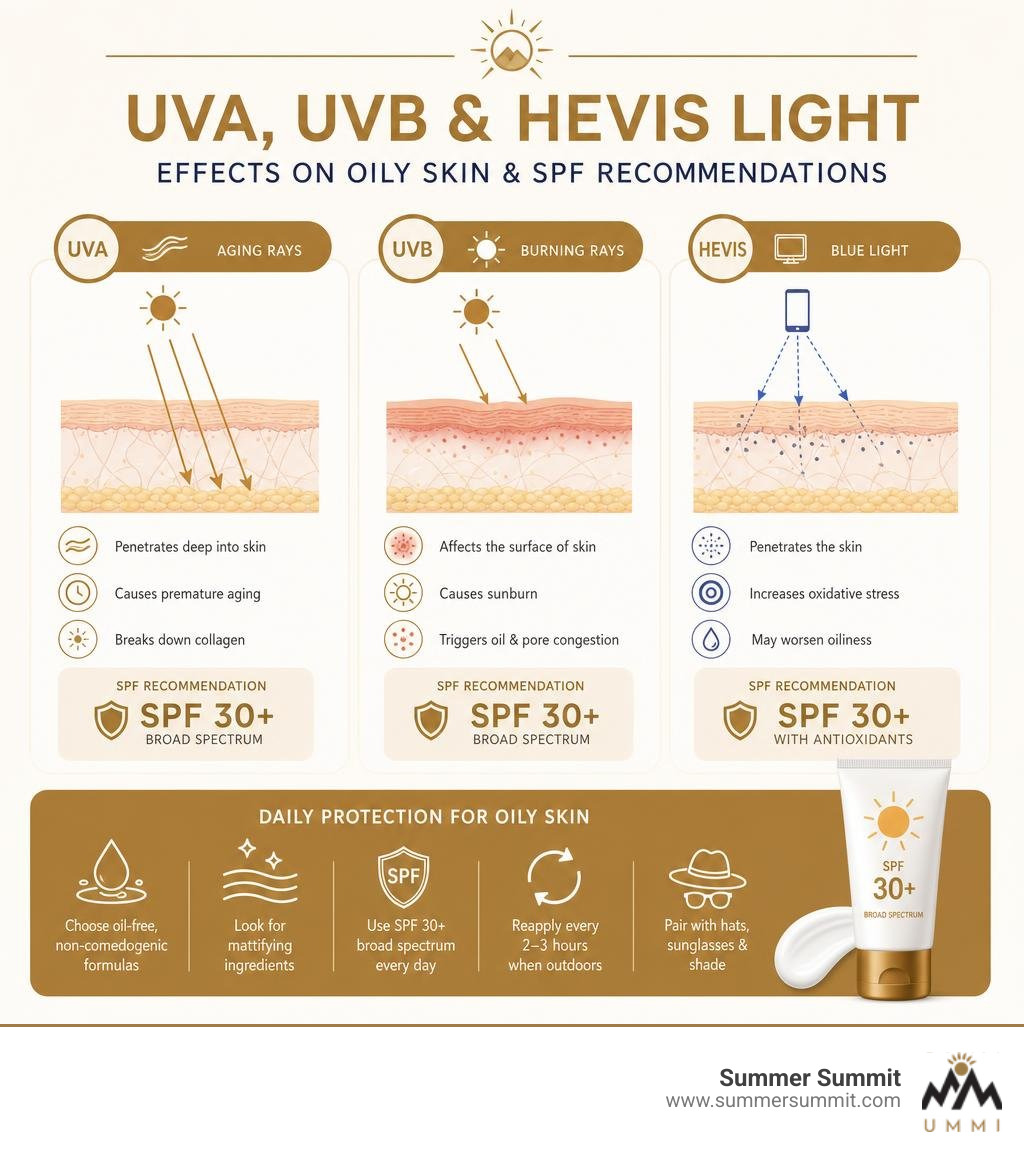
To find a sunscreen that works with your skin rather than against it, we must first understand why oily skin behaves the way it does. Oily skin is characterized by overactive sebaceous glands that produce an abundance of sebum. When we apply heavy, emollient-rich traditional sunscreens, we essentially trap this excess sebum beneath an occlusive barrier. This leads directly to clogged pores, an intense midday shine, and painful acne flare-ups.
When building a healthy routine, it is crucial to implement tips to take care of oily skin daily. One of the most important steps in that daily care is choosing the right UV protection. Skipping this step is not an option; there are 5 compelling reasons to use sunscreen every day, including preventing premature aging, avoiding dark spots, and reducing the risk of skin cancers.
Modern cosmetic chemistry has allowed us to formulate sunscreens that are "non-comedogenic" (meaning they are clinically tested not to clog pores) and actively assist in sebum regulation. Instead of relying on heavy plant oils and butter-based emollients, the best sunscreens for oily skin utilize ultra-light fluid carriers, volatile silicones, and oil-absorbing minerals.
Two of the most effective ingredients for shine control are:
- Silica: A natural mineral spherical powder that acts like microscopic sponges on the skin, absorbing excess oil throughout the day without stripping the skin of its natural hydration.
- Dimethicone: A lightweight silicone that provides a silk-like, breathable barrier. It helps smooth over uneven skin texture and large pores, leaving a soft-matte finish while preventing water loss.
Essential Features of the Best Sun Creams for Oily Skin
When you are scanning the skincare aisles, you should look for specific terms on the packaging. The formula must be labeled oil-free and non-comedogenic. An oil-free label ensures that no additional lipids are being introduced to your already sebum-rich skin barrier.
Additionally, the sunscreen must offer broad-spectrum protection, meaning it shields your skin from both aging UVA rays and burning UVB rays. For those with oily, acne-prone skin, broad-spectrum protection is doubly important because UV rays can darken post-inflammatory hyperpigmentation (the dark spots left behind by healed pimples). To see how top beauty editors evaluate these modern formulations, you can check out The 5 Best Sunscreens for Oily, Acne-Prone Skin, According ... - ELLE for an in-depth look at the latest performance standards.
Key Ingredients to Avoid in Sunscreens
Many sunscreens are designed for dry or mature skin types and are packed with rich, nourishing ingredients that are absolute poison for oily skin. If you are prone to breakouts and midday shine, carefully inspect the ingredient deck and avoid the following:
- Coconut Oil & Soybean Oil: Highly comedogenic natural oils that sit on top of the skin, suffocating pores and triggering rapid acne breakouts.
- Isopropyl Myristate & Isopropyl Palmitate: Synthetic emollients used to give products a slick, luxurious feel, but they are notorious pore-cloggers.
- Heavy Occlusives (like Petrolatum or Mineral Oil): Excellent for compromised, extremely dry skin, but they create a heavy, plastic-like seal on oily skin that traps sweat, bacteria, and sebum underneath.
- Artificial Fragrances: Synthetic perfumes can sensitize the skin, triggering inflammation that worsens acne and increases sebum production as a defense mechanism.
Mineral vs. Chemical Filters for Sebum Control
One of the most common debates in skincare is whether mineral or chemical filters are better suited for oily skin types. Both have distinct advantages and drawbacks, and the right choice often comes down to your personal skin sensitivity and daily habits.
Mineral filters (such as Zinc Oxide and Titanium Dioxide) sit on top of the skin's surface and physically reflect UV rays. Zinc oxide is naturally anti-inflammatory and antimicrobial, making it incredibly soothing for active acne. Furthermore, mineral powders have a natural mattifying effect on the skin, absorbing excess oil.
Chemical filters (such as Avobenzone, Homosalate, and Octisalate) absorb UV rays like a sponge and convert them into harmless heat. Chemical sunscreens are highly favored for their incredibly thin, water-like fluid textures that leave absolutely no white cast, making them perfect for deeper skin tones.
| Feature | Mineral Sunscreens (Zinc Oxide / Titanium Dioxide) | Chemical Sunscreens (Avobenzone / Octocrylene) |
|---|---|---|
| How it Works | Sits on top of the skin to reflect UV rays physically | Absorbs UV rays and converts them into heat |
| Texture | Typically thicker, though modern fluids are lighter | Very thin, watery, and completely weightless |
| Finish | Naturally matte, helpful for absorbing excess sebum | Ranges from dewy to satin-matte |
| White Cast | Can leave a white or chalky cast on darker skin tones | Completely transparent on all skin tones |
| Acne Compatibility | Highly recommended; Zinc is soothing and anti-inflammatory | Can occasionally cause mild heat-induced irritation |
If your skin is incredibly reactive or prone to redness alongside excess oil, you may want to look into the best sun creams for sensitive skin to find ultra-gentle mineral formulas that won't trigger irritation.
The Best Sun Creams for Oily Skin: Top Product Recommendations
Finding the perfect formula requires looking past marketing buzzwords and focusing on real-world performance.
To help you navigate the crowded market, we have reviewed the top-performing, dermatologist-approved options that keep shine at bay while delivering high-level UV protection. For a deeper look at what beauty experts swear by, take a look at the 7 Best Sunscreens for Oily Skin That Our Editors Swear By - Glamour. Below is our curated list of the absolute best sun creams for oily skin.
Eucerin Sun Gel-Cream Oil Control SPF 50+
This gel-cream is widely regarded by dermatologists as a gold standard for oily, acne-prone skin. It features Eucerin's proprietary Oil Control Technology, which combines lipid-absorbing micro-pigments with L-Carnitine. L-Carnitine is a highly effective ingredient that helps reduce sebum production in vitro by up to 86%, leaving your skin with an immediate, long-lasting dry-touch finish.
- Why it works: It offers up to 12 hours of reliable oil and shine control. The texture is an ultra-light gel-cream that absorbs in seconds without leaving a sticky residue or a white cast.
- Key Ingredients: L-Carnitine (sebum-regulating), Licochalcone A (anti-inflammatory antioxidant), Glycyrrhetinic Acid (supports skin DNA repair).
- Best For: Anyone looking for a high-performance, daily-use face sun tan lotion that genuinely keeps the T-zone matte all day.
La Roche-Posay Anthelios Ultra Light Fluid Sunscreen SPF 60
If you prefer an incredibly watery, weightless texture, this drugstore favorite is hard to beat. It uses an advanced chemical filter system to deliver high SPF 60 protection in a fluid that feels like absolutely nothing on the skin.
- Why it works: It shakes up to a water-like consistency and dries down to a clean, satin-matte finish. It is completely oil-free, fragrance-free, and non-comedogenic, making it highly compatible with acne-prone skin.
- Key Ingredients: Cell-Ox Shield technology (broad-spectrum filters + antioxidants), Senna Alata extract.
- Best For: Those who hate the feeling of traditional lotion and want a fast-absorbing, budget-friendly option.
Shiseido Urban Environment Oil-Free Mineral Sunscreen SPF 42
This premium mineral sunscreen is a favorite among makeup artists and skincare enthusiasts alike. It features a hybrid-like, ultra-fluid mineral formula that actively controls excess sebum while hydrating the skin with hyaluronic acid.
- Why it works: It contains oil-absorbing powders that keep the skin matte and smooth. Because of its blurring, velvety texture, it doubles beautifully as a makeup primer, preventing your foundation from sliding off during hot summer days.
- Key Ingredients: Zinc Oxide, Titanium Dioxide, Hyaluronic Acid, Spirulina Energy Essence.
- Best For: Daily wear under makeup or for those who want a high-end mineral shield. For more expert recommendations on mineral options, watch this Sunscreen for Oily Skin | Recommendations - YouTube video.
Altruist Oily Skin Cream SPF 50
Developed by a UK-based consultant dermatologist and skin cancer surgeon, Altruist is dedicated to providing high-quality, affordable sun protection. This specialized oily skin formula is designed to deliver maximum protection without the premium price tag.
- Why it works: It utilizes starch-based mattifiers (like tapioca starch) to absorb excess sebum and provide a comfortable, dry-touch finish. It is formulated to be hypoallergenic, fragrance-free, and non-comedogenic.
- Key Ingredients: Tapioca Starch, Vitamin E, Glycerin.
- Best For: Budget-conscious consumers who want dermatologist-grade, daily-use broad-spectrum protection that won't cause breakouts.
How to Apply Sunscreen on Oily Skin Without Clogging Pores
Even the best formulation can fail if your application technique is causing issues. Applying sunscreen to oily skin requires a strategic approach to ensure even coverage without overloading your pores.

First, always start with a clean canvas. We highly recommend double cleansing at night to thoroughly remove all traces of water-resistant sunscreen, makeup, and daily sebum. In the morning, use a gentle, sulfate-free cleanser to wash away overnight oil production before applying your morning skincare.
If you are looking for a complete breakdown of how to protect your skin from sunrise to sunset, make sure to read our ultimate all day sun protection guide. Additionally, if you prefer a streamlined morning routine, choosing a lightweight day cream sun protection product can help you hydrate and protect your skin in one simple step.
Step-by-Step Application Tips for the Best Sun Creams for Oily Skin
To get the most out of your sunscreen without adding shine, follow this simple routine:
- The Two-Finger Rule: To achieve the advertised SPF rating, you must apply an adequate amount. Squeeze a line of sunscreen along your index and middle fingers. This is the exact amount needed to cover your face, neck, and ears.
- Use a Patting Motion: Instead of vigorously rubbing the product into your skin (which can trigger excess oil production and cause the product to pill), gently pat and press the sunscreen into your face. This helps the formula lay flat and bond with the skin barrier.
- Allow to Dry Completely: Give your sunscreen at least 10 to 15 minutes to fully set and dry down to its intended matte finish before you step outside or apply any makeup.
- Practice Safe Summer Habits: Sun protection goes hand-in-hand with general skin health. Keep your complexion clear by following our tips for summer skincare keeping your skin healthy and radiant.
Layering SPF Under Makeup
Wearing makeup over oily skin is already a balancing act, and adding sunscreen can sometimes feel like a recipe for a sliding foundation disaster. However, with the right layering technique, your SPF can actually act as a high-performing primer.
- Wait for the Bond: Always wait 15 minutes after applying your chemical or mineral sunscreen before touching your face with makeup. This allows the UV filters to form an uninterrupted protective film.
- Skip the Heavy Primer: If you are using a mattifying sunscreen like Shiseido Urban Environment or Eucerin Oil Control, you can completely skip your cosmetic face primer. These formulas already contain oil-absorbing silica and starches that grip makeup beautifully.
- Set with Translucent Powder: Once your foundation is applied, lightly dust a oil-absorbing translucent setting powder over your T-zone. This locks everything in place and absorbs any breakthrough shine that occurs throughout the day.
Frequently Asked Questions about Sunscreen for Oily Skin
Should oily skin use mineral or chemical sunscreen?
Both work beautifully, but they serve different preferences. If you have highly sensitive, acne-prone skin that gets easily irritated, a mineral sunscreen containing zinc oxide is your best bet because zinc naturally calms inflammation. However, if you have a deeper skin tone and want to avoid any possibility of a white, chalky cast, a lightweight, oil-free chemical fluid is highly recommended.
Can daily sunscreen use cause acne breakouts?
Sunscreen itself does not cause acne; rather, the wrong ingredients in a poorly formulated sunscreen do. Heavy, occlusive oils, synthetic fragrances, and pore-clogging emollients are the true culprits. When you choose a certified non-comedogenic, oil-free formula and wash it off thoroughly at the end of the day, daily sunscreen use will actually help calm acne-prone skin by protecting it from inflammatory UV damage.
How often should you reapply sunscreen on oily skin?
To maintain full protection, you must reapply your sunscreen every two hours when exposed to direct sunlight, and immediately after swimming or sweating. If you are wearing a full face of makeup, reapplying a liquid cream can be difficult. In this case, we highly recommend using a translucent powder sunscreen brush to dust on additional SPF protection while absorbing midday shine.
Conclusion
Finding the perfect sun protection for shine-prone skin doesn't have to be a frustrating trial-and-error process. By focusing on oil-free, non-comedogenic formulas enriched with sebum-regulating ingredients like silica, dimethicone, and L-Carnitine, you can keep your skin fully protected without sacrificing a clean, matte finish.
At Summer Summit, we are dedicated to developing premium, clinically-proven skincare that supports your skin's health. Our entire line is dermatologist-formulated, cruelty-free, and free of sulfates, parabens, and harmful irritants. We back all of our formulations with a 100% satisfaction guarantee and offer free shipping on every order to ensure you find your perfect match risk-free.
For more expert skincare guides, formulation deep-dives, and healthy skin tips, explore our library at Summer Summit News.
Leave a comment