

Exfoliating Cleanser 101
What Is an Exfoliating Cleanser — and Do You Actually Need One?
An exfoliating cleanser is a face wash that does two jobs at once: it cleans away dirt, oil, and makeup while also removing dead skin cells from the surface of your skin.
Quick answer:
- What it does: Cleans skin and removes dead skin cells in one step
- Who it's for: All skin types, including oily, dry, combination, and sensitive
- Key ingredients: AHAs (glycolic, lactic acid), BHAs (salicylic acid), or physical buffers (jojoba beads, bamboo)
- How often: Typically 2–3 times per week, though some gentle formulas are safe for daily use
- Main benefits: Smoother texture, clearer pores, brighter tone, and better absorption of other skincare products
If your skin looks dull after a day at the beach, or your go-to cleanser just isn't cutting it anymore, you're not alone. Dead skin cells build up on the surface faster than most people realize — and a regular cleanser alone won't shift them. That's where an exfoliating cleanser steps in.
The good news: it doesn't have to be harsh or complicated. Many modern formulas are gentle enough for daily or near-daily use, even on sensitive or reactive skin.
I'm Robert McCann, founder of Summer Summit Skincare, and I've spent years working directly with labs and formulators to understand how active ingredients like exfoliating acids and physical buffers behave in a cleanser base. That hands-on experience shapes everything I write about exfoliating cleanser formulation and use. Below, I'll walk you through everything you need to know to find the right one for your skin.
What is an Exfoliating Cleanser and How Does It Work?
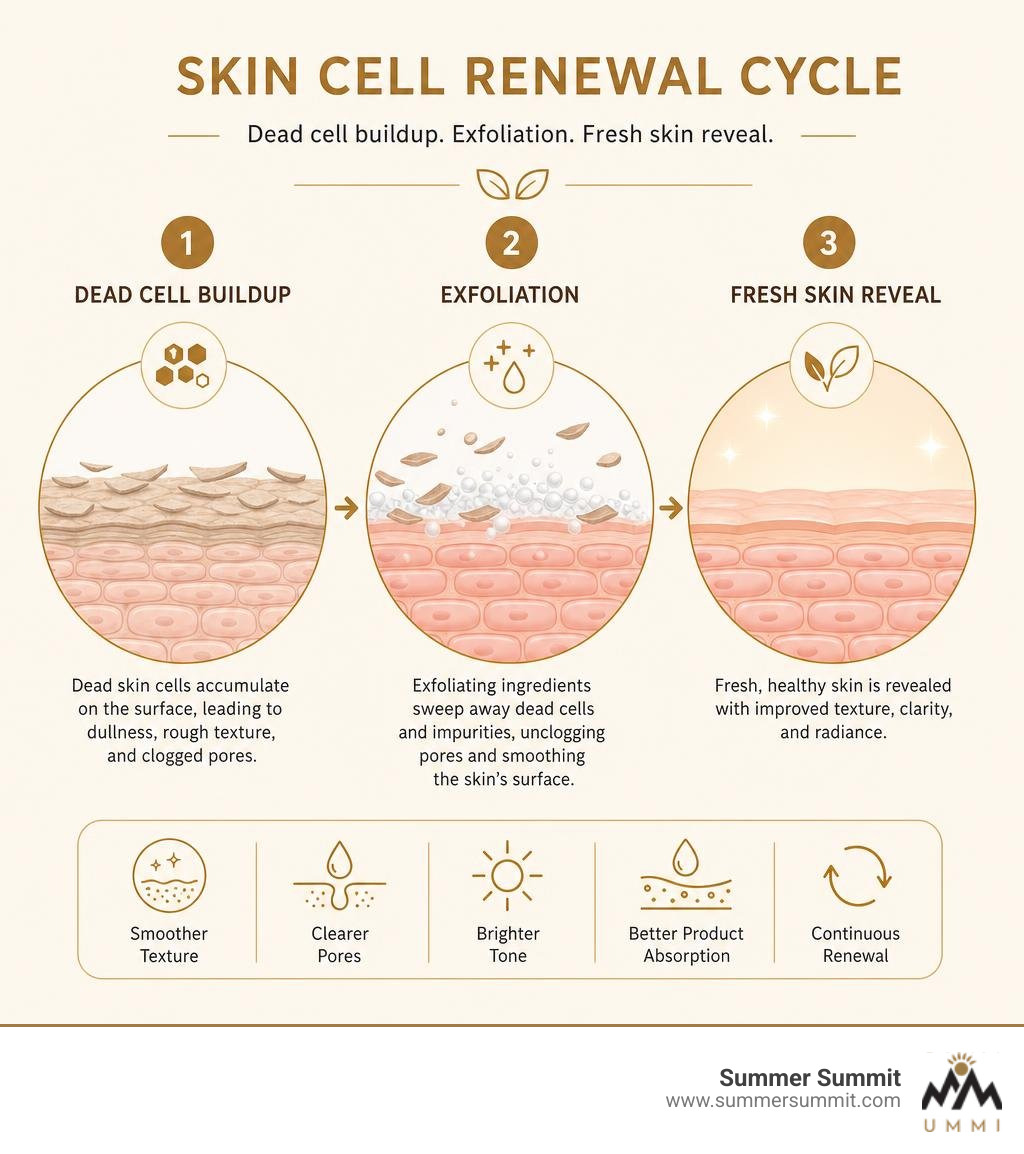
To understand how an exfoliating cleanser works, we first have to look at how our skin naturally behaves. Your skin is constantly regenerating. New skin cells are born in the deeper layers of the epidermis, and they slowly journey to the surface. By the time they reach the top, they die and form the stratum corneum—the outermost layer of our skin barrier.
Ideally, these dead cells shed naturally. However, factors like aging, environmental stress, and excess sebum production can slow this process down. When dead cells stick around, they trap oil, clog pores, and make your complexion look flat and lackluster.
So, What Does an Exfoliant Do to My Skin exactly? It breaks the microscopic bonds that hold these dead cells together, lifting them away so fresh, radiant skin can come to the surface.
An exfoliating cleanser streamlines your routine by performing this cell-clearing magic at the exact same time you wash your face. This is different from a traditional leave-on exfoliant (like a toner or serum) because the active ingredients are rinsed off. This "short-contact" therapy delivers excellent results with a much lower risk of irritation. If you are wondering whether you should use a separate scrub after your daily wash, our Cleanse Then Exfoliate Complete Guide breaks down why combining these steps is often the gentlest, most efficient route for your skin barrier.
Physical vs. Chemical Exfoliation: Key Ingredients and Types
When shopping for exfoliating cleansers, you will run into two main categories: physical and chemical. Both have unique ways of leaving your skin smooth and fresh, but they go about it in very different ways.
| Feature | Physical Exfoliants | Chemical Exfoliants |
|---|---|---|
| Mechanism | Manual friction (polishing the surface) | Dissolving cellular "glue" (chemical bonds) |
| Common Ingredients | Jojoba beads, bamboo buffers, volcanic sand | Lactic acid, salicylic acid, glycolic acid |
| Best For | Instant smoothness, oil reduction, flaky skin | Deep pore clearing, evening skin tone, acne |
| Skin Type Match | Normal, oily, resilient skin | Sensitive, combination, acne-prone skin |
| Barrier Impact | Can cause micro-tears if particles are jagged | Very gentle, but can over-dry if overused |
Physical Exfoliants: Natural Buffers and Beads
Physical exfoliants rely on manual friction to sweep away dead skin. In the past, physical scrubs got a bad reputation because they used jagged, crushed nutshells or environmentally damaging plastic microbeads.
Today, premium formulations use spherical, biodegradable buffers. Spherical jojoba beads are made from hydrogenated jojoba oil and roll gently over the skin, dissolving harmlessly in water without causing micro-tears.
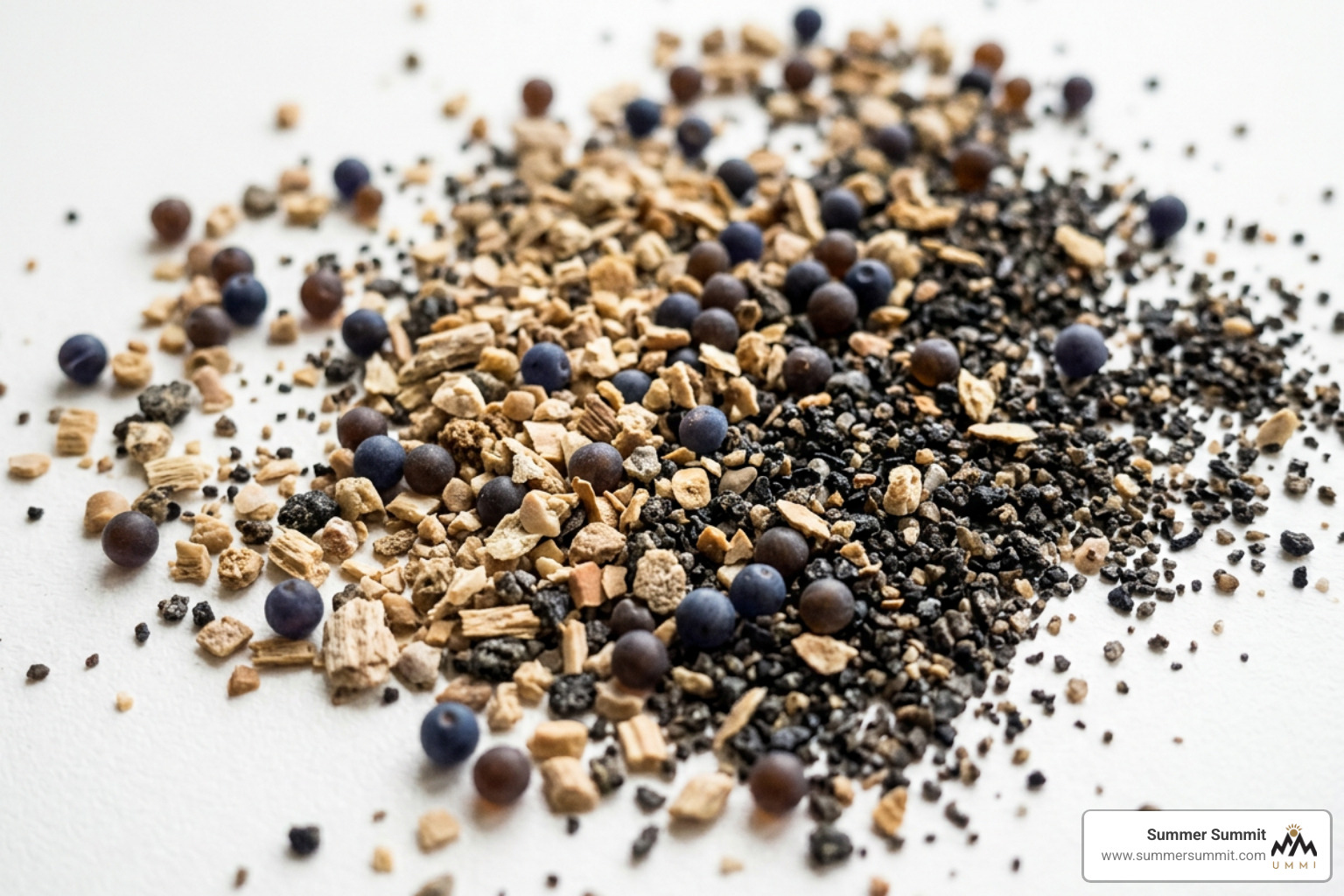
Other excellent natural physical buffers include bamboo extract, which polishes the skin surface beautifully. Mineral-origin volcanic sand and biodegradable montan wax are also fantastic for physical refinement. If you prefer a classic, organic approach to physical scrubbing, you might also explore natural facial scrubs to manually lift flakes and instantly soften rough patches.
Chemical Exfoliants: AHAs, BHAs, and PHAs
Chemical exfoliants use gentle acids or enzymes to dissolve the intercellular "glue" that keeps dead skin cells bound together. Because there is no scrubbing involved, they are often much safer for sensitive or acne-prone skin.
- Alpha Hydroxy Acids (AHAs): Water-soluble acids like glycolic acid and lactic acid work on the skin's surface. Lactic acid is particularly hydrating because it acts as a natural humectant, while mandelic acid has a larger molecular size, making it incredibly gentle for sensitive skin.
- Beta Hydroxy Acids (BHAs): Salicylic acid is oil-soluble, meaning it can bypass surface oil to travel deep inside your pores. This makes BHAs the gold standard for clearing blackheads and preventing breakouts. For an in-depth look at how BHAs work in a daily wash, check out our Salicylic Acid Face Wash Complete Guide.
- Polyhydroxy Acids (PHAs): Gluconolactone is a PHA that offers ultra-gentle chemical exfoliation. It has large molecules that do not penetrate deeply, making it perfect for highly reactive skin types.
Many modern cleansers use a triple acid blend of salicylic, mandelic, and gluconolactone to provide comprehensive surface renewal and deep pore clearing without irritation.
The Top Benefits of Regular Exfoliation
Adding an exfoliating cleanser to your skincare routine is one of the fastest ways to transform your complexion. Here are the key benefits you can expect to see:
- Unclogged Pores and Reduced Congestion: Regular use of exfoliating cleansers with ingredients like salicylic, lactic, and glycolic acids helps dissolve the plugs of sebum and dead skin that lead to blackheads and acne.
- Visibly Smoother, More Radiant Skin: Exfoliating cleansers can improve skin texture and radiance after just one use, removing the dull surface layer to reveal a healthy glow.
- Enhanced Product Absorption: When you remove the barrier of dead skin cells, your expensive serums, toners, and moisturizers can penetrate much deeper and work more effectively.
- Boosted Collagen and Cell Renewal: Regular exfoliation encourages the skin's natural cell renewal process, which helps keep the skin looking plump, firm, and youthful over time.
To learn more about how this simple step supports your long-term skin health, read our guides on the Benefits of Exfoliating and how to properly Clean and Exfoliate without stripping away your skin's natural oils.
Choosing the Best Exfoliating Cleanser for Your Skin Type
There is no one-size-fits-all in skincare. The key to getting incredible results without irritation is matching your exfoliating cleanser to your specific skin type.

Oily and Acne-Prone Skin
If your skin produces excess oil, you need an exfoliant that can cut through sebum. Look for a BHA-focused formula containing salicylic acid. Physical exfoliators with jojoba beads can also help remove excess oil and surface impurities without stripping the skin, leaving oily skin feeling fresh with a reduction in midday shine. For our top recommendations, dive into our Best Exfoliating Cleanser Guide 2026.
Dry and Dehydrated Skin
Dry skin needs gentle surface polishing paired with hydration. Look for AHAs like lactic acid, which gently loosen dry flakes while drawing moisture into the skin. Avoid harsh physical scrubs and choose creamy, hydrating bases with nourishing botanical oils.
Sensitive Skin
Sensitive skin types should look for ultra-gentle PHAs (like gluconolactone) or mild AHAs (like mandelic acid). Avoid synthetic fragrances, sulfates, and parabens. Our dermatologist-formulated cleansers at Summer Summit are specifically designed to protect the delicate skin barrier of reactive skin types.
Combination Skin
If you have an oily T-zone but dry cheeks, balance is key. A gentle salicylic acid wash is highly effective here. For a detailed roadmap on managing this skin type, explore our Salicylic Acid Cleanser Guide Combination Skin and our curated list of the Best Salicylic Acid Face Wash for Combination Skin.
How to Integrate an Exfoliating Cleanser Into Your Skincare Routine
Using an exfoliating wash correctly is just as important as choosing the right one. Here is how to map it out step-by-step:
- Step 1: Prep your skin. Splash your face with lukewarm water.
- Step 2: Apply and massage. Work a dime-sized amount of your exfoliating cleanser into a light lather. Massage it gently over your face in circular motions for 30 to 60 seconds, paying extra attention to congested areas like the nose and chin. Avoid the sensitive eye area.
- Step 3: Rinse and pat dry. Rinse thoroughly with warm water and pat dry with a clean towel.
- Step 4: Hydrate and protect. Follow up immediately with your favorite toner, serum, and moisturizer to lock in hydration. Always apply a broad-spectrum SPF during the day, as exfoliating acids can increase sun sensitivity.
For additional general guidance on safe exfoliation habits, the American Academy of Dermatology recommends choosing an exfoliation method based on your skin type and adjusting frequency if irritation occurs.
Morning vs. Night
While you can use a gentle exfoliating cleanser in the morning for an invigorating start, we generally recommend using it during your nighttime routine. This helps thoroughly sweep away the dirt, makeup, and daily pollution that have accumulated on your skin throughout the day.
Mixing and Layering Actives
When using an exfoliating cleanser, be mindful of other active ingredients in your routine, such as retinol or vitamin C.
- Vitamin C: Best used in your morning routine, while your exfoliating wash is used at night.
- Retinol: Avoid using a strong exfoliating cleanser at the exact same time as your retinol serum to prevent barrier irritation. Instead, alternate nights-use your exfoliating wash 2-3 times a week on nights you do not use retinol.
For a complete look at how to structure your daily skincare steps, explore our classic guides:
- Cleanse Exfoliate Tone Moisturize
- A Simple Daytime Skincare Routine
- A Simple Nighttime Skincare Routine
Frequently Asked Questions
Can I use an exfoliating face wash every day?
For most skin types, using an exfoliating face wash 2 to 3 times a week is the sweet spot. Over-exfoliating can strip your skin’s natural lipid barrier, leading to redness, flaking, tightness, and even increased breakouts.
However, some extremely gentle formulas—like those featuring a low concentration of mild acids or soft, spherical jojoba beads—are specifically designed for daily use. If you want to keep your skin clean and fresh without stripping it, check out our guide on Skin Care Cleansing Without Drying Skin.
Are exfoliating face washes safe during pregnancy?
Many exfoliating ingredients are perfectly safe during pregnancy, but there are a few guidelines to keep in mind. Low concentrations of glycolic and lactic acids (AHAs) are widely considered safe by dermatologists.
However, high concentrations of salicylic acid (BHA) are generally not recommended during pregnancy or breastfeeding. If you are pregnant, we always recommend consulting with your OB-GYN or dermatologist to build a safe, personalized skincare routine.
Is an exfoliating face wash suitable for men?
Yes, absolutely! In fact, an exfoliating cleanser is one of the best tools a man can have in his grooming routine. Men’s skin is naturally thicker and produces more sebum than women's skin, making it highly prone to congestion.
Using an exfoliating wash helps soften facial hair, prevents painful ingrown hairs, and prepares the skin for a much smoother shave. Read our dedicated guide on Exfoliating Cleanser for Men to find the perfect match for your grooming routine.
Conclusion
Finding the right exfoliating cleanser doesn't have to be a trial-and-error guessing game. By understanding your skin type and choosing high-quality, gentle physical or chemical buffers, you can easily reveal a smoother, brighter, and healthier complexion.
At Summer Summit, we believe in clinically proven, dermatologist-formulated skincare that respects your skin barrier. All of our premium products are 100% cruelty-free and completely free of sulfates, parabens, and harsh chemical irritants. We are so confident you will love how your skin looks and feels that we back our products with a 100% satisfaction guarantee and offer free shipping on all orders.
Ready to upgrade your daily wash? Explore our Top Rated Face Cleanser collection, take advantage of our Salicylic Acid Cleanser Satisfaction Guarantee, and Explore Summer Summit Skincare today to find your perfect match!
Dejar un comentario