

The Great Debate on Why You Should Always Cleanse Before You Exfoliate
The Right Order Matters: Why You Should Always Cleanse Then Exfoliate
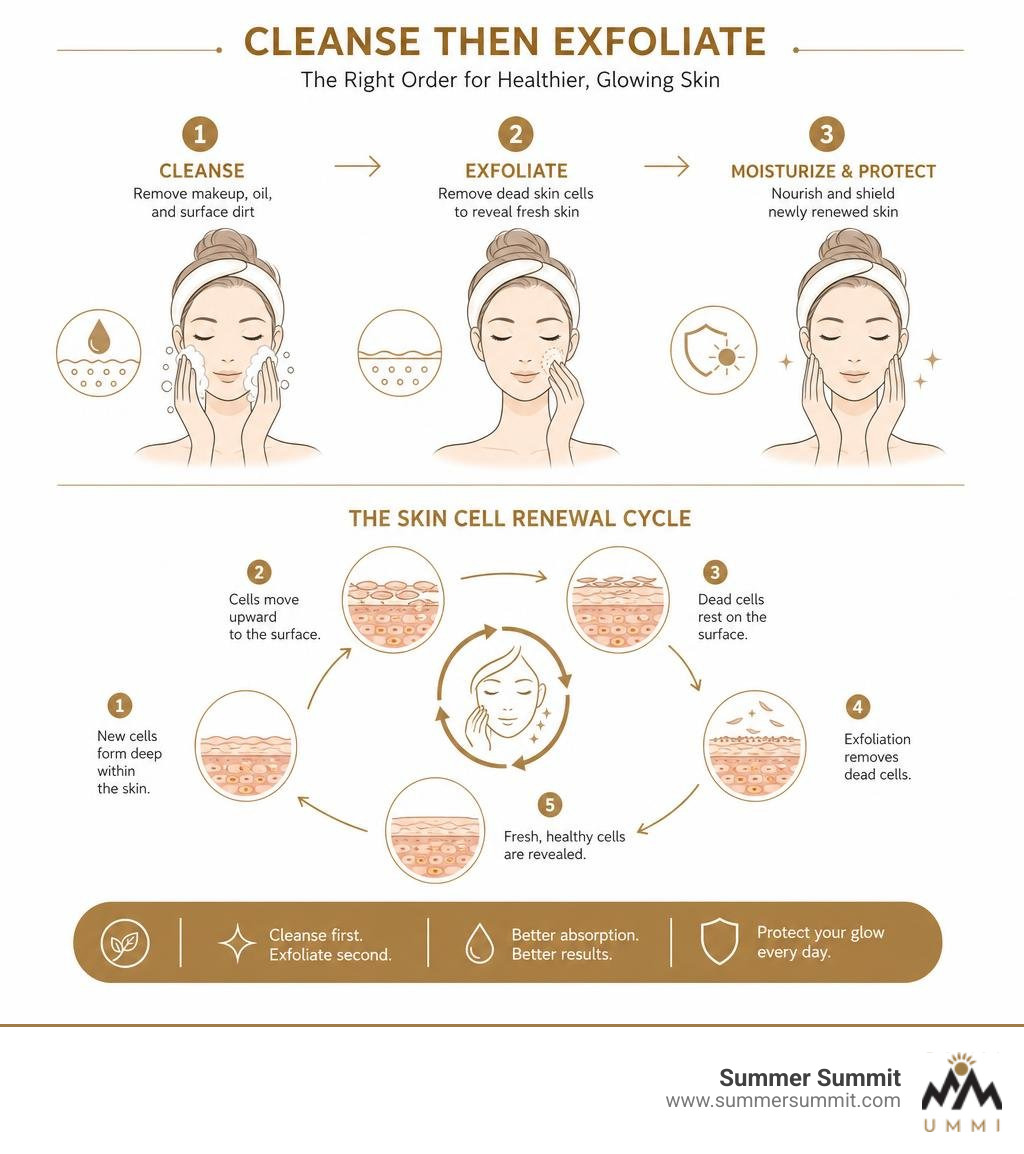
Cleanse then exfoliate — in that exact order — is the correct sequence for your skincare routine.
Quick answer:
- Cleanse first to remove makeup, oil, and surface dirt
- Exfoliate second so active ingredients can reach bare skin directly
- Moisturize and apply SPF to protect freshly renewed skin
Skipping step one — or reversing the order — means your exfoliant has to push through a layer of grime just to reach your skin. That can drive dirt and bacteria deeper into your pores, leading to breakouts and irritation.
Both steps are essential, but the sequence is what makes the difference between results and frustration.
Skincare routines are full of conflicting advice. But on this one, the evidence is clear: cleansing first creates a clean surface so your exfoliant can actually do its job — removing dead skin cells, unclogging pores, and improving texture. In fact, research has shown that 100% of women tested showed significant improvement in skin texture, pores, fine lines, and wrinkles after just four weeks of consistent exfoliation following proper cleansing.
I'm Robert McCann, founder of Summer Summit Skincare, where I've spent years working directly with labs and formulators to understand how ingredients like AHAs, BHAs, and gentle cleansing agents interact in a cleanse then exfoliate routine. In this guide, I'll break down the science and the practical steps so you can stop guessing and start seeing real results.
Why You Should Cleanse Then Exfoliate: Understanding the Core Differences
To understand why the sequence of your routine is so critical, we first need to look at what these two steps actually do. While they both leave your face feeling fresh and clean, they serve entirely different physiological purposes.
Think of your face as a high-end wooden deck that you want to stain. You wouldn’t start sanding the wood while it is still covered in autumn leaves, dirt, and mud, would you? Of course not. You would sweep the deck first, wash away the surface grime, and then sand down the rough patches to expose the beautiful wood grain underneath.
The exact same logic applies to your face. Let’s look at how these two steps compare:
| Feature | Cleansing First (Recommended) | Exfoliating First (Not Recommended) |
|---|---|---|
| Primary Goal | Removes makeup, sebum, daily pollution, and sweat. | Sloughs off dead skin cells and deep-seated pore blockages. |
| Pore Penetration | Clears the entrance of the pore so active ingredients can enter. | Blocked by surface oils, rendering chemical exfoliants less effective. |
| Skin Barrier Prep | Softens the skin with warm water, making dead cells easier to lift. | Abrasive action on dry or dirty skin increases friction and irritation. |
| Risk Factor | Extremely safe; preserves the essential skin microbiome. | Pushes daily makeup and surface bacteria deeper into vulnerable pores. |
| Product Efficiency | Maximizes the value of your expensive exfoliating acids and serums. | Wastes product as it sits on top of a barrier of surface grime. |
By establishing this clear boundary between the two steps, you ensure that your skin gets the maximum benefit from both. For a deeper dive into how clinical experts view this sequence, you can read the detailed breakdown on Medical News Today on Cleansing vs Exfoliating.
What is the Difference Between Cleansing and Exfoliating?
Cleansing is your daily maintenance work. Its primary job is to act as a gentle sweep, lifting away water-soluble impurities (like sweat and dust) and oil-soluble impurities (like excess sebum, silicone-heavy makeup, and water-resistant sunscreens). A good cleanser does this without stripping away the essential lipids that keep your skin barrier intact.
Exfoliation, on the other hand, is a targeted treatment designed to accelerate your skin's natural desquamation process (cell turnover). As we age, our skin’s natural ability to shed dead cells slows down. These dead cells accumulate on the surface, making our complexion look dull, accentuating fine lines, and trapping oils underneath.
To resolve this, we use two primary methods of exfoliation:
- Chemical Exfoliants: These use active acids like Alpha Hydroxy Acids (AHAs) and Beta Hydroxy Acids (BHAs) to gently dissolve the microscopic "glue" holding dead cells together. To understand how these acids interact with your skin barrier, check out our guide on What Does an Exfoliant Do to My Skin.
- Physical Exfoliants: These rely on manual friction—such as super-fine scrubs, soft washcloths, or exfoliating brushes—to physically lift away loose flakes.
When done correctly, the Benefits of Exfoliating are unmatched: you will experience refined pores, reduced blemishes, a more even skin tone, and a natural radiance that makeup simply cannot replicate.
The Science of Why We Cleanse Then Exfoliate First
The physical structure of your skin dictates this order. If you apply a chemical exfoliant (like glycolic or salicylic acid) to an unwashed face, the active ingredients have to fight through a thick layer of makeup, daily pollution, and oxidized sebum. Because these acids are highly sensitive to pH and barrier interference, their potency is severely compromised.
When you cleanse then exfoliate, you wash away that physical shield. This allows your exfoliant to make direct, uniform contact with the stratum corneum (the outermost layer of dead skin cells). The warm water used during your cleanse also helps to soften the skin, making the desquamation process far more efficient and gentle.
Furthermore, clinical testing has proven the long-term power of this exact sequence. In a clinical study of women who consistently cleansed their skin before applying an exfoliant, 100% of participants showed highly significant improvements in skin texture, pore visibility, crow’s feet, and fine lines over a four-week period. If you are ready to experience these clinical-grade results at home, explore our dermatologist-formulated Summer Summit Exfoliating Solutions.
Risks of Exfoliating Before Cleansing
What happens if you reverse the order? Let's say you come home after a long day, skip the cleanser, and go straight in with a physical scrub or a chemical peel pad.
First, if you are using a physical scrub, the friction of the exfoliating particles will massage your daily makeup, sweat, and environmental pollutants directly into your open pores. This is a fast track to inflammatory acne, blackheads, and painful congestion.
Second, exfoliating unwashed skin can cause micro-tears and localized irritation. Because the skin hasn't been softened by a gentle cleanse, the abrasive force is unevenly distributed, which can compromise your moisture barrier. This leads to transepidermal water loss (TEWL), leaving your skin feeling tight, red, and itchy. To avoid this common pitfall, make sure you are practicing proper Skin Care Cleansing Without Drying Skin.
How to Cleanse and Exfoliate Based on Your Skin Type

No two faces are identical, which means your cleanse then exfoliate routine must be tailored to your skin's unique personality. Let’s look at how to customize your sequence to prevent irritation and maximize your glow.
Oily and Acne-Prone Skin
Oily skin produces excess sebum, which acts like a sticky magnet for dead skin cells. This combination easily plugs the pores, leading to blackheads and inflammatory breakouts.
For this skin type, we highly recommend incorporating salicylic acid (a oil-soluble BHA) into your routine. Because BHAs can cut through oil, they penetrate deep into the pore lining to dissolve the sebum plugs.
To keep your skin clear without stripping it, consider using our specially formulated Men's Oil Eliminator Deep Cleansing Exfoliating Face Wash or explore the benefits of a dedicated Exfoliating Cleanser for Men to balance sebum production and sweep away daily impurities.
Dry and Sensitive Skin
If your skin is prone to flaking, redness, or a tight sensation, you must proceed with caution. Avoid aggressive physical scrubs entirely, as they can easily damage your delicate skin barrier.
Instead, opt for gentle chemical exfoliants like lactic acid (an AHA that also acts as a humectant to draw moisture into the skin) or Polyhydroxy Acids (PHAs). PHAs, such as gluconolactone, have a larger molecular size, meaning they penetrate the skin more slowly and cause virtually zero irritation.
Always start your routine with a ultra-gentle, hydrating base. We recommend using our Top Rated Face Cleanser to wash away impurities while preserving the vital lipids your skin needs to stay plump and hydrated.
Combination Skin
Combination skin is the ultimate balancing act. You might have an oily T-zone (forehead, nose, and chin) prone to large pores, alongside dry, sensitive cheeks.
For this skin type, a targeted approach is best. You can use a gentle, balancing cleanser across your entire face, and then apply your exfoliant selectively. For instance, apply a salicylic acid treatment only to your T-zone to address congestion, while leaving your cheeks to enjoy a mild, hydrating AHA.
To master this balance, check out our comprehensive Salicylic Acid Cleanser Guide Combination Skin, find the perfect match with the Best Salicylic Acid Face Wash for Combination Skin, and read our expert Tips to Take Care of Combination Skin.
Step-by-Step Guide: How to Cleanse Then Exfoliate Safely

Now that you understand the science and have identified your skin type, let’s walk through the physical steps of a safe, effective, and luxurious evening skincare routine.
Step 1: Double Cleanse to Remove Surface Impurities
If you are wearing makeup or sunscreen, a single quick wash with a foaming cleanser isn't going to cut it. We highly recommend the "double cleanse" method in the evening:
- The Oil Cleanse: Apply a gentle cleansing oil or balm to dry skin. Massage it in for 60 seconds. This breaks down oil-soluble makeup, stubborn silicone primers, and water-resistant sunscreens.
- The Water-Based Cleanse: Rinse away the oil cleanser with lukewarm water, then follow up with a gentle, water-based foaming or hydrating cleanser. This second step removes any remaining water-soluble sweat and dirt, leaving your skin perfectly bare and prepped.
Step 2: Cleanse Then Exfoliate with the Right Acid or Scrub
Once your skin is thoroughly clean, pat your face gently with a clean towel.
- If using a chemical exfoliant (peel pads, toners, or serums): Apply the product to completely dry skin. Applying acids to damp skin can cause them to penetrate too quickly, which increases the risk of irritation. Let the product absorb for 2 to 3 minutes.
- If using a gentle physical scrub: Keep your skin slightly damp. Dispense a dime-sized amount of scrub into your palms and massage it onto your face using light, circular motions. Never scrub aggressively—let the particles do the work. Rinse thoroughly with lukewarm water.
Always cleanse then exfoliate to ensure your active ingredients aren't blocked by a layer of surface grime.
Step 3: Post-Exfoliation Hydration and Protection
Exfoliation temporarily disrupts your skin barrier to reveal fresh cells underneath. This means your skin is highly vulnerable to moisture loss and environmental damage immediately afterward.
To lock in your results:
- Hydrate: Apply a generous layer of a hydrating serum containing hyaluronic acid or glycerin to draw water back into the skin.
- Moisturize: Follow up with a rich moisturizer packed with ceramides and fatty acids to rebuild and seal your moisture barrier.
- Protect (Morning Only): If you are exfoliating in the morning, you must apply a broad-spectrum sunscreen with an SPF of 30 or higher. Freshly exfoliated skin is highly susceptible to UV damage and sunburn.
Frequently Asked Questions about Cleansing and Exfoliating
How often should I exfoliate my face?
For the vast majority of skin types, exfoliating 1 to 3 times per week is the sweet spot. Exfoliating daily is a recipe for a compromised skin barrier, which manifests as shiny but bumpy skin, prolonged redness, a burning sensation when applying basic moisturizers, and sudden breakouts. Always listen to your skin and scale back if you notice any signs of irritation.
Can I use an exfoliating cleanser every day?
Yes, but only if the formula is specifically designed for daily use. Some daily foaming washes contain very low, buffered concentrations of salicylic or lactic acid that gently keep pores clear without stripping the skin barrier.
If you want to find the perfect formula that balances daily cleansing with mild exfoliation, take a look at our curated Best Exfoliating Cleanser Guide 2026.
Should I exfoliate in the morning or at night?
While you can do either, we generally recommend exfoliating at night. During sleep, your body’s natural human growth hormone levels rise, accelerating cell regeneration and collagen production. Exfoliating at night removes the dead barrier, allowing your nighttime repair creams to penetrate deeper. Plus, it eliminates the immediate risk of sun sensitivity that occurs when you step out into the daylight with freshly exfoliated skin.
Conclusion
When it comes to achieving a radiant, healthy complexion, the order of your products matters just as much as the ingredients inside them. By committing to the cleanse then exfoliate sequence, you ensure that your skin is perfectly prepped, your pores are protected, and your high-performance products can work at their absolute peak.
At Summer Summit, we believe in clean, science-backed beauty. All of our dermatologist-formulated products are 100% cruelty-free and entirely free of sulfates, parabens, and harmful irritants. We are so confident you will love your results that we back every single order with a 100% satisfaction guarantee and free shipping across our service regions.
Ready to elevate your skincare journey? Explore Summer Summit Skincare Blogs for more professional tips and expert advice today!
Dejar un comentario