

Beginner's Guide to L-Ascorbic Acid Vitamin C Serum
Why an L-Ascorbic Acid Vitamin C Serum Belongs in Your Daily Routine
An l ascorbic acid vitamin c serum is a topical skincare product that uses the purest, most biologically active form of vitamin C to brighten skin, fade dark spots, boost collagen, and defend against environmental damage.
Quick answers:
- What it is: L-ascorbic acid is pure vitamin C — the form your skin can use immediately, no conversion needed
- What it does: Brightens skin tone, fades hyperpigmentation, stimulates collagen, and neutralizes free radicals
- Best concentration: 10–20% L-ascorbic acid; beginners should start lower
- Key supporting ingredients: Vitamin E and ferulic acid improve stability and results
- When to use it: Morning, after cleansing, before moisturizer and SPF
- Shelf life: 3–6 months after opening for most formulas; waterless formulas can last up to 24 months
If you've tried vitamin C products before and felt let down — skin still dull, dark spots still stubbornly visible, bottles going orange before you're halfway through — you're not alone. Most of the frustration comes down to formulation, not the ingredient itself. L-ascorbic acid is one of the most researched actives in skincare, with decades of clinical data behind it. But it's also one of the most misunderstood, and one of the hardest to formulate correctly.
This guide cuts through the noise. Whether you're new to vitamin C or looking to upgrade what's already on your shelf, you'll find clear, evidence-based answers here.
I'm Robert McCann, founder of Summer Summit Skincare, and I've spent years working directly with labs to understand how active ingredients like l ascorbic acid vitamin c serum formulas are developed, stabilized, and tested for real results. That hands-on experience shapes everything I share here.
What is an L-Ascorbic Acid Vitamin C Serum?
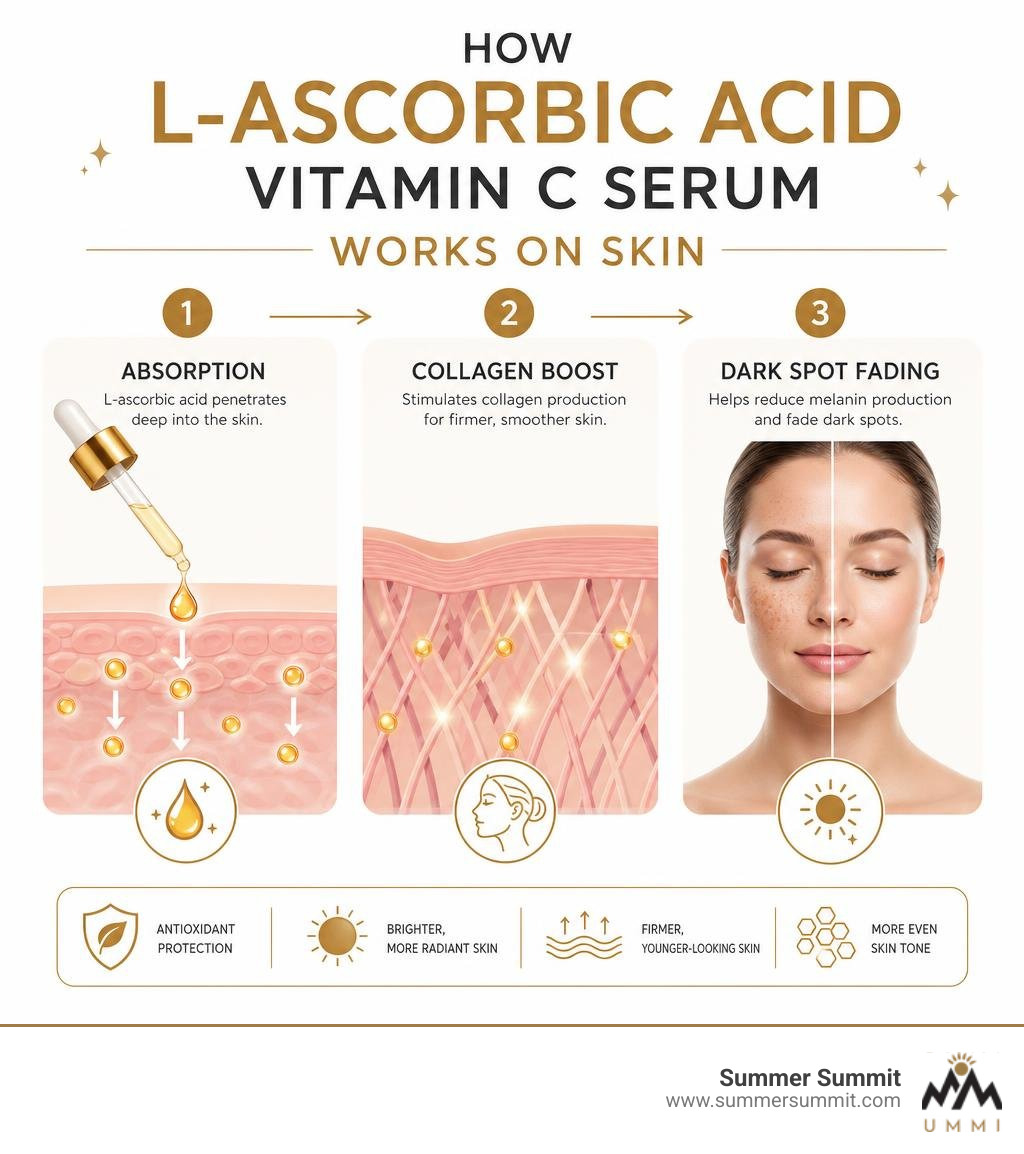
To understand why an l ascorbic acid vitamin c serum is the gold standard, we have to look at how skin biological processes work. L-ascorbic acid is the chemically active isomer of vitamin C. When you apply it to your skin, it doesn’t need to undergo any enzymatic conversion process to start working. It is instantly recognized by your skin cells, allowing it to begin neutralizing free radicals and supporting collagen production immediately.
However, this high biological activity comes with a catch: L-ascorbic acid is notoriously unstable. It is highly water-soluble and oxidizes rapidly when exposed to light, air, and heat. To penetrate the skin barrier effectively, an L-ascorbic acid serum must be formulated at a highly acidic pH level—typically below 3.5. When formulated correctly within this acidic window, the molecule remains uncharged, allowing it to pass through the lipid barrier of your stratum corneum and deliver deep cellular benefits.
To explore how these biological mechanisms protect and support your skin barrier, you can read our deep dive on Antioxidants in Skin Care: Benefits and Concerns.
L-Ascorbic Acid vs. Vitamin C Derivatives
Because pure L-ascorbic acid is so fragile and can sometimes irritate sensitive skin, cosmetic chemists have developed several vitamin C derivatives. These derivatives are stabilized forms of vitamin C that are engineered to remain stable in water and at higher, more skin-friendly pH levels. However, they must convert into pure L-ascorbic acid within the skin before they can provide any antioxidant or collagen-boosting benefits.
Here are the most common derivatives you will find on ingredient labels:
- Sodium Ascorbyl Phosphate (SAP): A water-soluble derivative that is exceptionally stable and gentle. It is particularly popular in acne-prone skincare formulations because of its mild antimicrobial properties, though its overall anti-aging potency is lower than pure L-ascorbic acid.
- Ascorby Glucoside: A derivative bound to glucose. It is incredibly stable in water-based formulas and performs beautifully at a neutral pH of 6.0 to 7.0. While it is excellent for mild brightening, it delivers slower, more subtle anti-aging results because of the conversion step.
- Ethyl Ascorbic Acid: A "new generation" etherified derivative that is highly stable and soluble in both water and oil. It offers excellent skin penetration and converts efficiently, making it a fantastic middle-ground option for those who want visible brightening without the irritation of a low-pH pure acid.
| Feature | Pure L-Ascorbic Acid | Vitamin C Derivatives (e.g., SAP, Ascorbyl Glucoside) |
|---|---|---|
| Active State | Active immediately; no conversion required | Must convert to L-ascorbic acid in the skin |
| Optimal pH | Highly acidic (under 3.5) | Near-neutral (5.0 to 7.0) |
| Stability | Low; highly prone to oxidation | High; resistant to light, air, and heat |
| Irritation Risk | Moderate to High (due to low pH) | Very Low |
| Efficacy Speed | Fast, clinically proven results | Slower, cumulative results |
Proven Benefits of L-Ascorbic Acid for Skin Brightening and Anti-Aging
Topical vitamin C is a true multitasker. Because our bodies cannot naturally produce vitamin C, our skin relies entirely on dietary intake and topical application to maintain its antioxidant stores. Applying an l ascorbic acid vitamin c serum directly to the face is up to 20 times more effective at raising skin-specific vitamin C levels than taking oral supplements.
When integrated into a daily routine, L-ascorbic acid works on three primary fronts: protecting against environmental damage, fading hyperpigmentation, and rebuilding the skin’s structural matrix.

How an L-Ascorbic Acid Vitamin C Serum Fades Dark Spots
Hyperpigmentation, sun spots, and melasma occur when pigment-producing cells (melanocytes) overproduce melanin. L-ascorbic acid addresses this by acting as a potent tyrosinase inhibitor. Tyrosinase is the key enzyme responsible for triggering melanin synthesis in response to UV exposure or inflammation. By inhibiting this enzyme, vitamin C prevents the formation of dark spots before they even reach the surface.
Clinical results consistently back this up. In consumer trials evaluating high-quality vitamin C formulations, 96% of users agreed after 2 weeks that the product helped fade brown spots, and 100% of users agreed after 4 weeks that skin tone was brighter and skin texture was smoother.
For a comprehensive guide on how to safely combine vitamin C with other targeted botanical brighteners to maximize these effects, check out Transform Your Dull Skin Into a Radiant Glow and explore how it works alongside other agents in Vitamin C: The Powerful Skin Brightening Agent.
Boosting Firmness and Reducing Fine Lines
As we age, our skin's natural collagen production slows down, leading to structural sagging and the formation of fine lines. L-ascorbic acid is a required co-factor for the enzymes prolyl hydroxylase and lysyl hydroxylase, which stabilize and cross-link collagen molecules during synthesis. Without adequate vitamin C, your body simply cannot produce stable collagen.
Furthermore, L-ascorbic acid stimulates fibroblasts—the cells responsible for generating collagen and elastin—while simultaneously neutralizing the free radicals that degrade existing collagen. Clinical studies on advanced antioxidant serums have demonstrated a 37% increase in firmness and a 36% reduction in the appearance of wrinkles over a multi-week period. These impressive transformations are why beauty editors frequently write that These Vitamin C Serums Are Basically Mini Facials in a Bottle.
Key Formulation Factors to Look For in an L-Ascorbic Acid Serum
Not all vitamin C serums are created equal. When shopping for an l ascorbic acid vitamin c serum, you will find products ranging from budget-friendly drug store options to premium dermatologist-formulated treatments. Understanding the science behind the bottle will help you choose a formula that actually delivers on its promises.

The Role of Supporting Antioxidants (Vitamin E and Ferulic Acid)
If there is one scientific breakthrough that revolutionized modern vitamin C formulations, it is the combination of L-ascorbic acid, Vitamin E (Alpha Tocopherol), and Ferulic Acid.
Ferulic acid is a plant-based antioxidant that acts as a natural stabilizer. When added to a water-based solution of L-ascorbic acid and Vitamin E, it stabilizes the highly volatile molecules and doubles the photoprotective benefits of the formula. This synergistic trio works far better together than any of the ingredients do individually.
In addition to preventing rapid oxidation in the bottle, this combination delivers exceptional results for the skin's overall appearance. In clinical trials, 81% of participants had an improved overall complexion after 28 days of use, 76% of participants had noticeably less dull skin after 28 days of use, and 71% of participants found their skin was noticeably brighter and smoother after 28 days of use.
While some water-based serums use this trio in a lightweight, water-like consistency for rapid absorption, other formulations use nourishing, oil-rich bases to cushion the skin and support dry skin types.
Hydrating and Soothing Additives
Because pure L-ascorbic acid must be formulated at a low, acidic pH to remain active, it can occasionally cause a mild tingling sensation or temporary dryness. To combat this, premium serums are often enriched with hydrating and barrier-supportive ingredients:
- Hyaluronic Acid: A powerful humectant that draws moisture into the skin, instantly plumping the epidermis and offsetting any potential drying effects of the acid.
- Inulin: A prebiotic fiber that supports the skin's natural microbiome, helping to maintain a healthy, resilient skin barrier.
- Panthenol (Vitamin B5): A soothing agent that reduces redness and accelerates skin recovery.
Some brands also employ a "fresh-batching" philosophy, manufacturing their serums in small batches every few weeks to guarantee maximum freshness and potency before the product ever reaches your vanity.
Advanced Delivery Systems and Boosters
The latest innovations in skincare technology have introduced advanced boosters that take vitamin C efficacy to the next level. One of the most exciting ingredients is Ergothioneine (EGT), a powerful antioxidant that acts as a vitamin C booster. EGT has the unique ability to "recycle" oxidized vitamin C in the skin, extending its active lifespan and maximizing its overall brightening and protective potential.
Additionally, modern formulations successfully pair vitamin C with ingredients like niacinamide to target multiple pathways of hyperpigmentation simultaneously. While older skincare myths claimed these two ingredients couldn't be used together, contemporary chemistry has proven that they are highly compatible and incredibly effective at addressing stubborn dullness.
In clinical studies of boosted formulas, 90% of subjects agreed that their skin looked less dull after 4 weeks of once daily use, and 83% of subjects reported improvement in skin texture after 8 weeks of once daily use.
How to Use L-Ascorbic Acid Serums in Your Skincare Routine
To get the most out of your l ascorbic acid vitamin c serum, consistency and proper application order are key. Because vitamin C acts as a secondary line of defense against UV-induced free radicals, it is best applied during your morning skincare routine.
Your Step-by-Step Morning Application Guide
- Cleanse: Wash your face with a gentle, pH-balanced cleanser to remove nighttime oils and impurities.
- Tone (Optional): If you use a toner, apply it now and allow it to dry completely.
- Apply Vitamin C: Dispense 4 to 5 drops of your L-ascorbic acid serum onto your fingertips. Gently pat and press the serum into your face, neck, and chest, avoiding the immediate eye area.
- Wait: Let the serum absorb for 1 to 2 minutes. This allows the low-pH formula to penetrate the skin barrier effectively.
- Moisturize: Apply your favorite moisturizer to lock in hydration and support your skin barrier.
- Protect: Finish with a broad-spectrum sunscreen of SPF 30 or higher. Vitamin C and sunscreen work hand-in-hand; the serum neutralizes the free radicals that slip past your sunscreen, while the sunscreen protects the volatile vitamin C from degrading.
For more tips on how to maximize this antioxidant synergy, read our comprehensive guide on Vitamin C and E Together in a Serum.
Choosing the Right Concentration of L-Ascorbic Acid Vitamin C Serum
When selecting a serum, you will typically see concentrations ranging from 10% to 20%:
- 10% Concentration: Ideal for beginners, those with sensitive skin, or individuals prone to redness. It offers excellent daily antioxidant protection with minimal risk of irritation.
- 15% Concentration: The sweet spot for most skin types. It provides robust clinical results for brightening and collagen support while remaining highly tolerable.
- 20% Concentration: Professional-strength. This is highly effective for experienced users targeting stubborn hyperpigmentation or advanced signs of aging. However, research suggests that the skin reaches its maximum saturation point for L-ascorbic acid at 20%; concentrations higher than this do not absorb any better and dramatically increase the risk of skin irritation.
Tips for Beginners and Sensitive Skin Types
If you have highly sensitive skin, rosacea, or are completely new to active acids, introducing pure L-ascorbic acid requires a thoughtful approach:
- The Patch Test: Always perform a patch test on your inner forearm or jawline for 24 hours before applying a new formula to your entire face.
- The Buffering Method: If a low-pH serum causes mild redness, try applying a lightweight moisturizer first. This acts as a protective buffer, slowing down the absorption rate of the acid without rendering it inactive.
- Start Slow: Begin by using your serum 2 to 3 times per week, gradually building up to daily morning use as your skin builds tolerance.
- Explore Gentle Alternatives: If your skin simply cannot tolerate pure acids, you can achieve beautiful brightening results by pairing gentler active creams. Read more about this approach in our guide on Kojic Acid and Vitamin C Cream.
Stability, Shelf-Life, and Waterless Formulas
Because water-based L-ascorbic acid is highly prone to oxidation, most traditional serums have a relatively short active shelf life of 3 to 6 months after opening. High-quality formulations are designed at precise pH levels to optimize this window, and they typically utilize protective dark amber glass bottles to block out light.
To solve this shelf-life dilemma, some modern skincare labs have developed waterless L-ascorbic acid formulas. By eliminating water entirely from the bottle, the L-ascorbic acid remains completely stable and inert. The formula only activates once it comes into contact with the natural moisture on your skin or when mixed with a splash of water during application. These innovative waterless formulas can remain highly stable and effective for up to 24 months, completely eliminating the race against the clock to finish your bottle before it oxidizes.
Frequently Asked Questions about L-Ascorbic Acid
Why does my vitamin C serum smell like hot dog water?
This is one of the most common complaints in skincare! That distinct, slightly smoky, or metallic scent is actually a natural byproduct of the chemical reaction between ferulic acid and L-ascorbic acid. While it might not be the most luxurious scent in your vanity, it is completely normal and is actually a sign that the active, stabilizing ingredients are present and working in your formula. Rest assured, the scent dissipates within a few minutes of absorption.
Can I use L-ascorbic acid with retinol or niacinamide?
Yes, but timing is everything. Because L-ascorbic acid requires a low pH to work, and retinol works best at a neutral pH, using them at the exact same moment can neutralize both ingredients and cause significant skin irritation.
The ideal approach is to split them up: use your l ascorbic acid vitamin c serum in the morning to maximize your daytime sun protection, and save your retinol for your nighttime routine when your skin is in recovery mode. As for niacinamide, modern formulations have proven they can be layered beautifully without any issues; just allow your vitamin C serum to dry completely before applying your niacinamide.
How do I know if my vitamin C serum has oxidized?
Pure L-ascorbic acid naturally starts as a completely clear or very pale champagne color. As it is exposed to air and light, it slowly oxidizes, turning a light yellow, then a dark amber, and finally a deep brown.
A pale yellow tint is still perfectly safe and effective to use. However, once your serum turns a dark orange or brown, it has fully oxidized. At this stage, it has lost its antioxidant potency and can actually cause mild free radical damage or skin staining. If your bottle has gone dark brown, it is time to throw it out and replace it.
Achieve Your Brightest Skin with Summer Summit
At Summer Summit, we believe that clinical skincare should be both incredibly effective and gentle on your skin. Our dermatologist-formulated products are proudly cruelty-free and completely free of sulfates, parabens, and harmful irritants. We are so confident in our formulas that we back every single order with a 100% satisfaction guarantee and free shipping.
If you're ready to transform your skincare routine and unveil a radiant, even-toned complexion, explore our advanced brighteners today.
Shop our clinically-proven brightening solutions at Summer Summit
Leave a comment