

8 Sunscreens for Sensitive Skin to Stay Calm and Covered
Why Finding the Best Sun Creams for Sensitive Skin Is Harder Than It Should Be
The best sun creams for sensitive skin are ones that deliver broad-spectrum SPF protection without triggering redness, breakouts, or irritation — a balance that's genuinely difficult to find.
Here are the top picks at a glance:
| Product | SPF | Best For |
|---|---|---|
| La Roche-Posay Anthelios Clear Skin | SPF 60 | Acne-prone sensitive skin |
| Colorescience Total Protection Face Shield Flex | SPF 50 | Reactive, easily irritated skin |
| Shiseido Urban Environment Oil-Free | SPF 42 | Oily or combination sensitive skin |
| NUDESTIX Nudescreen Mineral | SPF 30 | Acne-prone, minimal-ingredient seekers |
| Blue Lizard Sensitive Mineral | SPF 50+ | Rosacea-prone and fair skin |
| Cetaphil Sheer Mineral | SPF 30 | Daily use, dry to normal sensitive skin |
| Supergoop! Mineral Unseen | SPF 40 | Lightweight, invisible finish |
| Tower 28 Beauty FaceGuard | SPF 30 | Reef-safe, clean formula |
Here's the frustrating reality: most sunscreens are formulated for average skin. If your skin reacts to fragrance, clogs easily, or flushes at the slightest irritant, the average formula just doesn't cut it.
And the stakes are real. Up to 80% of the sun's UV radiation reaches your skin even on overcast days. Skipping or avoiding sunscreen because past products have failed you means ongoing exposure to the rays that drive premature aging, dark spots, and skin cancer risk.
The good news? A new generation of sensitive-skin sunscreens — built around mineral filters, soothing actives, and cleaner ingredient lists — has changed what's possible.
I'm Robert McCann, founder of Summer Summit Skincare, where I've spent years working directly with labs on evidence-based formulations to understand exactly which ingredients protect sensitive skin and which ones quietly sabotage it — making me well-positioned to cut through the noise on the best sun creams for sensitive skin. Read on for a research-backed breakdown of what actually works.
Choosing the Best Sun Creams for Sensitive Skin
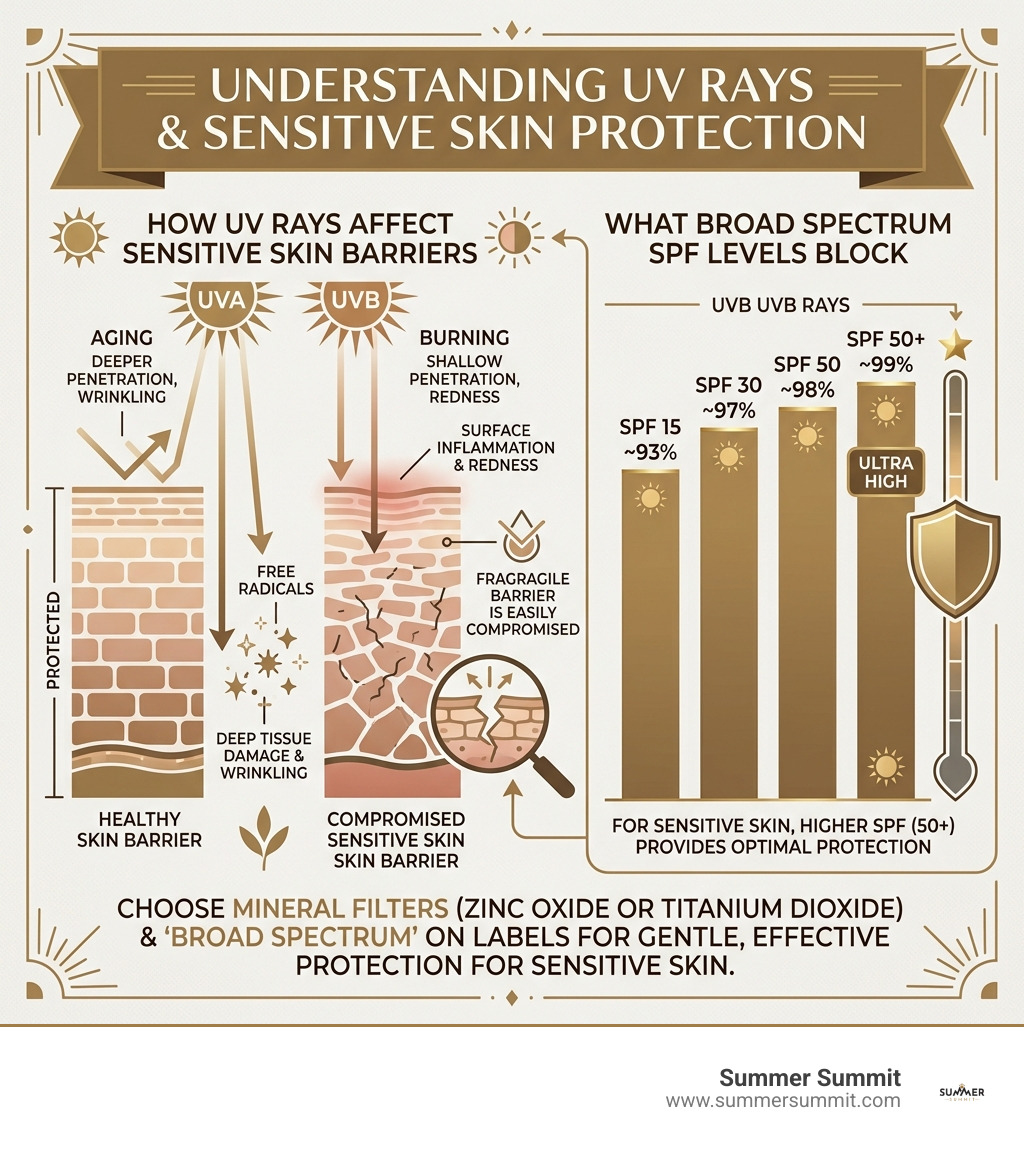
When we talk about sensitive skin, we aren't just talking about a single skin type; we’re talking about a skin barrier that is easily compromised. Choosing the best sun creams for sensitive skin requires looking past the marketing and diving straight into the "drug facts" on the back of the bottle.
The primary debate usually centers on Mineral vs. Chemical filters. Mineral sunscreens (also known as physical sunscreens) use Zinc Oxide and Titanium Dioxide to sit on top of the skin and reflect UV rays like a mirror. These are widely considered the gold standard for reactive skin because they aren't absorbed into the bloodstream and rarely cause the "stinging" sensation associated with chemical filters.
If you've ever wondered why your skin feels calmer with a mineral formula, Zinc Oxide And Your Skincare explains how this specific mineral acts as a skin protectant, often used in diaper creams for its soothing properties.
Beyond the filters, we always recommend looking for labels that state "hypoallergenic," "fragrance-free," and "non-comedogenic." Fragrance is the number one cause of contact dermatitis in skincare, and for those with acne-prone sensitive skin, "non-comedogenic" ensures the formula won't clog your pores.
Filter Comparison for Reactive Skin
| Feature | Mineral Filters (Physical) | Chemical Filters (Organic) |
|---|---|---|
| Active Ingredients | Zinc Oxide, Titanium Dioxide | Avobenzone, Oxybenzone, Octisalate |
| Mechanism | Reflects UV rays | Absorbs UV rays and converts to heat |
| Irritation Risk | Very Low | Moderate to High (due to absorption) |
| Wait Time | Works immediately | Requires 15-20 minutes to "set" |
| Texture | Can be thicker/whiter | Usually thinner/sheer |
Dermatologists often lean toward mineral options for patients with rosacea or eczema because they don't generate heat on the skin surface. For more professional insights, you can explore the 10 Best Sunscreens for Sensitive Skin, According to Dermatologists.
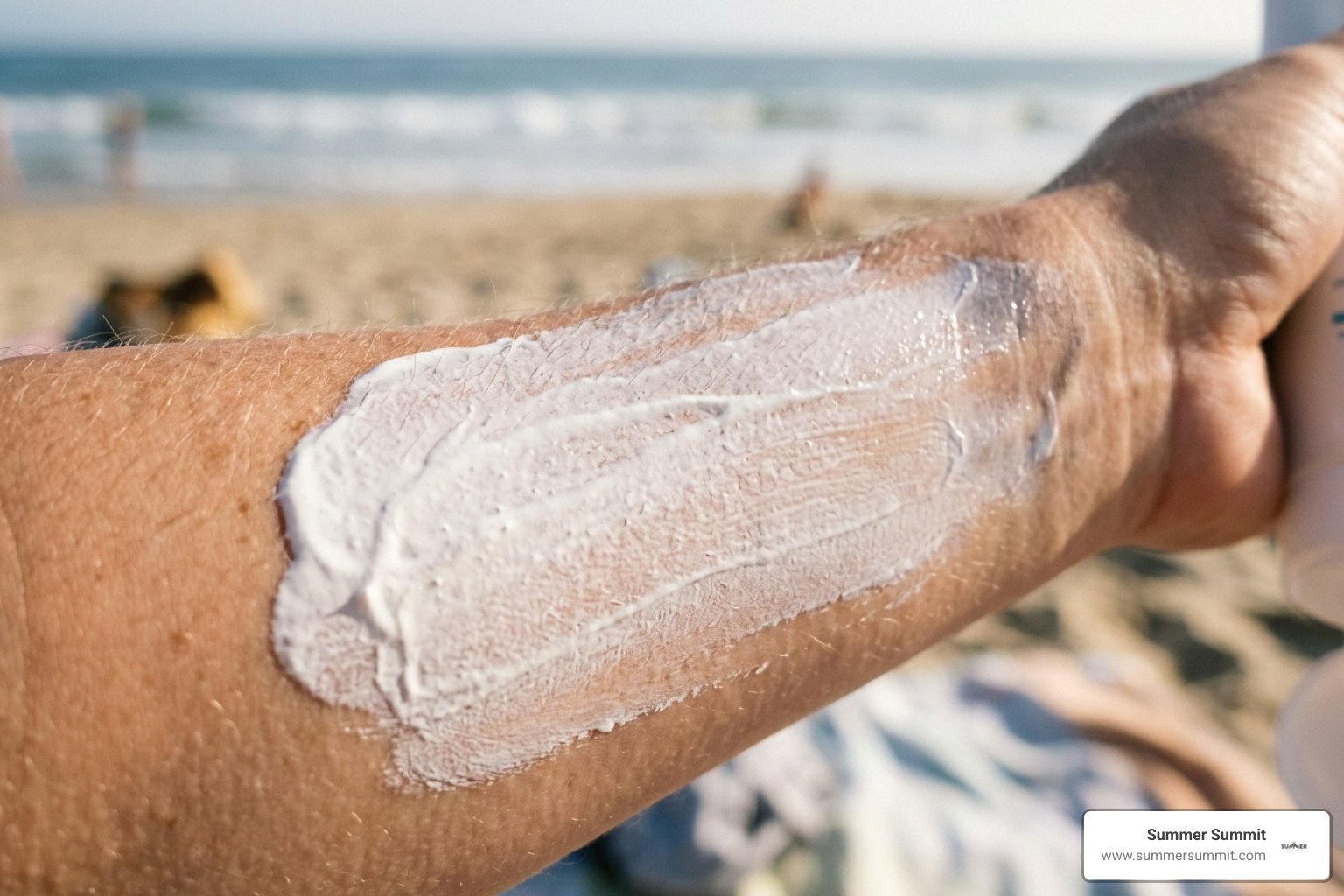
Key ingredients to look for in the best sun creams for sensitive skin
While the UV filters do the heavy lifting, the supporting ingredients determine whether your skin stays "calm" or goes into "crisis mode." In our experience at Summer Summit, the best formulations include barrier-supporting actives that help the skin defend itself.
The "Safe" List:
- Niacinamide (Vitamin B3): A powerhouse for sensitive skin. It helps reduce redness and strengthens the skin barrier.
- Hyaluronic Acid: Since sensitive skin is often dry, this humectant pulls moisture into the skin without feeling heavy.
- Vitamin E & Ceramides: These act as the "mortar" between your skin cells, preventing moisture loss and irritation.
- Bisabolol & Allantoin: Derived from chamomile and comfrey, these are specifically included to soothe existing inflammation.
If you are currently struggling with a flare-up, check out our guide on Soothing Solutions For Reducing Facial Redness.
The "Avoid" List: According to the 17 Best Sunscreens for Sensitive Skin, According to Derms, there are several common culprits you should steer clear of:
- Oxybenzone & Octinoxate: These chemical filters are common irritants and have also raised environmental concerns regarding reef safety.
- Synthetic Fragrances: Often listed as "Parfum," these can trigger instant rashes or long-term sensitivity.
- Parabens & Sulfates: While used as preservatives and emulsifiers, they can be too harsh for a compromised barrier.
- Alcohol Denat: Often used to make sunscreens dry faster, it can severely dehydrate sensitive skin types.
8 Top-Rated Sunscreens for Irritation-Free Protection
Finding the best sun creams for sensitive skin involves navigating various textures and finishes. Based on extensive user reviews and expert testing as of April 2026, here are the top eight performers.

1. La Roche-Posay Anthelios Clear Skin Oil Free SPF 60
This is a standout for those who struggle with both sensitivity and breakouts. It features Cell-Ox Shield technology, which combines UVA/UVB filters with Senna Alata antioxidants. It is non-comedogenic and specifically tested on acne-prone skin to ensure it won't cause new blemishes.
2. Colorescience Total Protection Face Shield Flex SPF 50
With over 9,000 reviews and a 4.7-star rating, this mineral formula is a fan favorite. It uses encapsulated iron oxide pigments that bloom as you apply them, providing a tinted finish that covers redness while protecting the skin. It’s hypoallergenic and designed specifically for reactive types.
3. Shiseido Urban Environment Oil-Free SPF 42
If you have oily but sensitive skin, this is a "holy grail" product. It is praised for its lightweight texture that doesn't leave a greasy residue or cause the "stinging" often associated with high-SPF formulas. It also offers protection against urban pollutants.
4. NUDESTIX Nudescreen Mineral Sunscreen SPF 30
This is a clean, vegan, and reef-safe option that users with highly reactive skin swear by. Reports suggest it causes zero breakouts even on the most "moody" skin. It’s a 100% mineral formula that works well as a primer.
5. Blue Lizard Sensitive Mineral Sunscreen SPF 50+
A classic recommendation for rosacea and fair skin. It contains no fragrances or parabens. One of its unique features is the bottle cap that turns blue in the presence of harmful UV rays—a great reminder to reapply!
6. Cetaphil Sheer Mineral Sunscreen SPF 30
Cetaphil uses "micronized technology" to help disperse the Zinc Oxide and Titanium Dioxide more evenly. While it is incredibly gentle and carries the NEA Seal of Acceptance, some users with deeper skin tones note a slight "ghostly" white cast if not blended thoroughly.
7. Supergoop! Mineral Unseen Sunscreen SPF 40
This is the mineral version of their famous Unseen Sunscreen. It provides a totally clear, weightless finish that acts as a smoothing primer. It’s ideal for those who hate the "heavy" feeling of traditional mineral creams.
8. Tower 28 Beauty FaceGuard SPF 30
Designed specifically for sensitive skin (the founder has eczema), this formula is non-toxic and reef-safe. It’s a "Swiss Army knife" product that protects while soothing the skin with ingredients like Aloe and Vitamin E.
How to Apply and Reapply for Maximum Efficacy
Even the best sun creams for sensitive skin will fail if you don't use enough. Most people apply only 25-50% of the recommended amount.
The Gold Standard Rules:
- The Nickel Rule: You need a nickel-sized amount for your face alone. If you're covering your neck and ears (which you should!), increase this to a tablespoon.
- The Two-Finger Rule: Squeeze two strips of sunscreen along your index and middle fingers. That is the amount required for your face and neck.
- The 15-Minute Lead Time: Even mineral sunscreens benefit from a few minutes to "set" before you head outdoors or apply makeup.
- The Reapplication Cycle: Sunscreen breaks down. You must reapply every two hours, or every 80 minutes if you are sweating or swimming.
Don't forget the "hidden" areas. The tops of the ears, the eyelids, and the back of the neck are where we see the most sun damage in our clinics. For a deeper dive into why this daily habit is non-negotiable, see 5 Compelling Reasons To Use Sunscreen Every Day.
If you're building a full regimen, sunscreen should always be the last step of your skincare routine but the first step of your makeup routine. You can see how to layer these products in our Skincare Routine For Sensitive Skin guide.
Wearing the best sun creams for sensitive skin under makeup
One of the biggest complaints with sensitive-skin sunscreens is "pilling"—those annoying little white flakes that form when your sunscreen reacts with your foundation.
To prevent this, look for "makeup-friendly" mineral formulas. Tinted mineral sunscreens, like the Colorescience Flex or NUDESTIX Nudescreen, often act as a light BB cream, allowing you to skip foundation altogether. This reduces the number of products on your skin, which is always a win for sensitivity.
For touch-ups throughout the day, we recommend:
- Brush-on Powder Sunscreens: These allow you to "dust" on SPF 50 over your makeup without smudging your concealer.
- Sunscreen Sticks: The Shiseido Clear Sunscreen Stick is a "dream" for reapplication because it glides over makeup without disturbing the layers underneath.
- Setting Sprays with SPF: While not enough for your primary protection, they are excellent for a quick "top-off" while running errands.
For those dealing with chronic flushing, using a green-tinted primer or sunscreen can help neutralize redness before you even reach for your foundation. Learn more about color-correcting in our Soothing Solutions For Reducing Facial Redness.
Frequently Asked Questions about Sensitive Skin Sunscreen
Does a higher SPF provide significantly better protection for sensitive skin?
It’s a common misconception that SPF 100 is twice as good as SPF 50. In reality:
- SPF 30 blocks about 97% of UVB rays.
- SPF 50 blocks about 98% of UVB rays.
- SPF 100 blocks about 99%.
While that 1% difference between SPF 30 and 50 seems small, it can be significant for someone with extreme photosensitivity or fair skin. However, for sensitive skin, the ingredients in high-SPF chemical sunscreens can sometimes be more irritating. We usually recommend a solid SPF 30 or 50 mineral formula as the "sweet spot" for protection versus comfort.
Can mineral sunscreens be used on deep skin tones without a white cast?
Historically, mineral sunscreens were notorious for leaving a "chalky" or "purple" cast on deeper skin tones. However, April 2026 technology has come a long way. Many brands now use "micronized" zinc (smaller particles that blend better) or iron oxide tints.
Products like NUDESTIX and Colorescience offer flexible shades that blend seamlessly into rich skin tones. If you are using a non-tinted mineral cream, try warming it between your palms for 10 seconds before pressing it into the skin—this helps the minerals "melt" in rather than sitting on the surface.
How do I reapply sunscreen over makeup without causing a breakout?
The key is to use non-comedogenic formulas. If you use a liquid reapplication, use a beauty sponge to "pat" the sunscreen on rather than rubbing it. However, for most sensitive types, a mineral powder brush is the safest bet. It absorbs excess oil (which can trigger acne) while adding a fresh layer of physical UV blockers. Always ensure you are cleaning your brushes and sponges regularly to prevent bacterial buildup.
Conclusion
Protecting your skin shouldn't feel like a trade-off between sun damage and a skin rash. By choosing the best sun creams for sensitive skin—specifically those formulated with mineral filters like Zinc Oxide and barrier-supporting ingredients like Niacinamide—you can stay protected and comfortable all year round.
At Summer Summit, we believe skincare should be effective without being aggressive. Our products are dermatologist-formulated, cruelty-free, and strictly free of sulfates, parabens, and harmful irritants. We are so confident your sensitive skin will love our approach that we offer a 100% satisfaction guarantee and free shipping on all orders.
Ready to give your skin the relief it deserves? Receive 10% Off Your First Order and start your journey toward a calmer, more protected complexion today.
Dejar un comentario