

Everything You Need to Know About Gentle Cleansers
What a Gentle Cleanser Actually Does (And Why It Matters)
A gentle cleanser is a face wash formulated to clean skin without stripping away its natural oils or disrupting its protective barrier. Here's a quick breakdown:
- What it is: A mild, low-irritant face wash designed for daily use
- Who it's for: Sensitive, dry, reactive, or compromised skin — but suitable for all skin types
- What it does: Removes dirt, oil, makeup, and sunscreen without causing dryness, redness, or tightness
- What makes it different: Free of harsh sulfates, synthetic fragrance, and drying alcohols that regular cleansers often contain
- How often to use it: Morning and evening, every day
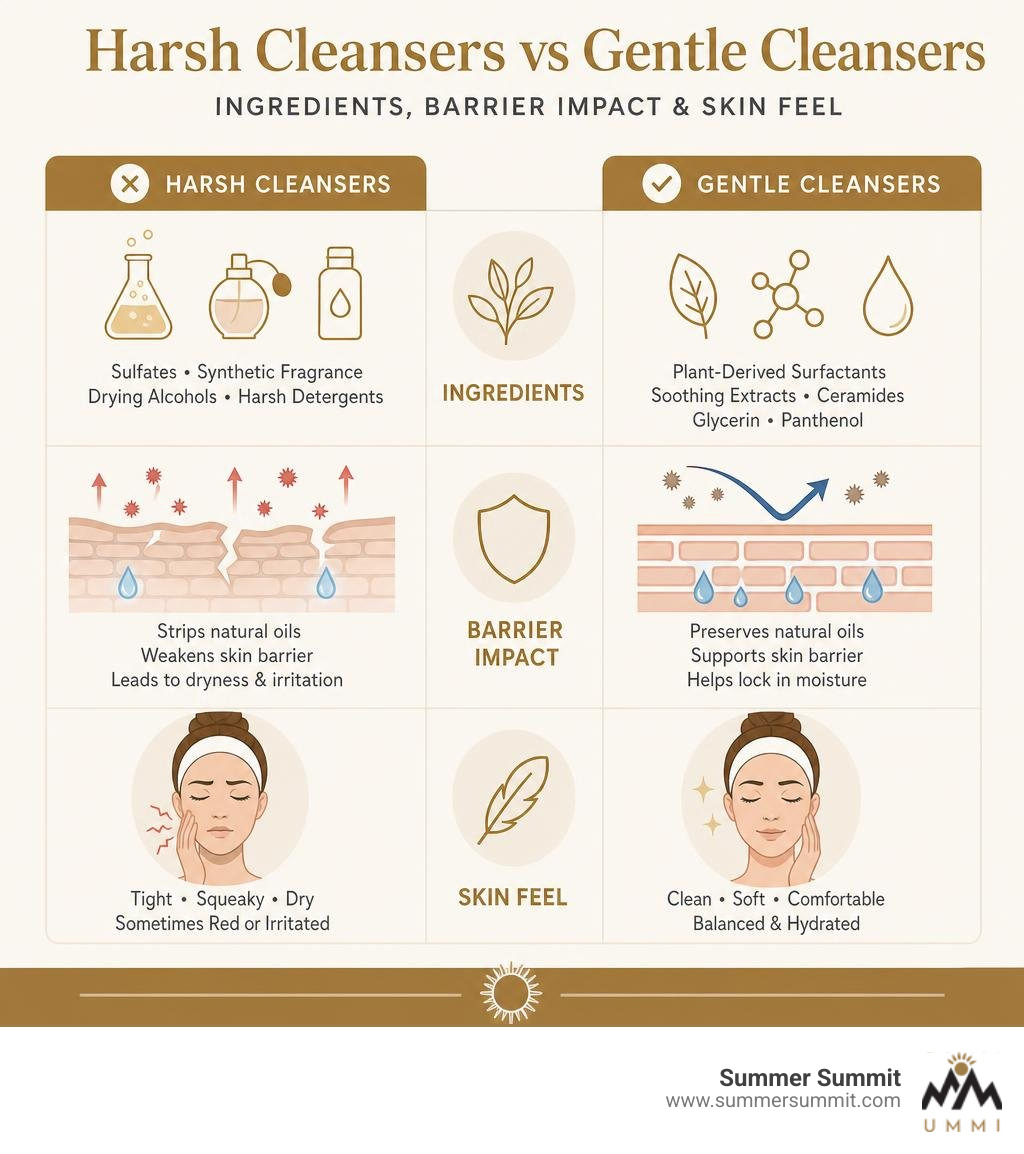
If you've ever felt that tight, dry, almost squeaky sensation after washing your face, that's your skin barrier telling you something is wrong. That feeling isn't "clean" — it's damage. The wrong cleanser can erode the thin lipid layer that keeps moisture in and irritants out, leaving skin more reactive over time.
For anyone dealing with redness, flakiness, or persistent sensitivity — especially in a sun-heavy, beach-lifestyle environment — the cleanser you use every single day is one of the most important choices in your routine. And yet it's often the last thing people think to change.
I'm Robert McCann, founder of Summer Summit Skincare, and through years of hands-on work in ingredient sourcing, formulation, and product development, I've evaluated what actually separates an effective gentle cleanser from one that simply markets itself as gentle. In this guide, I'll walk you through exactly what to look for.
What is a Gentle Cleanser and Why Does Your Skin Barrier Need It?
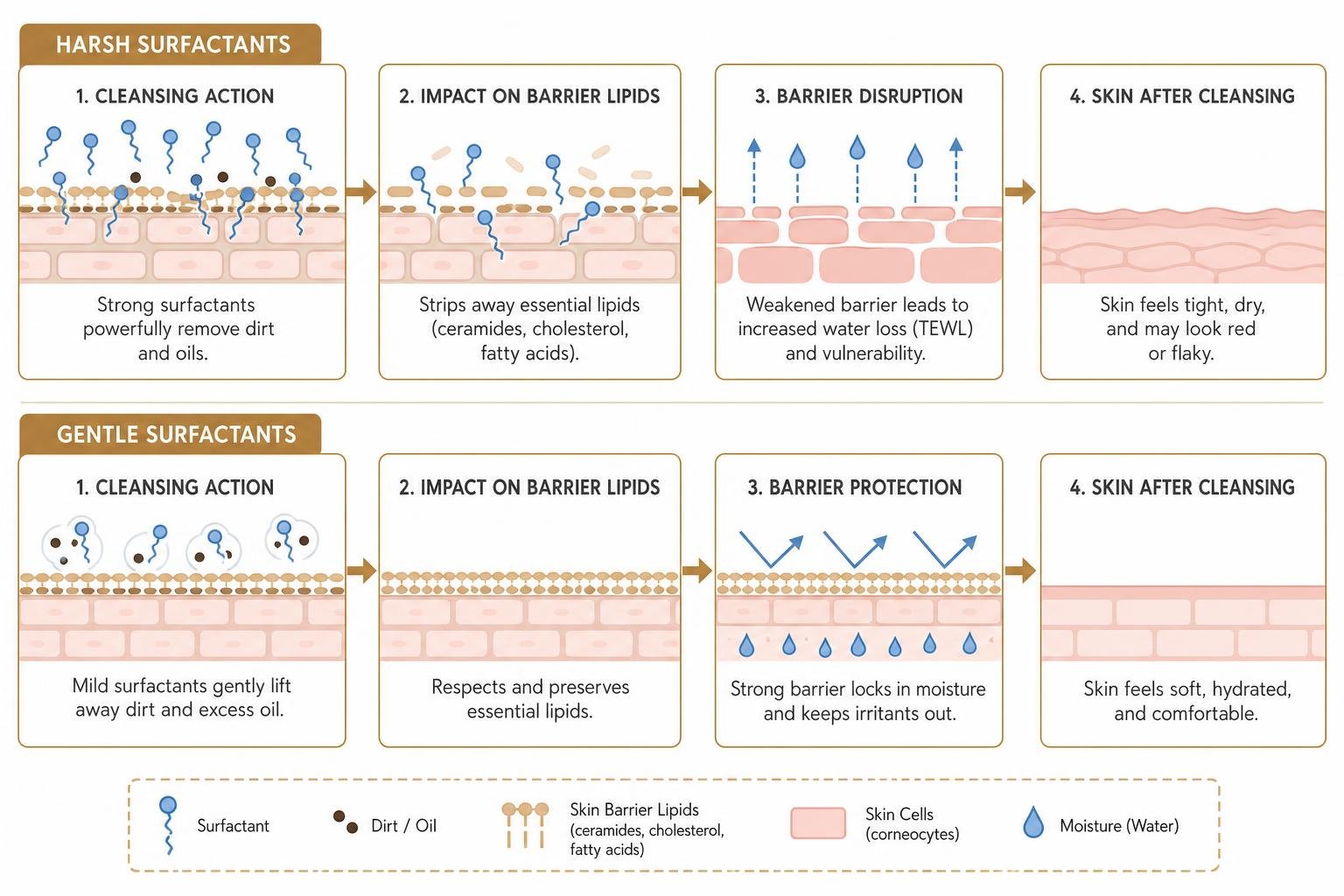
To understand why a gentle cleanser is so critical, we have to look beneath the surface. Our skin is protected by an outer layer known as the stratum corneum, often called the skin barrier. This barrier operates like a brick wall: the skin cells are the bricks, and lipids (like ceramides, cholesterol, and fatty acids) act as the mortar.
When you use a harsh, traditional cleanser, the strong surfactants don't just wash away surface dirt - they dissolve this essential lipid mortar. This leads to what dermatologists call transepidermal water loss (TEWL), where vital moisture evaporates into the air, leaving your skin vulnerable, dry, and highly reactive.
Furthermore, healthy skin is naturally slightly acidic, maintaining a pH level of around 5.0 to 5.5. Traditional soaps and harsh cleansers are often highly alkaline (pH of 8.0 or higher). Disrupting this delicate pH balance weakens the skin's natural defenses and triggers sensitivity. This is why the American Academy of Dermatology recommends using gentle, fragrance-free cleansers when skin is dry, sensitive, or easily irritated.
To maintain this balance, learning about Skin Care Cleansing Without Drying Skin is highly beneficial. A true mild cleanser respects this acidic mantle and works with your skin's natural biology, not against it.
| Feature | Gentle Cleanser | Regular/Harsh Cleanser |
|---|---|---|
| Primary Surfactants | Mild, non-ionic, or amphoteric (e.g., Coco-Glucoside) | Strong anionic surfactants (e.g., Sodium Lauryl Sulfate) |
| pH Level | Acidic to neutral (5.0 - 5.5) | Often alkaline (7.0 - 9.0+) |
| Skin Barrier Impact | Preserves and supports natural lipids | Strips lipids, leading to dryness |
| Post-Wash Sensation | Soft, hydrated, and calm | Tight, dry, and squeaky-clean |
| Fragrance & Color | Usually free of synthetic dyes and perfumes | Often heavily fragranced |
Key Ingredients to Look For and Avoid
When shopping for a gentle cleanser, reading the ingredient list is your best defense. Many products claim to be "mild" or "for sensitive skin" on the front label, but a quick glance at the back reveals a different story.
Whether you are looking at specialized formulas like a skin softening gentle cleanser or evaluating daily drugstore options, understanding ingredient safety is the key to preventing unwanted irritation. It is also important to recognize how preservatives keep these water-based formulas safe from microbial growth without triggering contact dermatitis; you can read more about this in our guide on Common Skin Care Preservatives You Should Know About.

Soothing Ingredients to Seek in a Gentle Cleanser
A high-quality mild cleanser should do more than just clean; it should deposit hydrating and soothing agents that support skin recovery. Look for these powerhouse ingredients:
- Hyaluronic Acid: A stellar humectant that supports healthy collagen production and locks in hydration.
- Glycerin: A time-tested, water-soluble emollient that attracts moisture into the skin, preventing post-wash tightness.
- Niacinamide (Vitamin B3): Celebrated for its ability to soothe redness, restore the moisture barrier, and gently fade discoloration.
- Panthenol (Pro-Vitamin B5): Deeply moisturizing and soothing, it helps calm irritated or inflamed skin.
- Colloidal Oatmeal: Rich in beta-glucans, it creates a protective barrier and is clinically proven to comfort eczema-prone skin.
- Aloe Vera & Chamomile: Natural botanical extracts that provide antioxidant benefits and ultra-calming relief to reactive skin.
Harsh Ingredients to Avoid in a Gentle Cleanser
If you have sensitive, dry, or reactive skin, check your labels to ensure they are free of these common chemical irritants:
- Sulfates (like SLS or SLES): Aggressive foaming agents that strip away natural lipids.
- Parabens & Phthalates: Synthetic preservatives and plasticizers that can trigger allergic reactions in compromised skin.
- Synthetic Fragrance & Essential Oils: The number-one cause of cosmetic contact allergies. Even natural oils like peppermint or lavender can irritate highly sensitive skin.
- Drying Alcohols (like Isopropyl Alcohol or Alcohol Denat.): These rapidly evaporate moisture, leaving the skin barrier dry and flaky.
- Harsh Physical Exfoliants: Rough scrubs can create micro-tears in an already weakened skin barrier.
How to Choose and Use a Mild Cleanser for Your Skin Type
No two faces are identical, and a formula that works beautifully for dry skin might not satisfy someone with oily skin. Finding the right texture and balance is crucial for achieving clean, comfortable skin.
Tailoring Your Cleanser to Dry, Oily, or Acne-Prone Skin
Choosing the right formula depends heavily on your unique skin concerns:
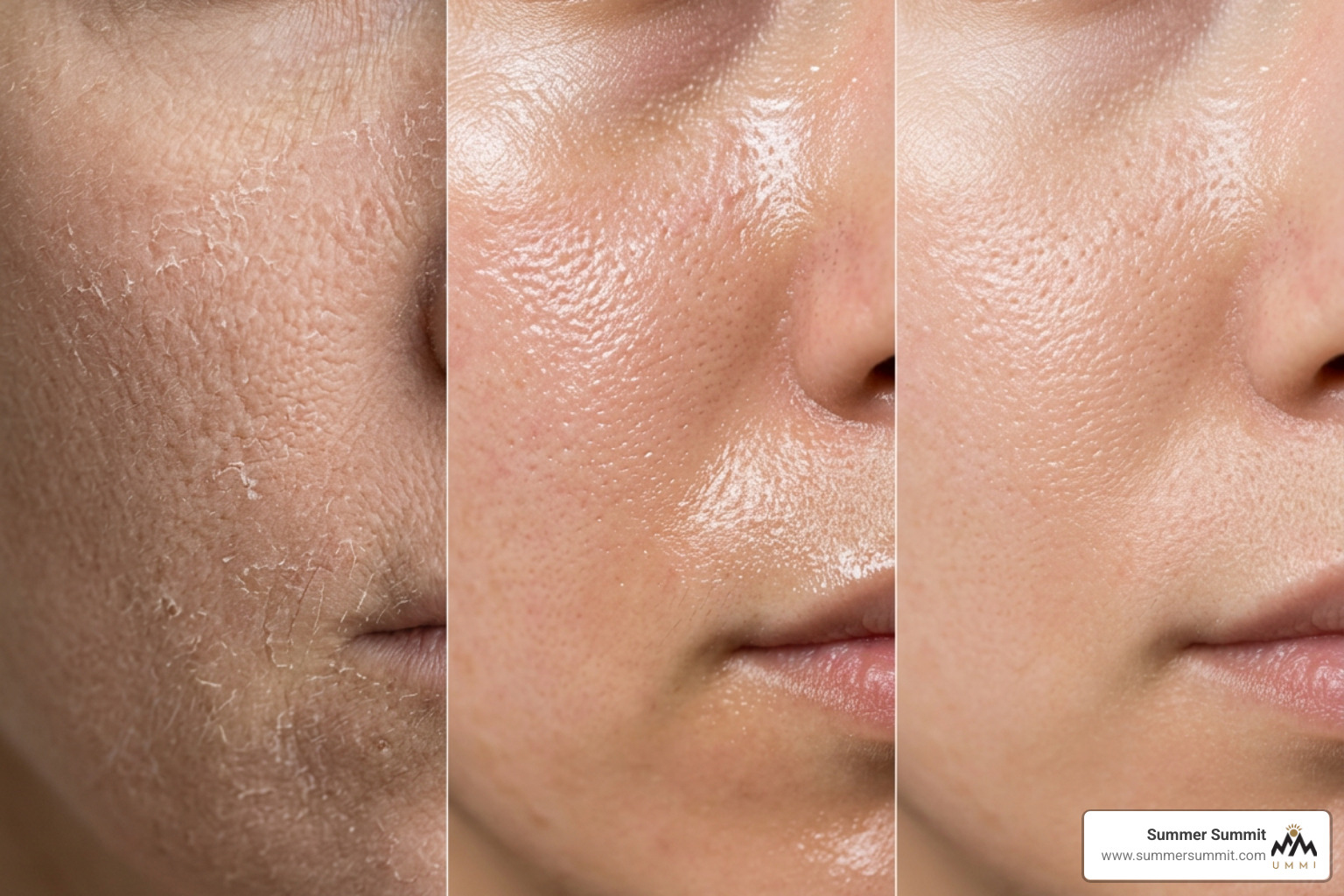
- Dry Skin: If you struggle with flakiness or tightness, a non-foaming, cream-based cleanser is your best match. These formulas rely on nourishing oils and humectants to lift away impurities without disturbing your natural moisture. For daily care tips, check out our guide on Tips to Take Care of Dry Skin Daily.
- Oily Skin: Those with oily skin often make the mistake of using harsh, drying washes to strip away sebum, which only triggers the skin to produce more oil. Instead, opt for a gentle, pH-balanced gel-to-foam cleanser. To balance your daily routine, see our Tips to Take Care of Oily Skin Daily.
- Combination Skin: If you have an oily T-zone but dry cheeks, look for a lightweight, balanced gel cleanser. You can learn how to manage this skin type with our Salicylic Acid Cleanser Guide Combination Skin.
- Acne-Prone Skin: A gentle, non-comedogenic formula is essential. While you might use active treatments to target breakouts, your daily wash should focus on soothing the skin barrier to prevent irritation from drying acne medications.
Makeup and Sunscreen Removal Efficacy
Can a gentle cleanser actually remove heavy makeup and mineral sunscreen? The short answer is yes—but it depends on how you use it.
For light daily wear, a high-quality, pH-balanced mild cleanser can effectively lift away impurities. In consumer trials for leading gentle face washes, up to 98% of participants agreed that their gentle cream or gel cleansers successfully removed makeup and daily buildup without leaving their skin feeling stripped or irritated.
However, if you wear long-wearing waterproof makeup or thick physical sunscreens, we highly recommend the double cleansing method:
- First Step: Use a gentle cleansing oil, balm, or micellar water to break down lipid-soluble impurities (like makeup and sebum).
- Second Step: Follow up with your water-based gentle cleanser to wash away any remaining residue and thoroughly clean the skin surface.
Dermatologist-Recommended Cleansing Products and Routines
Dermatologists worldwide agree that a simplified, non-irritating routine is the foundation of healthy skin. When skin is compromised by environmental factors or aggressive active ingredients, clinical experts recommend turning to trusted, hypoallergenic formulas.
When selecting professional-grade formulas, look for options like a clinical gentle cleanser or a nourishing, dermatologist-recommended gentle cleanser. Many of the most respected gentle formulas carry seals of acceptance from organizations like the National Eczema Association, confirming they are free of common irritants.
For example, clinical surveys show that 94% of users found prebiotic thermal water cleansers felt exceptionally gentle on sensitive skin, while 95% of users of classic dermatological gentle skin cleansers felt their skin was thoroughly yet softly cleansed.
To get the most out of your daily wash, follow this simple, dermatologist-approved routine:
- Prep with Lukewarm Water: Avoid hot water, which strips natural lipids, and ice-cold water, which won't effectively dissolve sebum. Lukewarm is perfect.
- Apply in Circular Motions: Apply a nickel-sized amount of your gentle cleanser to damp skin. Massage gently using your fingertips in circular, upward motions for about 30 to 60 seconds. Avoid rough washcloths or scrubbing brushes.
- Rinse Thoroughly: Ensure no residue is left behind, especially around the hairline and jawline.
- Pat Dry Gently: Never rub your face dry with a towel. Gently pat your skin with a clean, soft towel to prevent friction damage.
- Lock in Moisture Immediately: Apply your serums and moisturizers while your skin is still damp to seal in maximum hydration.
For a complete step-by-step guide to nurturing delicate skin, explore our comprehensive Skincare Routine for Sensitive Skin or optimize your evenings with A Simple Nighttime Skincare Routine.
Conclusion
At Summer Summit, we believe that skincare shouldn't be a battle. You don't need to strip, burn, or irritate your skin to achieve a radiant, healthy complexion. Our premium, clinically-proven skincare products are dermatologist-formulated, cruelty-free, and entirely free of sulfates, parabens, and harmful irritants. We back everything we make with a 100% satisfaction guarantee and free shipping because we believe your path to healthy skin should be completely stress-free.
Ready to upgrade your daily wash? Discover our expertly crafted, barrier-supporting formulas and find your perfect match by exploring our Top Rated Face Cleanser.
Can I wash my face daily with a mild formula?
Yes, absolutely! In fact, we recommend cleansing twice daily—once in the morning to wash away sweat and oils accumulated overnight, and once in the evening to remove daily grime, sunscreen, and pollution. Because a true gentle cleanser is formulated to preserve your skin's natural lipid barrier, daily use won't cause dryness or irritation.
Is a mild face wash good for acne-prone skin?
Yes, it is highly beneficial. Many people with acne-prone skin overuse harsh, drying acne washes, which damages their skin barrier and actually worsens breakouts. Using a mild, non-comedogenic face wash keeps the skin barrier strong and calm, making it much easier for your skin to tolerate targeted acne treatments without peeling or inflammation.
Can these formulas be used without water?
Some specialized gentle cream cleansers are designed to be used with or without water. For extremely compromised skin, or when traveling, you can apply the cleanser to your face with clean fingertips, gently massage, and then use a soft cotton pad to wipe away the excess. However, for daily routines, rinsing with lukewarm water is generally preferred to ensure all lifted dirt and impurities are completely removed.
Leave a comment