

What to Expect When You Are Exfoliating
What Actually Happens to Your Skin Before and After Using Salicylic Acid
The changes people see before and after using salicylic acid are some of the most consistent results in over-the-counter skincare — but the timeline is often misunderstood.
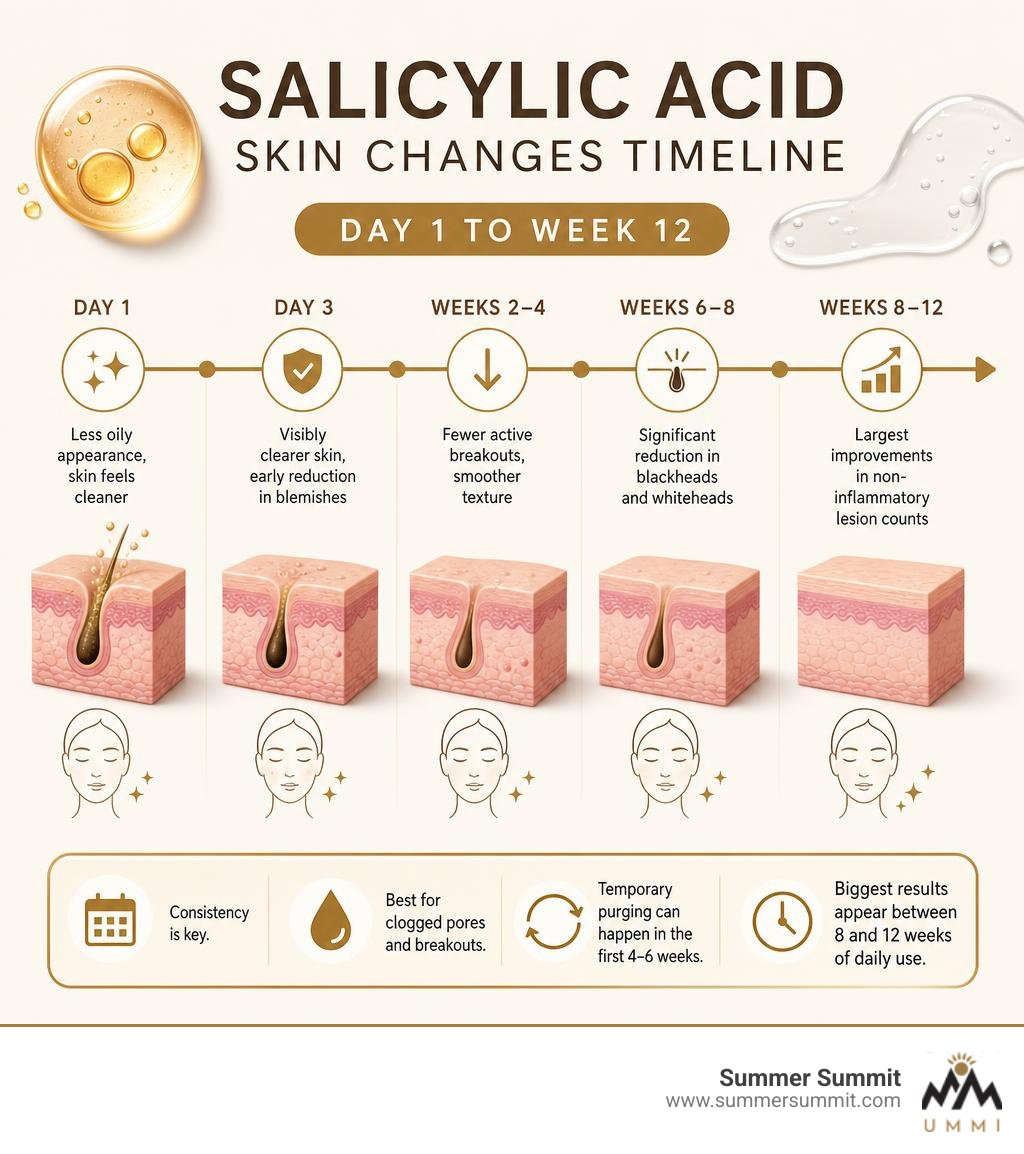
Here is a quick summary of what to expect:
| Timeframe | What Most People Notice |
|---|---|
| First wash | Less oily appearance, skin feels cleaner |
| Day 3 | Visibly clearer skin, early reduction in blemishes |
| Weeks 2-4 | Fewer active breakouts, smoother texture |
| Weeks 6-8 | Significant reduction in blackheads and whiteheads |
| Weeks 8-12 | Largest improvements in non-inflammatory lesion counts per clinical trial data |
A few things to keep in mind before diving deeper:
- Results depend heavily on consistency and using the right product format
- Salicylic acid works best for comedonal acne — blackheads, whiteheads, and clogged pores
- A temporary purging phase (increased breakouts) can occur in the first 4-6 weeks
- Clinical trials show the most meaningful results appear between 8 and 12 weeks of daily use — not the 2-4 weeks many brands advertise
Salicylic acid is a beta-hydroxy acid (BHA) that works differently from most cleansing ingredients. Because it is oil-soluble, it can actually penetrate inside the pore — dissolving the sebum and dead skin buildup that causes congestion from the inside out. That is what makes it uniquely effective for anyone dealing with persistent breakouts, clogged pores, or rough texture — especially in climates and lifestyles where excess oil is a daily reality.
I'm Robert McCann, founder of Summer Summit Skincare, and I have spent years working directly with laboratories and ingredient suppliers to understand how actives like salicylic acid perform across different formulations and skin types — including evaluating the clinical evidence behind before and after using salicylic acid in both wash-off and leave-on formats. In this guide, I will walk you through exactly what the evidence shows, what realistic results look like, and how to use salicylic acid safely and effectively in your daily routine.
What is Salicylic Acid and How Does It Work?
To truly appreciate the transformation your skin undergoes, it helps to understand what this powerhouse ingredient actually is. Salicylic acid is a naturally occurring compound historically derived from the bark of the willow tree (Salix alba). In fact, its medicinal history stretches back to ancient Egypt, where willow bark was utilized for its pain-relieving and anti-inflammatory properties.
In modern dermatology, salicylic acid is classified as a beta-hydroxy acid (BHA). Unlike its water-soluble cousins, the alpha-hydroxy acids (AHAs), salicylic acid is lipid-soluble (oil-soluble). This chemical structure is the secret to its success. While AHAs work primarily on the surface of the skin to sweep away dead cells, BHAs can bypass the skin's surface oils to dive deep into the pores.
Once inside the pore, salicylic acid performs a process known as desquamation. It acts as a keratolytic agent, meaning it softens and breaks down the intercellular "glue" (desmosomes) that holds dead skin cells together. This allows trapped debris, hardened sebum, and cellular waste to be easily expelled. By facilitating this deep exfoliation, it resolves the root cause of non-inflammatory acne. To learn more about how this active ingredient interacts with your specific skin barrier, check out our detailed article on salicylic acid and your skin.
The Science of Pore Penetration
To understand why your skin looks so different before and after using salicylic acid, we have to look at the microscopic process of follicular keratinization. In healthy skin, dead skin cells shed cleanly from the lining of the pore. However, in acne-prone skin, this process goes awry. Dead cells accumulate and mix with excess sebum, forming a sticky plug known as a microcomedone.
Because salicylic acid is oil-soluble, it is uniquely capable of penetrating these sebum-rich follicles:
- BHA vs. AHA: AHAs (like glycolic or lactic acid) are water-soluble and cannot easily penetrate sebum. They are fantastic for surface-level brightening and dry skin. BHAs, on the other hand, love oil. They dissolve the fatty blockages within the pore, making them the gold standard for oily and acne-prone skin.
- Anti-Inflammatory Properties: Salicylic acid is structurally related to aspirin (acetylsalicylic acid). This structural relationship allows it to inhibit the cyclooxygenase pathway, providing modest anti-inflammatory benefits. This means it doesn't just clear the pore; it also helps calm the angry, red swelling associated with active blemishes.
- Bacteriostatic Effects: While it does not directly kill acne-causing bacteria the way benzoyl peroxide does, salicylic acid is bacteriostatic. This means it creates an inhospitable, oxygen-rich environment that slows down the proliferation of Cutibacterium acnes (the bacteria responsible for acne flares).
Before and After Using Salicylic Acid: The Real Results
When evaluating salicylic acid, it is easy to get swept up in heavily filtered social media transformations. However, real clinical data paints a much more reliable — and still incredibly impressive — picture.
Dermatologists track progress using standardized, high-resolution photography to monitor lesion counts, pore volume, and sebum levels. In independent clinical trials, consistent use of a 2% salicylic acid formulation has been shown to produce a 30% to 40% reduction in non-inflammatory lesion counts (blackheads and whiteheads) by the 12-week mark.
For a comprehensive look at how clinical treatments compare to daily topical care, you can read more about the clinical impact in Transform Your Skin: The Impact of Salicylic Acid Before and After Treatment.
What to Expect Before and After Using Salicylic Acid for Acne
If you are starting your journey with comedonal acne — characterized by persistent blackheads, stubborn whiteheads, and a bumpy, congested T-zone — salicylic acid is highly targeted for your concerns.
Before treatment, your skin's natural desquamation process is stalled. Sebum acts as a cement, trapping dead cells inside the pore, which oxidizes upon contact with air to form blackheads.
After 6 to 8 weeks of consistent salicylic acid use, you can expect:
- A noticeable reduction in the overall number of active blackheads and whiteheads.
- A significant decrease in surface oiliness, particularly around the nose, forehead, and chin.
- Fewer inflammatory breakouts, as the microcomedones are cleared before they can develop into painful papules or pustules.
For a personal, step-by-step account of navigating this clearing process, you can explore this real-world case study: Salicylic Acid Before After Acne: My Real Journey from Clogged Pores to Clear Skin.
Before and After Using Salicylic Acid for Skin Texture and Pores
While salicylic acid is legendary for acne, its texturizing benefits are equally impressive. Many users who do not struggle with chronic breakouts still incorporate BHAs into their routine to address rough texture, enlarged pores, and hyperpigmentation.
- Pore Refinement: It is a biological fact that you cannot physically "shrink" your pore size, as pore size is largely determined by genetics. However, when pores are packed with dark, oxidized sebum, they appear significantly larger. By keeping the pores clean and clear, salicylic acid makes them appear dramatically smaller and more refined.
- Keratosis Pilaris (KP): Often referred to as "chicken skin," KP is caused by a buildup of keratin around the hair follicles, usually on the back of the arms or thighs. Salicylic acid's keratolytic action breaks down these keratin plugs, smoothing out the rough bumps.
- Hyperpigmentation: By accelerating cell turnover, salicylic acid helps fade post-inflammatory hyperpigmentation (the dark marks left behind after a blemish heals), revealing a brighter, more even complexion.
Consistent BHA exfoliation is key to achieving a smoother, more radiant complexion over time.
The Salicylic Acid Timeline: When Will You See Results?

One of the most common reasons people fail to see results from salicylic acid is that they give up too soon. In a world of overnight miracle claims, the biological reality of skin cell turnover is often ignored. Your skin completes a full renewal cycle approximately every 28 days. Because salicylic acid works by correcting deep-seated congestion, you must allow multiple cell cycles to pass to see the full transformation.
Here is the realistic, research-backed timeline of what you will experience:
- The First Wash (Instant Results): Immediately after your first application, you will notice a reduction in surface shine. In consumer trials, 93% of users agree skin instantly looks less oily after the very first wash with a 2% salicylic acid cleanser.
- Day 3 (Early Clarity): By the third day, surface congestion begins to clear. 90% of users agree skin looks visibly clearer after just 3 days of consistent use.
- Week 4 (The 28-Day Mark): Your skin has completed its first full cell cycle. Active breakouts are beginning to heal faster, and the overall texture of your skin will feel noticeably softer. 92% of users agree skin does not feel tight or stripped after 4 weeks of twice-daily use of a gentle, well-formulated 2% salicylic acid cleanser.
- Weeks 6 to 8 (The Turning Point): This is where the magic happens. Significant changes in stubborn blackheads and overall pore appearance become highly visible.
- Weeks 8 to 12 (Maximum Efficacy): Clinical trials show that the largest, most dramatic improvements in non-inflammatory lesion counts occur between weeks 8 and 12. If you have made it to this point consistently, your before-and-after photos will show a undeniable transformation.
Managing the Initial Purging Phase
Before your skin gets clearer, it might look a little worse. This is a completely normal process known as skin purging.
Because salicylic acid accelerates cellular turnover, it coaxes microcomedones (clogged pores that were already forming deep beneath the surface) to rise to the top much faster than they would have on their own. This can result in a temporary wave of breakouts, typically lasting between 4 to 6 weeks.
It is crucial to distinguish between purging and general skin irritation:
- Purging: Occurs in areas where you typically get breakouts (like your T-zone). The blemishes appear and heal much faster than normal acne.
- Irritation: Characterized by burning, stinging, persistent redness, and breakouts in areas where you never normally get pimples. This is a sign that your skin barrier is compromised, and you should scale back your usage.
To protect your skin barrier during this adjustment phase, always follow your salicylic acid application with a gentle, non-comedogenic moisturizer to lock in hydration.
How to Safely Incorporate Salicylic Acid Into Your Routine
To get the absolute best before and after using salicylic acid results, you must integrate it into your routine thoughtfully. More is not always better; over-exfoliating can damage your skin's natural moisture barrier, leading to increased redness, sensitivity, and ironically, more breakouts.
For expert guidance on daily use, you can read through Is Salicylic Acid Safe for Daily Use? Dermatologist Tips.
If you prefer a wash-off format to minimize irritation, our salicylic acid face wash complete guide provides a step-by-step breakdown. If you have combination skin, finding the right balance can be tricky, so be sure to consult our guide on the best salicylic acid face wash for combination skin.
Choosing the Right Concentration and Product Form
Salicylic acid comes in various concentrations (typically ranging from 0.5% to 2% for over-the-counter daily use) and product formats:
- Cleansers (Wash-off): Perfect for beginners, sensitive skin, or daily maintenance. Because the product is rinsed off, it minimizes the risk of irritation while still delivering excellent sebum-clearing benefits. For targeted body concerns, a salicylic acid based body wash is highly effective for chest and back breakouts.
- Toners and Serums (Leave-on): These formats provide longer contact time with the skin, making them highly effective for stubborn blackheads and active acne. However, they should be introduced slowly (2 to 3 times a week) before building up to daily use.
- Chemical Peels: High-strength formulations (typically 15% to 30%) are used as periodic, professional-grade treatments to deeply resurface the skin. These should not be used as part of a daily routine.
If you are dealing with combination skin, matching your cleanser to your skin's unique zones is essential. Read our salicylic acid cleanser guide combination skin to optimize your routine. No matter which format you choose, we believe in our formulas so deeply that we back them with a salicylic acid cleanser satisfaction guarantee.
Combining Salicylic Acid with Other Actives
Salicylic acid plays incredibly well with certain active ingredients, but combining it with others can lead to severe irritation.
| Active Ingredient | Can You Combine? | How to Do It Safely |
|---|---|---|
| Niacinamide | Yes (Excellent pair) | Niacinamide regulates sebum and calms redness, perfectly complementing BHA. Apply salicylic acid first, wait 2 minutes, then apply niacinamide. |
| Hyaluronic Acid | Yes (Highly recommended) | BHAs can be drying. Layering a hydrating hyaluronic acid serum afterward keeps the skin plump and balanced. |
| Benzoyl Peroxide | Yes (Use caution) | Salicylic acid clears the pore; benzoyl peroxide kills bacteria. To avoid extreme dryness, use salicylic acid in the evening and benzoyl peroxide in the morning. |
| Retinoids / Retinol | Yes (Do not layer directly) | Both increase cell turnover. Layering them together can compromise your skin barrier. Use salicylic acid in the morning (with SPF) and your retinoid at night, or alternate nights. |
| Vitamin C | Yes (Do not layer directly) | Both are acidic and can cause irritation when layered. Use Vitamin C in the morning for antioxidant protection and salicylic acid at night. |
For a quick summary of what to keep in mind, check out this guide on Salicylic Acid Skincare: Do's and Dont's | Before and After ....
Frequently Asked Questions about Salicylic Acid
Is Salicylic Acid Safe to Use During Pregnancy or Breastfeeding?
According to the American College of Obstetricians and Gynecologists (ACOG), topical salicylic acid is generally considered safe to use during pregnancy in low concentrations (2% or less). Systemic absorption of topical salicylic acid is extremely low. However, high-dose chemical peels should be avoided. When breastfeeding, do not apply salicylic acid to the chest area to prevent any potential direct contact with the infant's mouth or skin. Always consult your OB-GYN before starting any new active skincare ingredient during pregnancy.
What Are the Potential Side Effects and Toxicity Risks?
When first starting salicylic acid, mild side effects such as dryness, slight peeling, temporary tingling, and minor redness are common.
However, because salicylic acid is structurally related to aspirin, applying high concentrations over exceptionally large areas of the body for extended periods under airtight dressings can theoretically lead to salicylic acid toxicity (salicylism). Symptoms of toxicity include tinnitus (ringing in the ears), rapid breathing (hyperventilation), headache, and dizziness. This is extremely rare with standard 2% over-the-counter cosmetic products applied to the face.
Who Should Avoid Salicylic Acid and When to See a Dermatologist?
You should avoid salicylic acid if you have a known allergy to aspirin. Those with extremely dry, hypersensitive, or eczema-prone skin should use it with extreme caution. If you are dealing with severe, painful cystic acne, topical over-the-counter salicylic acid will not be enough to resolve the issue. In these cases, it is best to consult a board-certified dermatologist for prescription-strength options.
Conclusion
The journey before and after using salicylic acid is one of patience, consistency, and realistic expectations. While it won't transform your skin overnight, clinical evidence and real-world results prove that a high-quality BHA formulation is one of the most reliable ways to achieve clearer, smoother, and more radiant skin.
At Summer Summit, we formulate premium, dermatologist-tested skincare designed to deliver real results without the drama. Our products are proudly cruelty-free, free of sulfates, parabens, and harsh irritants, and are backed by our 100% satisfaction guarantee with free shipping. If you are ready to take the next step in your skincare journey but are still feeling a bit hesitant about introducing acids, take a deep breath and explore our guide: yikes theres salicylic acid in my skincare. Your clearest skin is waiting!
Dejar un comentario