

Everything You Need to Know About Kojic Face Lightening Cream
Why Kojic Acid Face Cream Belongs in Your Brightening Routine
Kojic acid face cream is a proven skin-brightening treatment that reduces dark spots, fades hyperpigmentation, and evens out skin tone by blocking the enzyme responsible for melanin production.
Here's what you need to know at a glance:
- What it does: Inhibits tyrosinase, the enzyme that triggers melanin (pigment) production
- Best for: Dark spots, sun damage, acne scars, melasma, and uneven skin tone
- When to see results: Skin feels more hydrated in 1-2 weeks; visible brightening in 4-8 weeks
- How to use it: Apply to clean skin morning and/or night, always follow with SPF during the day
- Who should use it: Most skin types, including sensitive — patch test first
- Key ingredient pairs: Niacinamide, Alpha Arbutin, Vitamin C, Tranexamic Acid
If you've spent money on products that promised to clear dark spots and delivered nothing, you're not alone. Hyperpigmentation is one of the most stubborn skin concerns out there — and most brightening creams barely scratch the surface.
Kojic acid is different. Derived from fungi (including certain mushrooms), it has been used in skincare for decades and works at the source of the problem: the melanin production process itself. It doesn't just mask discoloration — it slows down how much pigment your skin creates in the first place.
As of April 2026, kojic acid remains one of the most searched brightening ingredients on the market, with hundreds of products available across every price point. But not all formulas are created equal — and knowing what to look for makes all the difference.
I'm Robert McCann, founder of Summer Summit Skincare, where I've spent years working directly with labs and ingredient suppliers to develop evidence-based formulations, including kojic acid face cream products designed for real, lasting results. In this guide, I'll break down exactly how kojic acid works, how to use it safely, and how to choose a formula that's actually worth your time.
What is Kojic Acid and How Does It Work?
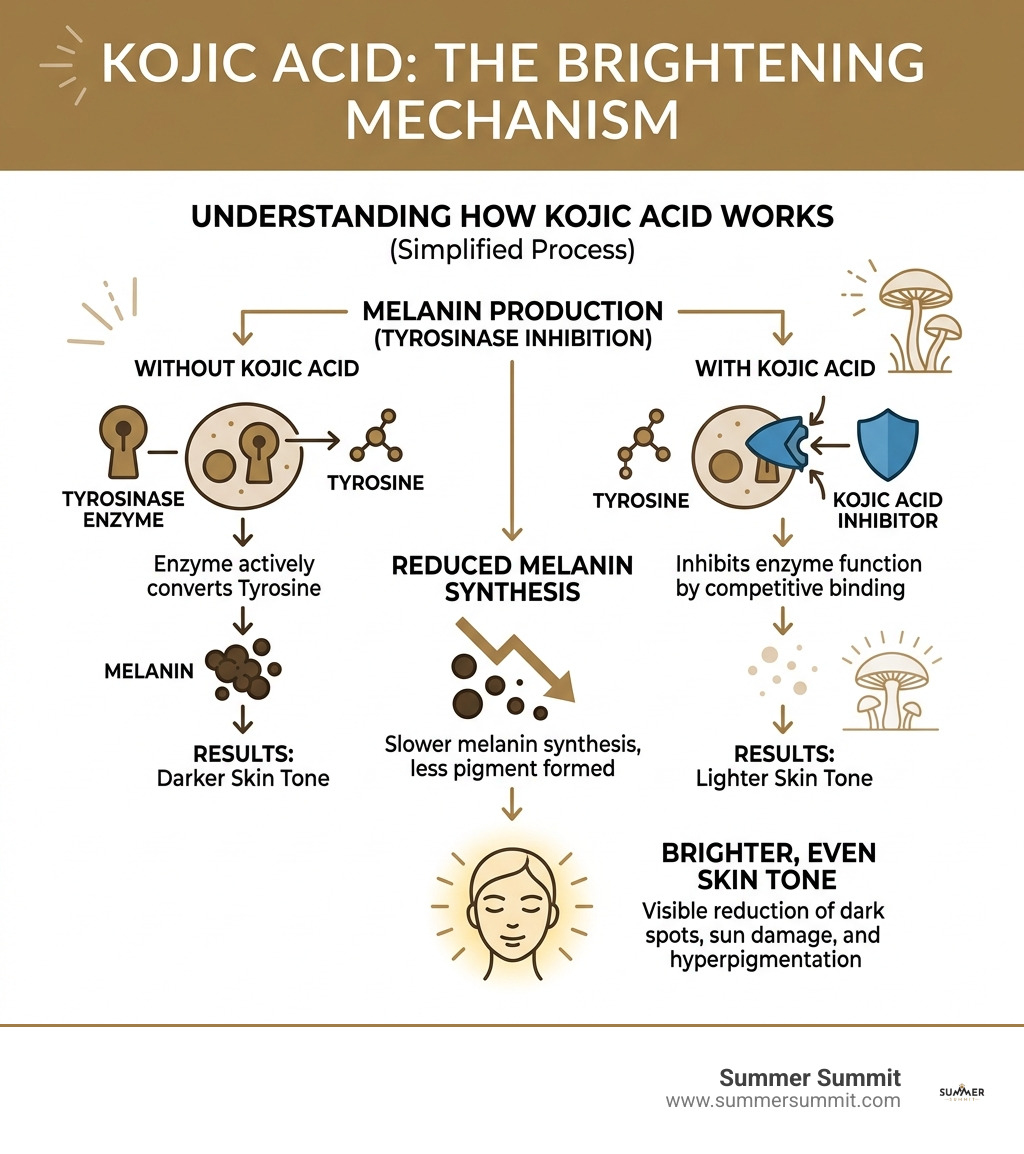
To understand why a kojic acid face cream is so effective, we have to look at the biology of your skin. Our skin gets its color from a pigment called melanin. While melanin is our natural defense against UV rays, sometimes our bodies produce too much of it in specific areas. This leads to what we call hyperpigmentation—those pesky dark spots, sun spots, and melasma patches.
Kojic acid is a natural metabolite derived from various types of fungi, such as mushrooms. It is also a byproduct of the fermentation process of certain foods, including Japanese rice wine (sake). In dermatology, it is classified as a "tyrosinase inhibitor."
The Science of Tyrosinase Inhibition
Tyrosinase is an essential enzyme required for the production of melanin. Think of tyrosinase as the "on switch" for pigment. When you apply kojic acid to your skin, it seeks out this enzyme and prevents it from functioning correctly. By blocking the enzyme, kojic acid effectively slows down the production of new pigment.
But the benefits don't stop at brightening. Research shows that kojic acid also offers:
- Antioxidant Properties: It helps the skin counteract environmental stressors like UV rays and pollution, which can cause oxidative stress and premature aging.
- Antimicrobial Benefits: It has been shown to have mild antibacterial and antifungal properties, which is why many people find it helpful for managing acne-related discoloration.
- Enhanced Cell Turnover: While not a primary exfoliant like Glycolic Acid, it supports a healthier skin cycle, helping damaged, pigmented cells move off the surface faster.
At Summer Summit, we prioritize sourcing high-purity kojic acid. We often look for Kojic Dipalmitate, a more stable, oil-soluble version of the ingredient that penetrates the skin barrier more effectively while being less prone to oxidation (turning brown in the jar).

Key Benefits of Using a Kojic Acid Face Cream
Whether you are dealing with "maskne" scars or sun damage from years spent at the beach, a kojic acid face cream offers a multifaceted approach to skincare. Unlike harsh bleaching agents, kojic acid works gradually to restore your natural, even complexion.
| Concern | How Kojic Acid Helps |
|---|---|
| Acne Scars | Fades the "post-inflammatory hyperpigmentation" (red or brown marks) left behind after a breakout. |
| Sun Spots | Targets localized clusters of melanin caused by UV exposure. |
| Melasma | Gently inhibits the overactive melanocytes often triggered by hormonal changes. |
| Uneven Tone | Provides an overall brightening effect for a more radiant, "lit-from-within" glow. |
| Aging Skin | Reduces the appearance of "age spots" or liver spots that become more prominent over time. |
Hydration and Barrier Support
Many modern formulations, including ours, don't stop at brightening. We believe a kojic acid face cream should also be a high-quality moisturizer. By including ingredients like Shea Butter, Sodium Hyaluronate (a form of Hyaluronic Acid), and Vitamin E, these creams lock in nutrients and keep the skin supple. This is crucial because brightening actives can sometimes be drying; pairing them with deep hydration ensures your skin stays healthy and resilient.
Long-Term Skin Health
Using kojic acid isn't just about fixing current spots; it’s about prevention. By consistently slowing down melanogenesis (the creation of pigment), you are less likely to develop new dark spots even when exposed to environmental triggers.
How to Properly Apply Kojic Acid Face Cream
Applying your skincare in the right order is the difference between seeing results in four weeks or four months. Because kojic acid is an active treatment, it needs to be close to the skin to work its magic.
- Cleanse: Start with a gentle, sulfate-free cleanser to remove dirt and oil.
- Tone: If you use a toner, apply it now. This helps balance your skin's pH and prepares it for absorption.
- Apply the Cream: Take a dime-sized amount of kojic acid face cream and massage it onto your face and neck. Focus on areas with visible discoloration.
- Massage: Use gentle, upward circular motions. This not only feels luxurious but also boosts circulation to the skin's surface.
- Sun Protection (Non-Negotiable): If you are applying this in the morning, you must follow with a broad-spectrum SPF 50. Brightening ingredients can make your skin more sensitive to the sun, and UV exposure will instantly undo the pigment-blocking work the cream is doing.
Pro Tip: For the best results, we recommend using the cream twice daily—once in the morning and once before bed. If you have sensitive skin, start by using it only at night for the first week to let your skin adjust.

Choosing the Best Kojic Acid Face Cream for Your Skin Type
As of April 2026, the market is flooded with options. You’ll find everything from budget-friendly Amazon finds to high-end medical-grade formulas. When browsing the 400+ results for "kojic acid cream" on major retailers, look for these key indicators of quality:
- Concentration: Look for products that specify a 1% to 2% concentration. This is the "sweet spot" where you get maximum brightening with minimum irritation.
- Packaging: Kojic acid is sensitive to light and air. Look for opaque bottles or jars with tight-sealing lids to prevent the formula from losing its potency.
-
Ingredient Synergy: Kojic acid works better when it has "friends." A premium cream will often pair it with:
- Vitamin C: For extra antioxidant protection.
- Niacinamide: To improve the skin barrier and reduce redness.
- Alpha Arbutin: Another tyrosinase inhibitor that works via a different pathway for a "double-duty" effect.
- Retinol: To speed up cell turnover and bring fresh, unpigmented skin to the surface.
- Turmeric: For its anti-inflammatory properties.
At Summer Summit, our dermatologist-formulated creams are designed to be "clean," meaning they are free from sulfates, parabens, and mercury—a harmful substance sometimes found in low-quality, unregulated lightening products.
Comparing Kojic Acid to Other Brightening Ingredients
You might be wondering: "Why should I choose kojic acid over Hydroquinone or Vitamin C?" Each ingredient has its place, but kojic acid occupies a unique middle ground of being highly effective yet generally safe for long-term use.
Kojic Acid vs. Hydroquinone
For years, Hydroquinone was the gold standard for skin lightening. However, it has faced significant scrutiny. In 2001, Europe banned it for over-the-counter use due to toxicity concerns and the risk of ochronosis (a permanent bluish-black skin discoloration). Kojic acid is a much safer, plant-derived alternative that offers similar pigment-blocking benefits without the same level of risk.
Kojic Acid vs. Alpha Arbutin
Alpha Arbutin is essentially a natural derivative of hydroquinone found in bearberry plants. It is very gentle. While Alpha Arbutin is excellent, kojic acid is often considered slightly more potent for stubborn, "stuck" pigment. Many of the best kojic acid face cream products actually combine both to get the best of both worlds.
Stability Matters: Kojic Acid vs. Kojic Dipalmitate
Standard kojic acid is notoriously unstable; it can turn brown and lose its effectiveness if the formula isn't perfect. Kojic Dipalmitate is a modified version that is more stable and less likely to cause skin irritation. When you see this on a label, it’s usually a sign of a more advanced, shelf-stable formulation.
Safety, Side Effects, and Precautions
While we love the results of a good kojic acid face cream, we always advocate for "safety first." Because kojic acid is an active acid, it can cause reactions in some people, particularly those with very dry or compromised skin.
Common Side Effects
- Redness and Irritation: This usually happens if the concentration is too high or if you use it too frequently at the start.
- Contact Dermatitis: In rare cases, some individuals may develop an itchy rash.
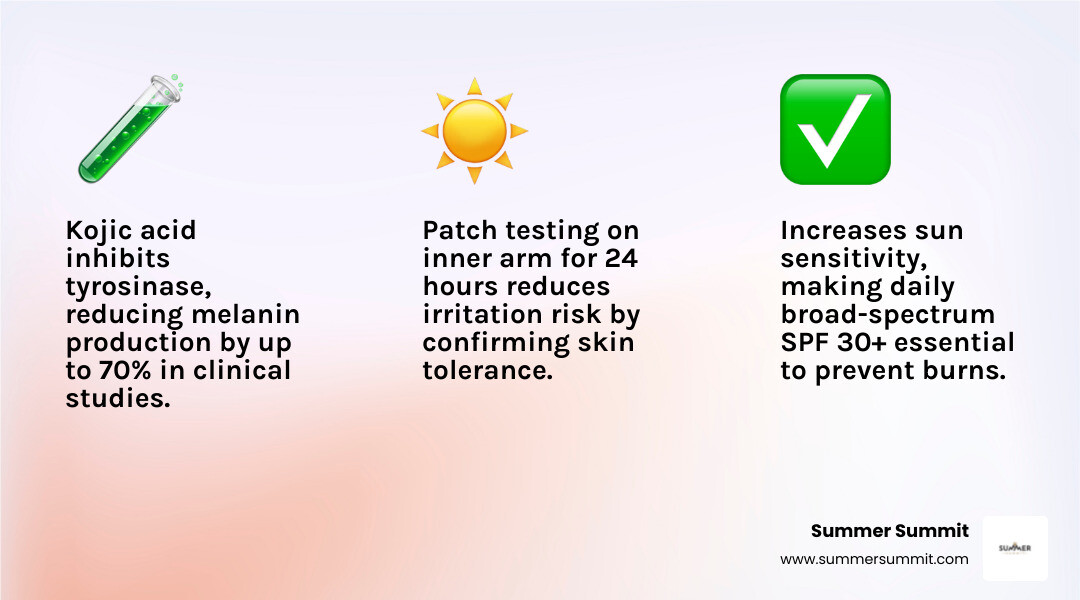
- Sun Sensitivity: This is the most common "side effect." Because kojic acid reduces melanin (your skin's natural sun protection), you will burn more easily.
The Importance of Patch Testing
We cannot stress this enough: always patch test. Before applying a new cream to your entire face, apply a small amount to your inner arm or the side of your neck. Wait 24 hours to see if any redness or itching occurs. If your skin stays calm, you’re good to go!
Sensitive Areas and Pregnancy
- Intimate Areas: Some people use kojic acid for brightening the bikini line or underarms. While effective, these areas have very thin skin. Use a formula specifically designed for sensitive areas and avoid application immediately after shaving.
- Pregnancy: While kojic acid is generally considered safer than retinoids or hydroquinone, we always recommend consulting with your doctor before starting any new active skincare routine while pregnant or breastfeeding.
Summer Summit formulas are dermatologist-designed to maintain the skin barrier while delivering actives, but listening to your skin is the most important rule of thumb. If you experience stinging that lasts more than a few seconds, rinse the product off and try again in a few days with a smaller amount.
Frequently Asked Questions about Kojic Acid
How long does it take to see results from kojic acid?
Skincare is a marathon, not a sprint. While some users report a "glow" within the first week due to the hydrating ingredients in a kojic acid face cream, real pigment change takes time. Most people see visible fading of dark spots in 4 to 6 weeks. For deep-seated hyperpigmentation or stubborn melasma, it may take up to 3 months of consistent, twice-daily use. This timeline aligns with your skin's natural 28-day renewal cycle.
Can I use kojic acid on sensitive areas?
Yes, but with caution. Kojic acid is often found in soaps and creams used for the body, underarms, and intimate areas. However, because the skin in these areas is more prone to friction and irritation, look for formulas that include soothing agents like Allantoin, Shea Butter, or Licorice Root Extract. Avoid using kojic acid on broken or freshly shaved skin.
What ingredients should I avoid pairing with kojic acid?
To keep your skin barrier happy, be careful with "stacking" too many acids.
- Avoid: Using high-percentage AHAs (like Glycolic Acid) or BHAs (Salicylic Acid) in the exact same application as your kojic cream unless your skin is very resilient.
- Retinoids: You can use both, but we suggest alternating them. Use your kojic acid face cream in the morning and your Retinol at night.
- Low pH Products: Kojic acid is most stable at a specific pH. Mixing it with very acidic products can sometimes cause it to degrade or cause excessive irritation.
Conclusion
Achieving a bright, even complexion doesn't have to involve harsh chemicals or expensive clinical treatments. A high-quality kojic acid face cream provides a natural, science-backed way to address hyperpigmentation at its source. By inhibiting tyrosinase and supporting your skin with antioxidants, you can fade existing spots and prevent new ones from forming.
At Summer Summit, we are committed to providing premium, cruelty-free skincare that actually delivers on its promises. Our dermatologist-formulated products are free of sulfates, parabens, and harmful irritants, ensuring that even those with sensitive skin can achieve a radiant glow. We stand behind our formulas with a 100% satisfaction guarantee and offer free shipping on all orders.
Ready to start your journey to more luminous skin? Explore our latest product releases and get more expert advice on our blog.
Leave a comment